

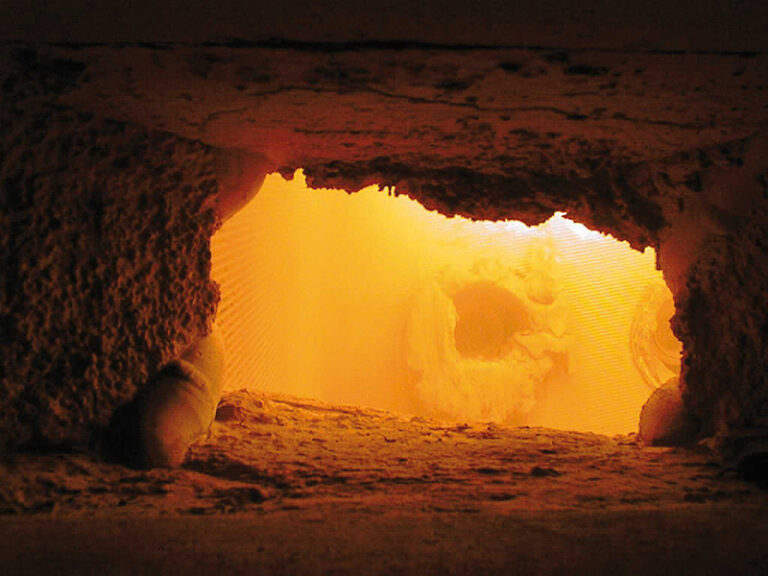
Regular sootblowing is important for combustion efficiency because deposits on heat transfer surfaces act as insulation, forcing the boiler to burn more fuel to achieve the same steam output. Without consistent cleaning, fouling accumulates progressively, reducing heat transfer efficiency, increasing fuel consumption and ultimately causing unplanned shutdowns. The sections below address the most common questions plant operators have about sootblowing, fouling and intelligent cleaning strategies.
What happens to a boiler when sootblowing is neglected?
When sootblowing is neglected, deposits build up on heat transfer surfaces and progressively reduce the boiler’s ability to transfer heat from combustion gases to the working fluid. The boiler must compensate by burning more fuel to maintain output, flue gas temperatures rise and the risk of unplanned shutdown increases significantly with every additional layer of deposit.
The consequences follow a predictable pattern. Early-stage fouling reduces heat transfer efficiency and raises fuel consumption. As deposits thicken, they create hot spots on tube surfaces that accelerate corrosion. In furnace areas, heavy slagging can form clinker formations large enough to break free and fall into the hopper, causing mechanical damage. In superheater and reheater zones, blocked gas lanes create uneven temperature distribution that stresses tube materials beyond their design limits.
The financial impact compounds quickly. An efficiency loss of even a few percentage points translates directly into higher fuel costs per megawatt-hour of output. Add the cost of an unplanned outage, lost generation revenue, emergency maintenance labour and potential equipment damage, and the case for consistent on-load boiler cleaning becomes straightforward.
How does sootblowing improve heat transfer efficiency?
Sootblowing improves heat transfer efficiency by removing the insulating layer of ash, slag and particulate deposits from heat exchange surfaces. Clean tube surfaces allow combustion gases to transfer heat directly to the working fluid, maintaining the temperature differentials and flow conditions the boiler was designed to operate at.
Deposits have a much lower thermal conductivity than the metal tube walls beneath them. Even a thin, uniform layer of ash measurably increases thermal resistance across the surface. As the deposit layer grows thicker or denser, particularly with sticky, chlorine-rich ash from waste or biomass fuels, the insulating effect becomes severe. Flue gas exits the boiler at higher temperatures, carrying heat out of the system rather than transferring it to steam.
Effective sootblowing restores the designed heat transfer coefficient across each zone of the boiler. In the furnace, where roughly half of total boiler heat transfer occurs, keeping walls free of slagging has a disproportionately large effect on overall efficiency. In the convective pass, regular cleaning of superheater, reheater and economiser surfaces maintains the temperature profile the boiler control system expects, allowing it to operate closer to its design point.
How often should sootblowing be performed?
There is no universal fixed interval for sootblowing. The correct frequency depends on fuel type, combustion conditions, boiler design and the actual deposit situation on each surface at any given time. Cleaning too infrequently allows deposits to harden and become harder to remove; cleaning too frequently wastes steam or water and causes unnecessary erosion of tube surfaces.
Traditionally, plants operated on fixed time-based schedules, blowing every surface at set intervals regardless of actual deposit levels. This approach is simple to manage but inherently inefficient. Surfaces that foul slowly get cleaned unnecessarily, while surfaces under heavy fouling conditions may not be cleaned often enough between scheduled cycles.
A more effective approach is demand-driven cleaning, where the frequency and sequence of sootblowing are determined by real-time data on deposit levels across the boiler. Flux sensors and acoustic monitoring systems can detect where deposits are building up and trigger cleaning only where and when it is needed. This reduces steam consumption, extends the service life of sootblower components and prevents both under-cleaning and over-cleaning of individual surfaces.
What causes slagging and fouling in Waste-to-Energy and biomass boilers?
Slagging and fouling in Waste-to-Energy and biomass boilers are caused by the chemical composition of the ash produced during combustion. Both fuel types generate ash with high concentrations of alkali metals, particularly potassium and sodium, as well as chlorine and heavy metals. These compounds lower the melting point of ash particles, causing them to arrive at heat transfer surfaces in a sticky or partially molten state and bond to tube walls.
Several factors make fouling in these boilers more complex than in conventional coal-fired plants. Waste fuel composition varies continuously: the calorific value, moisture content and ash chemistry of municipal solid waste change from load to load. Biomass fuels, while more consistent, still vary significantly by species, harvest conditions and storage. This variability means combustion temperatures and flue gas chemistry fluctuate, creating conditions where deposit formation rates and deposit characteristics change constantly.
The distribution of deposits is also inhomogeneous. Some surfaces foul heavily while adjacent surfaces remain relatively clean, depending on local gas velocities, temperature gradients and the trajectory of ash particles. This uneven distribution is one reason why a single cleaning strategy applied uniformly across the boiler is rarely optimal for these fuel types.
What’s the difference between steam sootblowers and other cleaning technologies?
Steam sootblowers use high-velocity jets of steam or air to dislodge deposits from heat transfer surfaces. They are the established technology for convective pass cleaning, including superheaters, reheaters, economisers and air preheaters, and are well suited to removing loose, dry or lightly bonded ash. Water-based systems and mechanical rapping systems address different deposit types and boiler zones where steam alone is insufficient.
Steam and air sootblowers
Retractable sootblowers insert a lance tube with high-performance nozzles helically into the flue gas path, covering travel distances up to 10 metres and operating at flue gas temperatures up to 1,400°C. Part-retractable versions are used in superheater and reheater areas where the blowing tube remains partially in the gas path. Oscillating sootblowers target specific segments with heavy fouling and are available in both retractable and part-retractable configurations. Rotating element sootblowers handle light fouling at flue gas temperatures below 500°C without axial movement.
Water-based cleaning systems
Water carries significantly more energy per unit mass than steam, making it more effective against heavy slagging and bonded deposits that steam jets cannot dislodge. In furnace applications, water cannons create a meander-shaped jet pattern across the furnace walls for targeted cleaning. Shower-clean systems mounted on the boiler roof lower a nozzle assembly into the furnace and empty passes, spraying water in a continuous 360-degree pattern. Wall blowers using water as the cleaning medium address heavy slagging on membrane wall surfaces. Because these systems do not require steam extraction from the boiler cycle, they can also reduce auxiliary energy consumption compared to steam-based alternatives.
Rapping systems
Rapping systems use mechanical impulse rather than a cleaning medium to dislodge deposits. They are particularly suited to facilities with varying fuels and loose, dry deposits on heating surfaces and economisers. Because no steam, air or water is consumed, maintenance costs for the cleaning medium supply are eliminated.
How can intelligent sootblowing reduce operating costs?
Intelligent sootblowing reduces operating costs by replacing fixed-schedule cleaning with demand-driven cleaning that responds to actual deposit conditions. Instead of blowing every surface at predetermined intervals, the system uses sensor data and diagnostic information to determine where deposits are forming, how quickly and how much cleaning force is needed, then acts accordingly.
The cost reductions come from several directions. Steam consumption falls because surfaces that are not yet fouled are not cleaned unnecessarily. Sootblower components last longer because they are not cycled through unnecessary operations. Tube erosion from over-blowing is reduced. And because the system responds to actual deposit build-up rather than a calendar, it can prevent the kind of heavy, hardened deposits that require aggressive cleaning or, in the worst case, a forced outage to remove manually.
Intelligent controls also allow the cleaning system to adapt to changing fuel conditions. In Waste-to-Energy and biomass plants, where fuel quality varies continuously, a fixed schedule calibrated for one set of conditions will be wrong much of the time. A demand-driven system recalibrates continuously, maintaining boiler efficiency across the full range of operating conditions without requiring manual intervention every time the fuel mix changes.
The combination of reduced steam consumption, lower component wear and fewer unplanned outages means that the operating cost savings from intelligent sootblowing typically outweigh the investment in controls and diagnostics within a manageable timeframe, particularly in plants running on variable or challenging fuels.
How Clyde Bergemann supports your boiler cleaning strategy
We work with plant operators across power generation, Waste-to-Energy and biomass to design and implement on-load boiler cleaning systems that match the actual deposit conditions in each boiler, not a generic standard solution. Our approach is built on more than 60 years of experience in boiler cleaning, and we were among the first in the industry to apply water as a furnace cleaning medium and to implement demand-driven cleaning in commercial operation.
- Full coverage across all boiler zones: We supply cleaning systems for furnaces, superheaters, reheaters, economisers, air preheaters and catalyst/absorber sections, using steam, air, water or mechanical rapping depending on what each zone requires.
- Demand-driven cleaning with SMART Clean: Our SMART Clean philosophy integrates sensor data and diagnostic analysis to trigger cleaning based on actual deposit levels, reducing steam consumption and extending component service life.
- Adaptability to variable fuels: Our systems are designed to handle the deposit variability that comes with waste and biomass fuels, including changing fuel mixtures and varying fuel quality.
- Service and spare parts support: We provide global service support, inspection assistance and spare parts availability to keep systems running under the demanding conditions of high-temperature, high-pressure boiler environments.
You can find a full overview of our boiler efficiency solutions on our website. If you want to discuss the specific deposit challenges in your plant, get in touch and we will connect you with an engineer who knows your application.
Related Articles
- 7 sootblower maintenance mistakes that shorten equipment service life
- The future of boiler cleaning technology and what engineers need to know
- What the data reveals about on-load cleaning ROI for plant operators
- 5 common causes of unplanned downtime in waste-to-energy plants
- What are the most effective methods for on-load boiler cleaning?