

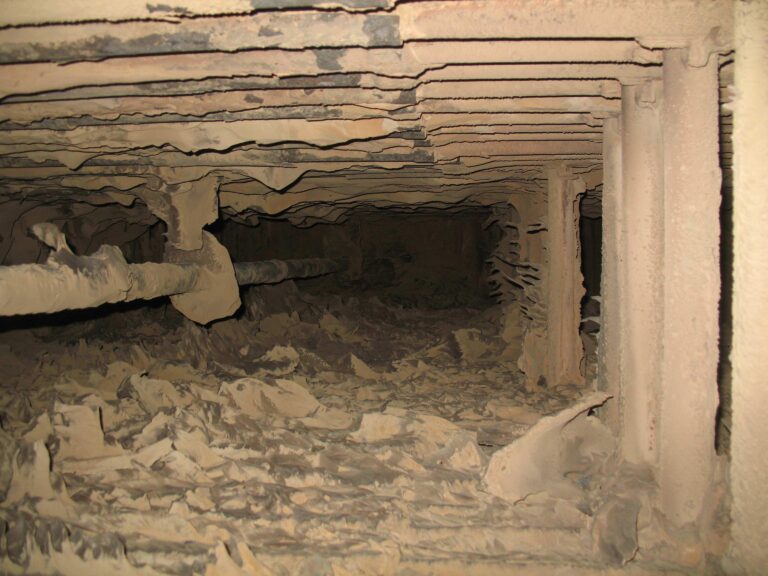
Waste composition is one of the most significant drivers of boiler fouling in Waste-to-Energy plants. The mix of plastics, organic matter, metals, and treated materials in municipal solid waste releases a complex cocktail of chemical compounds during combustion, many of which deposit aggressively on heat transfer surfaces. The sections below unpack the specific mechanisms behind composition-driven fouling and what plant operators can do about it.
What types of waste fuel cause the most severe boiler fouling?
Plastics, chlorine-rich materials such as PVC, and high-moisture organic fractions cause the most severe fouling in Waste-to-Energy boilers. These fuel types generate sticky, chemically aggressive deposits that bond strongly to superheater tubes and furnace walls, reducing heat transfer and accelerating corrosion. Processed industrial waste and mixed municipal streams with high polymer content are consistently the most problematic inputs.
Plastics combust at high temperatures and release chlorinated compounds and heavy metal vapors that condense on cooler downstream surfaces. PVC in particular is a major source of hydrogen chloride gas, which reacts with alkali metals to form low-melting-point chloride salts. These salts are highly adhesive and form the base layer of many hard, stratified deposits.
High-moisture organic fractions, such as food waste and garden material, create a different problem. They lower combustion temperatures and produce incomplete combustion products that contribute to sticky, tar-like fouling in the lower furnace. When moisture content fluctuates significantly between loads, the combustion zone shifts unpredictably, spreading deposit formation across a wider area of the boiler.
How does chlorine content in waste fuel drive deposit formation?
Chlorine in waste fuel drives deposit formation by reacting with alkali metals during combustion to produce alkali chlorides, primarily potassium chloride and sodium chloride. These compounds vaporize in the high-temperature combustion zone and then condense on cooler heat transfer surfaces, forming an initial sticky layer that captures fly ash particles and builds into thick, hard deposits.
The process is self-reinforcing. Once a thin chloride layer forms on a tube surface, it acts as a trap for further particulate matter. Over time, the deposit grows in layers, with the innermost zone often containing highly corrosive chloride compounds that attack the tube metal directly. This is why chlorine-driven fouling is associated not just with reduced boiler efficiency but with accelerated tube wall thinning and premature failure.
Hydrogen chloride gas also participates in active corrosion through a cycle where it reacts with iron oxides in the tube wall, releasing iron chloride, which then oxidizes and releases chlorine again to continue the attack. This mechanism is particularly damaging in the superheater region, where metal temperatures are highest and the corrosion rate increases sharply.
Why do alkali metals like potassium and sodium worsen fouling?
Potassium and sodium worsen fouling because they form low-melting-point compounds that remain in a semi-molten or sticky state at typical boiler operating temperatures. When these alkali metals combine with chlorine or sulfur from the flue gas, the resulting salts deposit on heat transfer surfaces and act as a binding agent that causes fly ash particles to adhere rather than pass through.
Potassium is particularly prevalent in biomass and organic-rich waste fractions. It volatilizes readily during combustion and is highly reactive with both chlorine and sulfur dioxide in the flue gas. The resulting potassium sulfate and potassium chloride deposits are dense and difficult to remove mechanically once they have sintered onto a surface.
Sodium behaves similarly but tends to be more abundant in industrial and commercial waste streams that contain packaging materials, treated wood, and food processing residues. In combination with potassium, sodium compounds lower the melting point of the deposit mixture further, increasing the fraction of the deposit that remains in a viscous, adhesive state during normal operation. This is why alkali-rich fuel blends consistently produce harder, more tenacious deposits than alkali-poor fuels at equivalent combustion temperatures.
What is the difference between slagging and fouling in waste-to-energy boilers?
Slagging refers to the formation of molten or partially fused deposits on furnace walls and in the radiant heat transfer zone, where temperatures are high enough to melt ash constituents. Fouling refers to deposit build-up on convective heat transfer surfaces further downstream, where temperatures are lower and deposits form primarily through condensation and particulate adhesion rather than melting.
In practice, both processes occur simultaneously in a Waste-to-Energy boiler, but they require different responses. Slagging in the furnace produces hard, glassy clinker formations that can grow large enough to fall and damage the hopper area below. The furnace alone accounts for approximately 50% of total heat transfer in a boiler, so slagging here has a direct and immediate impact on steam generation efficiency.
Fouling in the superheater and economizer regions tends to build more gradually but is chemically more aggressive due to the chloride and sulfate compounds that dominate at lower temperatures. These deposits insulate tube surfaces, reduce heat transfer rates and, as described above, drive active corrosion. Because the two phenomena have different physical and chemical characteristics, effective cleaning strategies must address each zone with appropriate technology and timing.
How does fluctuating waste composition make fouling harder to manage?
Fluctuating waste composition makes fouling harder to manage because deposit formation rates, deposit chemistry and deposit location all change with the fuel mix. A cleaning schedule optimized for one fuel blend may be insufficient or poorly timed when the composition shifts, allowing deposits to accumulate beyond the point where routine cleaning can remove them without extended downtime.
Municipal solid waste is inherently variable. Seasonal changes, regional collection patterns and the proportion of industrial versus household waste all alter the chlorine content, moisture level, alkali metal concentration and ash fusion temperature of the fuel. A plant receiving a higher-than-usual proportion of PVC-rich commercial waste will see a rapid increase in chloride deposit formation, while a shift toward wetter organic fractions will change combustion temperatures and shift where deposits form within the boiler.
Fixed cleaning intervals, designed around an average fuel composition, are poorly suited to this variability. When deposit build-up accelerates due to a composition shift, a fixed schedule may not respond quickly enough. Conversely, cleaning too frequently when deposits are light wastes cleaning medium, adds thermal stress to tube surfaces and increases maintenance costs. The core challenge is that the boiler’s actual deposit situation at any given moment is not directly visible without diagnostic support.
What boiler cleaning strategies are most effective for composition-driven fouling?
The most effective boiler cleaning strategies for composition-driven fouling combine the right cleaning technology for each boiler zone with demand-driven control that adjusts cleaning frequency and intensity based on the actual deposit situation rather than a fixed schedule. This approach directly addresses the variability problem by responding to what is happening in the boiler rather than what was expected to happen.
In the furnace, where slagging from high-temperature ash melting is the primary challenge, water-based cleaning systems are the most capable technology for removing heavy deposits. Water jets can deliver significantly more energy to a deposit than steam or air, making them effective against the hard, sintered slag that forms when chloride and alkali-rich waste is burned. Positioning systems that create a systematic cleaning pattern across the furnace walls ensure that no area is left untreated.
In the superheater and convective pass, retractable sootblowers using steam or air address the softer, layered fouling that builds on tube banks. For facilities with highly variable fuel compositions, part-retractable sootblowers that can switch between steam and water give operators more flexibility to respond to harder deposits when they form.
Across all zones, integrating cleaning systems with boiler diagnostics transforms reactive cleaning into a managed process. Sensors that monitor heat transfer performance in real time can identify where deposits are forming and trigger targeted cleaning before efficiency losses become significant. This demand-driven approach is particularly valuable in Waste-to-Energy plants where fuel composition changes frequently and deposit behavior is difficult to predict from one operating period to the next.
How Clyde Bergemann supports fouling management in Waste-to-Energy plants
We have been developing on-load boiler cleaning solutions for industrial boiler systems for close to 100 years, and Waste-to-Energy is one of our core application areas. Our product range covers every zone of the boiler, from furnace to economizer, with cleaning technologies matched to the specific deposit types and temperatures found in each area. Here is what we bring to composition-driven fouling challenges specifically:
- Water-based furnace cleaning: Our SMART Cannon and Shower-Clean System (SCS) use water as the cleaning medium to remove heavy slagging from furnace walls, including the hard chloride-rich deposits that form when PVC and alkali-rich waste fractions are burned.
- Flexible sootblower solutions: Retractable and part-retractable sootblowers for superheater and convective pass zones, with the option to use steam, air or water depending on deposit severity.
- Demand-driven cleaning with SMART Clean: Our SMART Clean platform integrates flux sensors and boiler diagnostics to trigger cleaning based on actual deposit conditions, not fixed intervals. This directly addresses the variability challenge that makes composition-driven fouling difficult to manage with conventional approaches.
- Controlled deposit build-up: Our systems are designed to maintain boiler efficiency and availability even when fuel composition changes, supporting flexible operation without unplanned shutdowns.
- Service and spare parts support: We provide global service support, maintenance and spare parts for plants operating under the extreme thermal and chemical conditions typical of Waste-to-Energy combustion.
Our Clyde Bergemann boiler efficiency solutions are in operation at Waste-to-Energy and biomass plants across Europe and beyond, including facilities in Germany, the UK, Denmark, Italy and Estonia. If you are dealing with persistent fouling problems or want to evaluate whether your current cleaning setup is matched to your actual fuel mix, we are happy to discuss your situation.
Related Articles
- Why reactive sootblowing strategies are failing modern industrial boilers
- Why do boiler cleaning intervals become shorter over time?
- How to extend boiler service life under high-temperature operating conditions
- How is boiler fouling different in waste-to-energy plants compared to coal?
- How much downtime can a missing boiler cleaning system cause?