

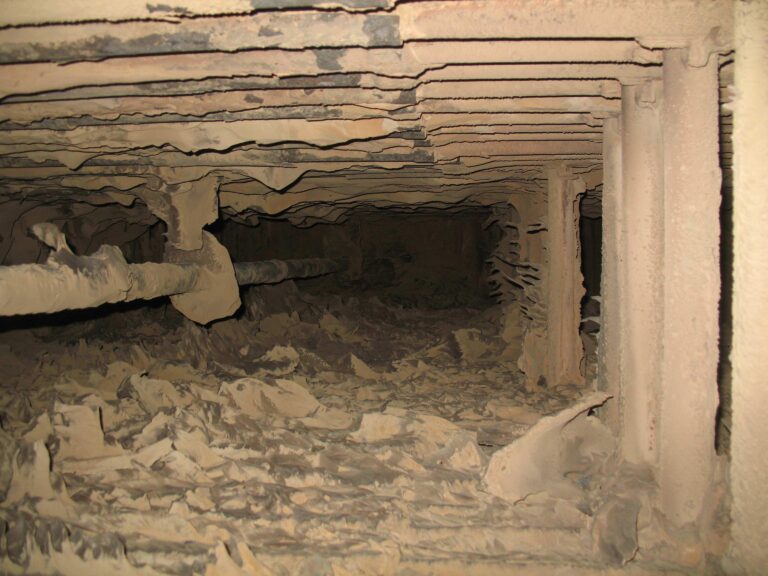
Boiler cleaning intervals become shorter over time because deposits accumulate faster than the original cleaning system was designed to handle. As fouling layers harden and thicken, each cleaning cycle removes less material, leaving a residual base that compounds with every subsequent cycle. The result is a progressively shrinking window between necessary cleaning events. The sections below examine the specific mechanisms behind this trend and what plant operators can do about it.
What causes deposits to build up faster in boilers over time?
Deposits build up faster in boilers over time because the initial fouling layer changes the surface conditions that govern how new material adheres. A clean heat transfer surface is relatively resistant to bonding. Once a thin deposit layer forms, its rougher, more porous texture gives incoming ash, slag, and combustion byproducts more surface area to grip. Each layer that forms accelerates the formation of the next.
In industrial boiler systems, the furnace alone accounts for roughly 50% of total heat transfer. This makes it the zone where deposit accumulation has the greatest impact on overall performance. High temperatures in the furnace cause molten or semi-molten particles to strike the membrane walls and solidify on contact, a process known as slagging. Over time, these slag formations grow denser and more firmly bonded to the surface, making them progressively harder to remove with the same cleaning energy.
In the superheater, reheater and economiser zones, the mechanism shifts toward dry fouling and chemical bonding. Alkali compounds from certain fuels react with sulfur oxides in the flue gas to form sticky intermediate layers that act as a glue for further particulate accumulation. Once this chemical bonding phase is established, deposit growth accelerates significantly compared to the early operational period of the boiler.
How does fouling affect heat transfer efficiency in boiler systems?
Fouling reduces heat transfer efficiency in boiler systems by acting as an insulating layer between the combustion gases and the heat exchange surfaces. Even a thin deposit significantly increases thermal resistance, forcing the boiler to consume more fuel to achieve the same steam output. As the deposit layer thickens, this efficiency loss compounds, and the gap between actual and designed performance widens.
The practical consequence is measurable: flue gas exit temperatures rise as heat that should have been transferred to the working fluid passes through the boiler unabsorbed. Higher exit temperatures signal wasted energy and indicate that the boiler is working harder than necessary. Over time, this translates into increased fuel consumption, higher CO₂ emissions and greater thermal stress on downstream components.
Corrosion is a secondary but serious consequence. Deposits trap moisture and corrosive compounds against the tube surface, creating localized chemical environments that attack the base material. This accelerates tube wall thinning and can lead to unplanned shutdowns that are far more costly than any scheduled maintenance event.
Why do cleaning systems lose effectiveness as deposits harden?
Cleaning systems lose effectiveness as deposits harden because the mechanical or thermal energy they deliver is calibrated for a specific deposit type and thickness. Fresh, loose deposits respond well to steam or air blowing. As deposits age and sinter, they develop a ceramic-like hardness that the same cleaning medium can no longer dislodge. The cleaning system continues operating on its original schedule but removes progressively less material per cycle.
This creates a ratchet effect. Each cleaning cycle that fails to fully remove the deposit leaves a harder residual base. The next cycle starts from a worse position. Over months or years, the effective cleaning depth per cycle shrinks while the deposit base grows, which is the direct mechanical reason why cleaning intervals must be shortened just to maintain acceptable boiler efficiency.
The geometry of the deposit also matters. Irregular, layered formations develop internal stress fractures as they heat and cool through operational cycles. These fractures can cause large sections to detach suddenly, which risks damage to the hopper area below the furnace. A cleaning strategy that only addresses surface fouling without accounting for the structural behaviour of mature deposits will consistently underperform.
What role does fuel type change play in shortening cleaning cycles?
Changing fuel types is one of the fastest ways to shorten boiler cleaning cycles because different fuels produce fundamentally different deposit chemistries and distributions. A cleaning system optimized for one fuel profile will be mismatched when the fuel changes, even if the thermal load remains the same. The result is accelerated fouling that the existing cleaning schedule cannot keep pace with.
Biomass fuels, for example, tend to have higher alkali content than coal. Potassium and sodium compounds in biomass ash lower the melting point of deposits, making them stickier at temperatures where coal ash would remain dry and loose. Waste-to-energy plants face an even more variable challenge: the composition of municipal solid waste shifts continuously, meaning the deposit chemistry in the furnace and empty passes changes from day to day.
Plants that have transitioned from coal to biomass or that now co-fire multiple fuel types often find that their original cleaning systems were sized and scheduled for a narrower operating envelope. The inhomogeneous deposit distribution that results from variable fuel mixtures means some zones foul rapidly while others remain relatively clean. A fixed cleaning schedule applied uniformly across the boiler will over-clean some areas and under-clean others, accelerating wear on cleaning equipment while still allowing problematic deposits to build in the neglected zones.
When should a plant consider upgrading its boiler cleaning system?
A plant should consider upgrading its boiler cleaning system when the cleaning interval has shortened to the point where it is affecting plant availability, when fuel type has changed significantly since the original system was installed, or when deposit-related corrosion or efficiency losses are measurable and recurring. These are operational signals that the installed system is no longer matched to the actual fouling conditions.
Other indicators worth monitoring include rising flue gas exit temperatures that do not respond to increased cleaning frequency, visible clinker formations in the furnace that the current system cannot prevent, and increasing spare parts consumption on cleaning equipment caused by operating at higher intensity to compensate for reduced effectiveness.
Plants that inherited their cleaning systems from the original construction phase are particularly likely to be running equipment chosen for lowest upfront cost rather than long-term performance. In these cases, the business case for upgrading is built on the cumulative cost of shortened intervals, increased fuel consumption, unplanned downtime and accelerated component wear, compared against the investment in a system properly matched to current operating conditions.
How can optimized cleaning strategies slow the interval shortening trend?
Optimized cleaning strategies slow the interval shortening trend by targeting deposits before they harden and by adapting cleaning intensity to actual fouling conditions rather than following a fixed schedule. Demand-driven cleaning, which responds to real-time deposit data rather than elapsed time, prevents the ratchet effect described earlier by intervening at the point where deposits are still removable with standard cleaning energy.
The key shift is from time-based to condition-based cleaning. A fixed schedule treats all zones of the boiler identically regardless of how they are actually fouling. A condition-based approach uses sensor data and diagnostic tools to identify where deposits are forming, how quickly they are hardening and which cleaning medium and intensity will be most effective. This allows cleaning energy to be concentrated where it is needed and reduced where it is not, which extends the life of cleaning equipment and reduces steam or water consumption.
Matching the cleaning medium to the deposit type is equally important. Steam and air blowers are effective against loose, dry deposits but lose effectiveness against sintered or chemically bonded fouling. Water-based cleaning systems deliver higher impact energy and are better suited to heavy slagging in furnace zones. Using the right medium in the right zone at the right time is what separates a cleaning strategy that maintains stable intervals from one that requires constant shortening to stay ahead of fouling.
How Clyde Bergemann supports boiler efficiency in industrial plants
We have been developing on-load boiler cleaning solutions for industrial boiler systems for around 100 years, and the challenge of shortening cleaning intervals is one we address directly through both technology and operational expertise. Our approach combines the right cleaning equipment for each boiler zone with demand-driven control systems that adapt to actual deposit conditions rather than fixed schedules.
- Zone-specific cleaning systems: We supply solutions for every application field within a boiler, from furnace wall cleaning with water-based SMART Cannon systems to retractable and oscillating sootblowers for superheater and reheater zones, and rapping systems for economisers with loose or variable deposits.
- Demand-driven cleaning with SMART Clean: Our SMART Clean philosophy replaces fixed cleaning schedules with condition-based intervention, targeting deposits before they harden and reducing unnecessary cleaning cycles that wear out equipment without improving boiler efficiency.
- Fuel flexibility support: Our systems are designed to handle variable fuel mixtures and changing fuel quality, which is particularly relevant for Waste-to-Energy and biomass plants where deposit chemistry shifts continuously.
- Diagnostics and controls integration: We integrate cleaning equipment with digital controls and diagnostic technology so your team has clear visibility of deposit conditions and cleaning performance across all boiler zones.
- Service and training: Our engineers support inspection, maintenance and employee training, drawing on more than 60 years of procedural expertise in power plant boiler cleaning.
If your cleaning intervals are shortening and you want to understand whether your current system is still matched to your operating conditions, Clyde Bergemann’s boiler efficiency solutions cover the full range of technologies discussed in this article. To discuss your specific plant situation, you are welcome to get in touch with our team directly.
Related Articles
- What to look for when evaluating boiler cleaning systems for industrial plants
- What happens when a boiler cleaning system fails mid-operation?
- How do you measure the cleaning effectiveness of a boiler sootblower?
- How does ash carry-over in boilers cause heat transfer problems?
- How much efficiency does a fouled boiler lose?