

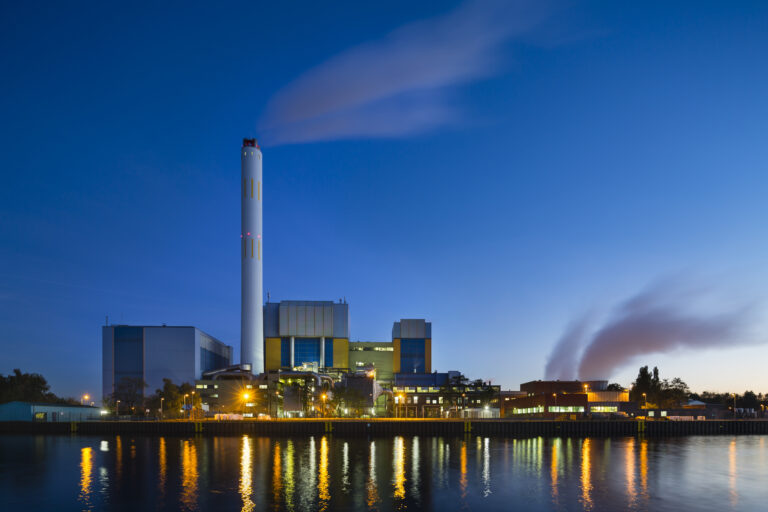
Boiler fouling in waste-to-energy plants is significantly more aggressive and chemically complex than in coal-fired boilers. The core difference lies in fuel composition: municipal solid waste contains chlorine, heavy metals and highly variable organic material that coal simply does not, producing deposits that are stickier, more corrosive and far less predictable. The sections below unpack each dimension of that difference, from deposit chemistry to cleaning strategy.
Why is waste-to-energy fuel so much harder on boilers than coal?
Waste-to-energy fuel is harder on boilers than coal because municipal solid waste is chemically heterogeneous and contains high concentrations of chlorine, alkali metals and heavy metals that coal does not. These elements react with combustion gases and boiler surfaces in ways that accelerate both fouling and corrosion simultaneously, creating a far more hostile operating environment.
Coal is a relatively consistent fuel. Its combustion chemistry is well understood, its ash composition is predictable and its fouling behavior follows patterns that plant operators have managed for decades. Municipal solid waste, by contrast, is a mixture of plastics, food waste, paper, textiles, metals and everything else that enters the waste stream. That variability does not disappear during combustion. It translates directly into fluctuating flame temperatures, shifting gas compositions and deposits that change character from one hour to the next.
The chlorine content of waste fuel is particularly significant. Coal contains very little chlorine, typically well under 0.1% by weight. Municipal solid waste can contain chlorine levels many times higher, primarily from plastics such as PVC and from organic material. When chlorine-rich gases contact boiler surfaces, they initiate corrosion mechanisms that are largely absent in coal combustion. This is not a marginal difference in degree. It is a qualitative difference in the type of problem plant operators face.
Heavy metals present in waste, including lead, zinc and cadmium, add another layer of complexity. These metals form low-melting-point compounds that remain partially molten at typical superheater temperatures, causing deposits to bond tenaciously to tube surfaces rather than remaining loose and friable, as coal ash tends to be.
What types of deposits form in waste-to-energy boilers?
Waste-to-energy boilers accumulate several distinct deposit types: sintered ash layers on furnace walls, sticky alkali-chloride deposits on superheater tubes, sulfate-bonded fouling in convective passes and loose fly ash in economiser zones. Each deposit type has different physical properties and responds differently to cleaning.
In the furnace itself, the dominant problem is slagging. High temperatures cause ash particles to soften or melt and adhere to membrane walls. In WtE plants, these slag deposits are often denser and more tenacious than coal slag because of the alkali and heavy metal content. Left unchecked, they grow into clinker formations that can reach significant mass before breaking away, risking damage to the hopper area below.
On superheater and reheater surfaces, the deposit character shifts. Here, alkali chlorides condense from the gas phase onto tube surfaces, forming an initial sticky layer that then captures additional fly ash particles. The result is a layered deposit that is chemically active, meaning it continues to react with the tube metal beneath it rather than simply insulating it. This is fundamentally different from the relatively inert silicate ash deposits typical of coal combustion.
Further downstream in the convective pass, sulfation reactions convert some of the chloride deposits into sulfates, which are harder and more adherent. Economiser surfaces tend to accumulate looser, drier fly ash, but even here the chlorine content of the particles means corrosion risk does not disappear entirely.
How does chlorine change the fouling and corrosion risk in WtE plants?
Chlorine transforms boiler fouling from a thermal efficiency problem into a combined fouling and corrosion problem. In WtE combustion, chlorine forms hydrogen chloride gas and alkali chlorides that condense on tube surfaces at temperatures well above the dew point of water, initiating active oxidation of the underlying steel and accelerating metal loss far beyond what ash deposits alone would cause.
The mechanism works in two stages. First, alkali chlorides such as potassium chloride and sodium chloride condense on superheater tubes, forming the initial deposit layer. Second, these chlorides react with sulfur dioxide in the flue gas to release chlorine gas directly at the tube surface. This released chlorine attacks the protective oxide layer on the tube metal, stripping it away and exposing fresh metal to further attack. The process is self-sustaining as long as chloride supply continues.
This mechanism, sometimes called active oxidation or the chlorine cycle, means that WtE superheater tubes corrode at rates that can be an order of magnitude higher than equivalent surfaces in coal boilers operating at similar temperatures. It is one of the primary reasons WtE plants typically operate their superheaters at lower steam temperatures than coal plants, accepting a thermodynamic efficiency penalty in exchange for acceptable tube life.
The practical implication for maintenance managers is that deposit management in WtE plants is not just about preserving heat transfer. It is about protecting the structural integrity of pressure parts. A deposit layer that would be a minor efficiency concern in a coal boiler can be actively destroying tube metal in a WtE boiler. This changes the urgency and frequency with which cleaning must occur.
Why do WtE boilers foul faster and more unevenly than coal boilers?
WtE boilers foul faster than coal boilers because the sticky, low-melting-point compounds in waste-derived ash bond to surfaces more readily and at lower temperatures. They foul more unevenly because waste fuel composition varies continuously, creating localized zones of intense deposit buildup that shift position depending on what is being burned at any given moment.
In a coal boiler, fouling rates are relatively predictable. The fuel is consistent, combustion conditions are stable and deposit growth follows a pattern that experienced operators can anticipate. Cleaning schedules can be set with reasonable confidence that they will match actual deposit accumulation.
In a WtE plant, the fuel changes constantly. A batch of waste rich in plastics produces different combustion gases and different ash chemistry than a batch dominated by food waste or paper. These shifts happen within hours or even within a single combustion cycle. The result is that deposit distribution across the boiler is inhomogeneous, with some areas accumulating heavy deposits while adjacent surfaces remain relatively clean. This uneven distribution makes fixed-interval cleaning schedules poorly matched to actual conditions.
The physical stickiness of WtE deposits compounds the problem. Because alkali chlorides and heavy metal compounds remain partially molten at furnace and superheater temperatures, incoming fly ash particles adhere to existing deposits rather than bouncing off. This creates a positive feedback effect where deposits grow faster as they grow thicker, because a larger sticky surface captures more particles. Coal ash, being predominantly silicate-based and more refractory, does not exhibit this self-reinforcing growth behavior to the same degree.
What cleaning methods work best for WtE boiler deposits?
The most effective cleaning methods for WtE boiler deposits combine water-based furnace cleaning for heavy slagging with steam or air sootblowers for convective pass surfaces, supported by demand-driven control systems that target cleaning where and when deposits actually require it rather than following a fixed schedule.
Furnace cleaning: water as the primary medium
For furnace walls, water-based cleaning systems outperform steam and air in WtE applications because the thermal shock and mechanical force of a water jet are more effective at dislodging the dense, tenacious slag deposits that form in waste combustion. Systems that create a meander-shaped cleaning pattern across furnace walls ensure that the entire surface receives targeted treatment, not just the areas directly in front of a fixed nozzle. Shower-clean systems mounted on the boiler roof and lowered into the furnace provide 360-degree coverage, which is particularly valuable in larger incinerators where deposit distribution is uneven.
Convective pass and superheater cleaning
In the superheater, reheater and convective pass zones, retractable and part-retractable sootblowers using steam or a combination of steam and water remain the standard approach. The choice between steam-only and water-capable units depends on deposit hardness. Softer, earlier-stage deposits respond well to steam. Harder, sintered deposits that have been allowed to build up may require the additional mechanical energy of water injection. Rapping systems offer an alternative for economiser surfaces and areas with loose, dry deposits, using mechanical vibration to dislodge material without requiring a cleaning medium.
Demand-driven cleaning control
Given how unevenly and unpredictably WtE boilers foul, the control strategy matters as much as the hardware. Demand-driven cleaning, which uses sensor data and boiler performance indicators to identify where deposits are forming and trigger cleaning only where needed, is significantly more effective than time-based schedules in WtE applications. It reduces unnecessary cleaning cycles that consume steam or water, extends the service life of cleaning equipment and ensures that genuinely problematic deposit zones receive attention before they reach a size that threatens availability.
How does fouling management differ operationally between WtE and coal plants?
Fouling management in WtE plants requires more frequent intervention, more adaptive cleaning strategies and closer monitoring of corrosion indicators than in coal plants. Where coal plant operators can rely on established schedules and predictable deposit behavior, WtE operators must treat fouling management as a continuous, data-driven process that responds to fuel variability in near real time.
In coal plants, cleaning intervals are typically set based on historical experience with a known fuel and adjusted seasonally or when fuel quality changes. The deposit chemistry is stable enough that this approach works well. Operators know roughly how long it takes for deposits to reach a level that affects efficiency and schedule cleaning accordingly.
In WtE plants, that predictability does not exist. Fuel composition shifts with every delivery, and the resulting changes in deposit formation can be rapid. An area that was clean yesterday may have significant buildup today if the fuel mix changed. This means WtE operators benefit from continuous monitoring of heat transfer performance across boiler zones, using temperature differentials and pressure drop measurements to detect deposit accumulation as it happens rather than discovering it during scheduled inspections.
Corrosion monitoring adds another operational layer that coal plants rarely need to manage with the same intensity. Tracking tube wall thickness, monitoring flue gas chlorine concentrations and inspecting superheater surfaces for early signs of active oxidation are routine tasks in well-managed WtE facilities. The maintenance burden is higher, the inspection frequency is greater and the consequences of falling behind on cleaning are more severe, because deposits in WtE boilers are not just reducing efficiency but actively damaging pressure parts.
Spare parts availability and service response times also carry greater operational weight in WtE plants. Because components operate under more aggressive conditions, wear rates are higher and the window between a component showing signs of degradation and failing completely can be shorter than in coal applications.
How Clyde Bergemann supports boiler fouling management in WtE plants
We have been developing and supplying on-load boiler cleaning systems for waste-to-energy and biomass plants for decades, and the challenges described in this article are exactly what our product range is built to address. Our boiler efficiency solutions cover every zone of the boiler, from furnace wall cleaning to convective pass sootblowing, with systems designed specifically for the aggressive deposit conditions that WtE combustion produces.
What we offer goes beyond hardware:
- Water-based furnace cleaning systems including the SMART Cannon and Shower-Clean System, designed to remove heavy slagging and clinker deposits without requiring steam or compressed air as a cleaning medium, which reduces operating costs and simplifies maintenance
- Retractable and part-retractable sootblowers for superheater and convective pass zones, with configurations suited to the harder, more chemically active deposits typical of waste combustion
- Demand-driven SMART Clean control technology that targets cleaning based on actual deposit conditions rather than fixed schedules, directly addressing the uneven and unpredictable fouling behavior of WtE boilers
- Rapping systems for economiser surfaces and facilities operating with varying fuel types and loose deposit profiles
- Comprehensive service support including spare parts, inspections and operator training, backed by more than 60 years of experience in power plant boiler cleaning
If you are managing fouling challenges in a WtE or biomass facility and want to discuss what a more effective cleaning strategy could look like for your specific plant, get in touch with our team.
Related Articles
- Why is regular sootblowing important for combustion efficiency?
- How do you know if your current boiler cleaning system is underperforming?
- How regular boiler cleaning reduces unplanned shutdowns
- What happens if an industrial boiler runs without an online cleaning system?
- What is the difference between on-load and offline boiler cleaning?