

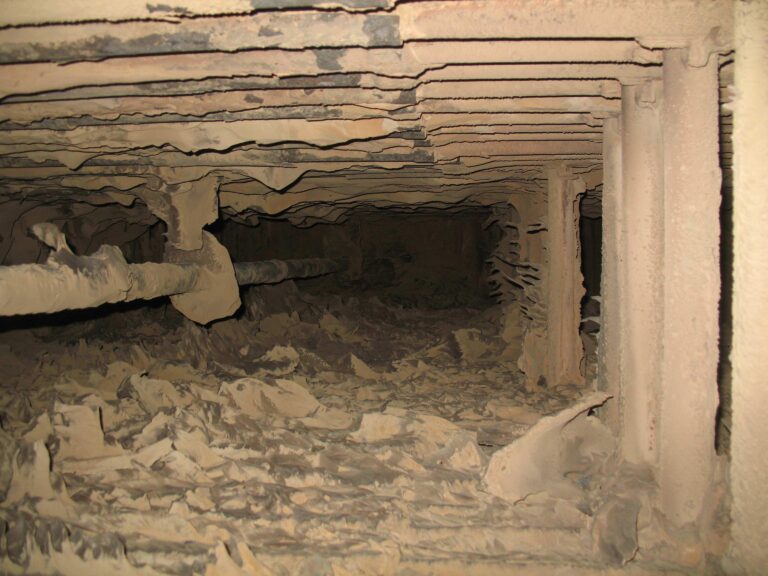
Steam output drops in a boiler even at stable load when heat transfer surfaces become coated with deposits that insulate the flue gas from the water or steam inside the tubes. The boiler burns the same amount of fuel, but less of that energy reaches the working fluid. This is one of the most common and underdiagnosed efficiency losses in industrial boiler systems, and it tends to worsen gradually before it shows up clearly in output data. The sections below address the specific mechanisms, deposit types, and intervention points that matter most for maintaining boiler efficiency.
What causes heat transfer loss in a boiler without load changes?
Heat transfer loss without any change in boiler load is almost always caused by deposit accumulation on heating surfaces. As ash, slag, or other combustion byproducts build up on tube walls and furnace surfaces, they act as thermal insulation. The combustion process continues at the same rate, but the energy that should transfer into steam production is instead absorbed or blocked by the deposit layer.
The furnace alone accounts for approximately 50% of total heat transfer in a boiler. Even a relatively thin deposit layer on furnace walls or superheater tubes can measurably reduce the amount of heat reaching the working fluid. The result is that flue gas exits the boiler at a higher temperature than it should, carrying away energy that was never converted into steam. Operators often notice rising flue gas exit temperatures before they see a drop in steam output, which makes this metric a useful early indicator.
Other contributing factors include changes in fuel composition, combustion air distribution, and burner performance, but these typically produce more immediate and visible effects. Gradual heat transfer loss that tracks with operating hours rather than operational changes almost always points to fouling.
What types of deposits reduce steam output most severely?
The deposits that reduce steam output most severely are those with low thermal conductivity that bond tightly to heat transfer surfaces. Dense, sintered slag layers and chemically bonded ash deposits are significantly more damaging than loose, powdery fouling because they are harder to remove and provide greater thermal resistance per unit of thickness.
In Waste-to-Energy and biomass plants, chlorine and alkali compounds in the fuel promote the formation of sticky, corrosive deposits that adhere strongly to superheater and furnace wall surfaces. These deposits are particularly problematic because they combine thermal insulation with accelerated corrosion, degrading the tube surface itself over time. In coal-fired systems, calcium and iron-rich slags can fuse into hard clinker formations that are difficult to dislodge without mechanical intervention.
The location of the deposit also determines its impact. Deposits in the furnace and on superheater surfaces affect the highest-temperature heat exchange zones, where the thermal gradient is steepest and the potential for heat transfer is greatest. A deposit in these zones causes proportionally more output loss than the same deposit thickness in a lower-temperature zone such as the economiser.
How does fouling progress before it becomes visible in output data?
Fouling progresses through a gradual accumulation phase that can span weeks or months before it produces a measurable drop in steam output. In the early stages, deposits are thin and loosely bonded, and the boiler’s control systems compensate automatically by adjusting fuel input or air flow. This compensation masks the underlying efficiency loss until the deposit layer becomes thick enough to exceed the system’s ability to self-correct.
The first measurable signals are typically indirect: flue gas exit temperature rises, fuel consumption increases slightly for the same output, and the temperature differential across specific heat exchange zones narrows. These changes are often within the normal operating range and easy to attribute to fuel quality variation or ambient conditions rather than fouling.
As deposits thicken and harden, the compensation mechanisms reach their limits. At this point, steam output begins to fall even though fuel input remains constant. By the time the drop is clearly visible in output data, the deposit layer is often already substantial and may require more aggressive cleaning or, in severe cases, a planned shutdown. Monitoring flue gas temperatures and heat transfer coefficients continuously gives operators a much earlier warning than steam output figures alone.
What’s the difference between slagging and fouling in boiler systems?
Slagging and fouling are both forms of deposit accumulation in boilers, but they occur in different temperature zones and involve different physical and chemical mechanisms. Slagging refers to the melting and resolidification of ash particles on surfaces exposed to high radiant heat, primarily in the furnace. Fouling refers to the bonding of ash particles to convective heat transfer surfaces downstream of the furnace, where temperatures are lower and the mechanism is primarily chemical rather than thermal.
Slagging: high-temperature radiant zones
Slagging occurs when ash particles in the flue gas reach their softening or melting point and adhere to furnace walls or other high-temperature surfaces. Once bonded, they can grow into thick, hard clinker formations. In severe cases, large clinker masses break free under their own weight and fall into the hopper area, causing physical damage to the boiler structure. Slagging is strongly influenced by fuel mineral content, particularly the ratio of basic to acidic oxides in the ash.
Fouling: convective heat transfer surfaces
Fouling develops on superheater, reheater, and economiser surfaces where flue gas temperatures are lower. Here, alkali sulfates and chlorides condense onto tube surfaces and react chemically with the ash layer, creating a bonded deposit that grows over time. Fouling deposits are often more chemically aggressive than slag and can accelerate corrosion beneath the deposit layer. In biomass and Waste-to-Energy plants, the high chlorine and alkali content of the fuel makes fouling on superheater surfaces a particularly serious operational challenge.
How can boiler cleaning systems restore steam output without shutdown?
On-load boiler cleaning systems restore steam output by removing deposits from heat transfer surfaces while the boiler continues to operate at full or partial load. This eliminates the need for a planned shutdown to address fouling and allows operators to maintain output continuity. The cleaning medium, whether steam, compressed air, or water, is directed at deposit-covered surfaces to dislodge and carry away accumulated material.
Different zones of the boiler require different cleaning approaches. In the furnace, where slagging is the primary challenge, water-based cleaning systems deliver targeted jets that break up and flush away slag from membrane wall surfaces. In the superheater and reheater sections, retractable or oscillating sootblowers using steam or air clean between tube banks without damaging the tubes themselves. In the economiser and air preheater, rake-type or rotating element sootblowers address the looser, more powdery deposits typical of these lower-temperature zones.
The effectiveness of on-load cleaning depends heavily on timing and targeting. Cleaning too infrequently allows deposits to harden and bond, making them much harder to remove. Cleaning too frequently can cause unnecessary thermal stress on tube surfaces. Demand-driven cleaning systems that monitor actual deposit conditions and trigger cleaning only when and where it is needed represent a significant improvement over fixed-interval cleaning schedules, both in cleaning effectiveness and in reducing wear on the cleaning equipment itself.
When should a steam output drop trigger an inspection or intervention?
A steam output drop should trigger inspection or intervention when it cannot be explained by changes in fuel quality, load demand, or ambient conditions and persists across multiple operating shifts. A sustained drop of more than a few percent in steam production at constant fuel input is a reliable signal that heat transfer surfaces are fouled beyond what the existing cleaning system is managing.
Specific thresholds depend on the boiler design and the baseline performance data for that unit, but the following conditions consistently warrant immediate attention:
- Flue gas exit temperature rising above the expected range for the current load and fuel type
- Increasing fuel consumption to maintain the same steam output over a period of days
- Visible changes in flame shape or combustion behaviour that suggest altered heat distribution
- Abnormal temperature differentials across individual heat exchange zones
- Clinker formations large enough to risk falling and damaging the hopper area
Waiting until steam output loss becomes severe before intervening significantly increases the cost and complexity of remediation. Deposits that have had time to sinter or chemically bond to tube surfaces may require more intensive cleaning methods or, in the worst cases, manual removal during a shutdown. Establishing clear intervention thresholds based on continuous monitoring data, rather than relying on periodic manual checks, gives maintenance teams the lead time they need to respond before efficiency losses compound.
How Clyde Bergemann Supports Boiler Efficiency in Practice
We work with operators across power generation, Waste-to-Energy and biomass facilities to address exactly the kind of efficiency losses described in this article. Our approach combines the right cleaning technology for each boiler zone with intelligent controls that respond to actual deposit conditions rather than fixed schedules.
- Zone-specific cleaning systems: From water-based SMART Cannon systems for furnace slagging to retractable and oscillating sootblowers for superheater and economiser fouling, we match the cleaning method to the deposit type and location.
- Demand-driven cleaning with SMART Clean: Our SMART Clean platform monitors deposit build-up in real time and triggers cleaning only where and when it is needed, reducing thermal stress on tubes and improving overall cleaning effectiveness.
- Flexible fuel compatibility: Our systems are designed to handle the variable fuel compositions common in biomass and Waste-to-Energy plants, where deposit characteristics change with each fuel batch.
- More than 60 years of application experience: Our engineering teams draw on decades of boiler cleaning expertise to design systems that fit the specific conditions of each plant, not generic off-the-shelf configurations.
- Comprehensive service and spare parts support: We provide ongoing maintenance, training and spare parts availability to keep cleaning systems operating reliably under the extreme conditions of industrial boiler environments.
If you are seeing unexplained drops in steam output or rising fuel consumption, our Clyde Bergemann boiler efficiency solutions are a practical starting point for identifying and addressing the root cause. To discuss your specific plant situation, get in touch with our engineering team.
Related Articles
- What causes boiler fouling in waste-to-energy plants?
- What is sootblowing and why does it matter for boilers?
- How to extend boiler service life under high-temperature operating conditions
- How is boiler fouling different in waste-to-energy plants compared to coal?
- How does boiler cleaning reduce fuel consumption and emissions?