

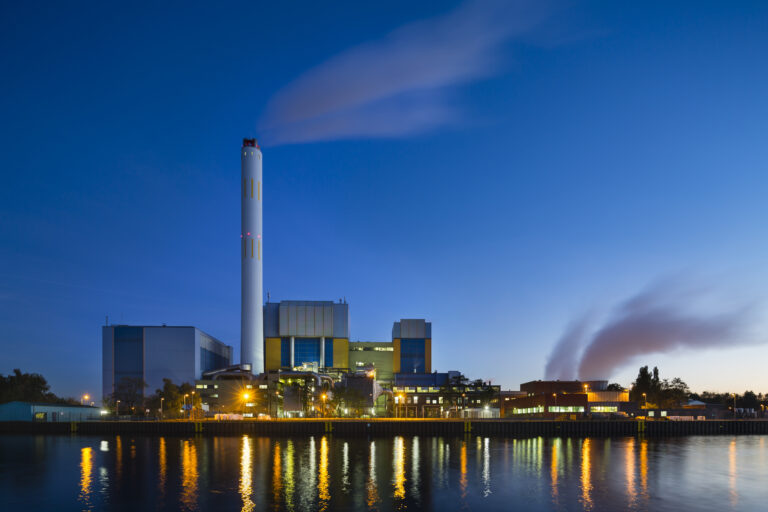
Yes, on-load cleaning systems can meaningfully reduce corrosion in waste boilers — not by eliminating the chemical conditions that cause it, but by removing the deposits that accelerate it. In waste-to-energy and biomass combustion, fouling layers trap corrosive compounds against metal surfaces and disrupt heat transfer, creating the thermal and chemical conditions where corrosion thrives. The sections below unpack how that process works, what types of corrosion are most common, and what on-load cleaning can and cannot do about it.
How does fouling lead to corrosion in waste-to-energy boilers?
Fouling leads to corrosion in waste-to-energy boilers by creating a chemically aggressive environment directly on heat transfer surfaces. When combustion gases carry ash, chlorides, alkali compounds, and sulfur species, these materials deposit on furnace walls, superheater tubes, and economiser surfaces. The deposit layer then acts as both an insulator and a reservoir for corrosive agents, concentrating them against the metal beneath.
The insulating effect of fouling raises the temperature of the tube wall surface underneath the deposit. This elevated temperature accelerates the rate of chemical reactions between the metal and the corrosive compounds trapped in the deposit. Chlorine-bearing compounds, which are particularly common in municipal solid waste and refuse-derived fuel combustion, are especially damaging in this context. They form low-melting-point eutectics that remain partially molten at operating temperatures, sustaining continuous contact between aggressive chemistry and the metal surface.
Alkali sulfates and chlorides also participate in a cyclic corrosion mechanism: sulfation reactions convert chlorides back into sulfates, releasing hydrogen chloride gas that attacks the metal; then the cycle repeats. Without deposit removal, this process continues uninterrupted. Keeping surfaces clean interrupts the cycle and limits the time corrosive compounds spend in contact with the tube wall.
What types of corrosion are most common in waste boilers?
The most common types of corrosion in waste boilers are high-temperature chlorine corrosion, sulfate-induced hot corrosion, and low-temperature acid dew point corrosion. Each occurs in a different zone of the boiler and is driven by a different chemical mechanism, though all are worsened by deposit accumulation.
High-temperature chlorine corrosion is the dominant concern in the furnace and superheater regions. Chlorine compounds from waste fuels react with iron and chromium in the tube alloy, forming volatile metal chlorides that migrate outward through the oxide layer and oxidise at the surface, continuously consuming the base metal. This mechanism is particularly aggressive in grate-fired waste boilers where fuel chlorine content varies.
Sulfate-induced hot corrosion occurs when alkali sulfate deposits melt onto superheater surfaces. The molten deposit dissolves the protective oxide layer on the tube, exposing fresh metal to further attack. This type of corrosion is strongly temperature-dependent, which is why controlling tube surface temperature through effective heat transfer is important.
At the cooler end of the boiler, in the economiser and air preheater zones, acid dew point corrosion becomes relevant. Sulfur trioxide in the flue gas combines with moisture to form sulfuric acid, which condenses on surfaces that fall below the acid dew point temperature. Fouling in these zones can lower local surface temperatures unevenly, creating cold spots where condensation occurs.
How do on-load cleaning systems reduce deposit-driven corrosion?
On-load cleaning systems reduce deposit-driven corrosion by removing fouling layers before they can establish the thermal and chemical conditions that accelerate metal attack. By keeping heat transfer surfaces clean during operation, these systems prevent the temperature escalation under deposits and limit the residence time of corrosive compounds against tube walls.
Different cleaning technologies address different zones of the boiler. In the furnace, water cannons and shower-clean systems dislodge slagging from membrane walls using targeted water jets. The SMART Cannon, for example, uses a precisely controlled linear drive to create a meander-shaped cleaning pattern across furnace walls, ensuring systematic coverage rather than spot cleaning. Wall blowers using steam or air address lighter deposits on membrane wall heating surfaces.
In the superheater and reheater regions, retractable and oscillating sootblowers remove fouling from tube banks using steam or air. Part-retractable sootblowers can also use water for heavier deposits. In the economiser, rapping systems mechanically dislodge loose deposits from heating surfaces, which is particularly useful when fuel composition varies and deposit character changes frequently.
The timing and targeting of cleaning also matter. Demand-driven cleaning, which responds to actual deposit conditions rather than a fixed schedule, avoids both under-cleaning and over-cleaning. Over-cleaning with water or steam carries its own risks, including thermal shock to tube surfaces, so applying the right cleaning medium at the right moment is important for protecting tube integrity while managing fouling.
For operators working across biomass and waste combustion, the challenge is compounded by variable fuel quality, which changes deposit composition and distribution unpredictably. On-load systems that can adapt to these variations provide more consistent corrosion protection than fixed-interval approaches.
Can on-load cleaning fully prevent corrosion, or only slow it down?
On-load cleaning systems slow corrosion significantly but cannot fully prevent it. Corrosion in waste boilers is driven by the fundamental chemistry of the fuel and combustion environment, which no cleaning system eliminates. What cleaning does is reduce the severity and rate of corrosion by limiting the conditions under which it accelerates most rapidly.
Even with effective on-load cleaning, some deposit formation between cleaning cycles is inevitable. During those intervals, corrosive compounds remain in contact with tube surfaces. The goal of on-load cleaning is to keep deposit thickness and composition within a range where corrosion rates remain manageable and do not threaten tube integrity between planned maintenance intervals.
Material selection, flue gas temperature management, and boiler design all contribute to corrosion control alongside cleaning. On-load cleaning works best as one layer of a broader corrosion management strategy, not as a standalone solution. That said, its contribution is substantial: consistent deposit removal reduces the frequency and severity of corrosion-related tube failures, which directly extends the intervals between forced outages and tube replacement campaigns.
What’s the difference between on-load cleaning and offline chemical cleaning for corrosion control?
On-load cleaning operates continuously during boiler operation to prevent deposit accumulation, while offline chemical cleaning is performed during planned shutdowns to dissolve or remove deposits that have already formed. The two approaches address corrosion at different stages and serve different purposes in a maintenance strategy.
On-load cleaning is preventive. By removing deposits as they form, it keeps heat transfer surfaces in a condition where corrosive compounds cannot concentrate and dwell. It requires no boiler shutdown and does not interrupt power or steam production. The trade-off is that it cannot address deposits in zones that are inaccessible to the cleaning medium, or deposits that have hardened beyond what the cleaning system can dislodge.
Offline chemical cleaning is corrective. It uses acid or alkaline solutions circulated through the boiler circuit to dissolve scale, oxide layers, and stubborn deposits that have built up over time. It is thorough but requires a full outage, introduces its own risks if not managed carefully, and is typically reserved for situations where deposit accumulation has already affected performance or where a major inspection is due.
In practice, effective corrosion management uses both: on-load cleaning to minimise deposit accumulation during operation and reduce the frequency with which offline cleaning is needed, and offline cleaning during scheduled outages to address what on-load systems cannot reach. Plants with well-maintained on-load cleaning programmes typically find that offline cleaning intervals can be extended, reducing the total number of shutdowns required.
How does effective boiler cleaning affect plant availability and maintenance intervals?
Effective boiler cleaning directly extends plant availability by reducing unplanned shutdowns caused by fouling-related failures. Deposit accumulation that goes unmanaged leads to tube overheating, accelerated corrosion, and eventually tube failures that force emergency outages. Consistent on-load cleaning keeps these failure modes in check, allowing the plant to run for longer between forced stops.
Maintenance intervals also lengthen when cleaning is effective. Corrosion-driven tube thinning progresses more slowly when deposits are regularly removed, which means tube inspection campaigns find less damage and tube replacement is needed less frequently. This reduces both the direct cost of replacement materials and the indirect cost of the outage time required to carry out the work.
Boiler efficiency is a related benefit. Clean heat transfer surfaces transfer heat more effectively, which means the boiler reaches target steam conditions with less fuel input. As fouling builds up, efficiency drops and fuel consumption rises to compensate. On-load cleaning maintains the heat transfer performance that the boiler was designed to deliver, keeping operating costs stable over time.
For waste-to-energy and biomass operators, where plant availability directly determines how much waste is processed and how much energy is sold, the commercial value of avoiding unplanned outages is significant. A plant that runs reliably for longer stretches between maintenance windows generates more revenue and processes more waste than one that suffers frequent fouling-related interruptions.
How Clyde Bergemann supports corrosion control in waste and biomass boilers
We have been developing and applying boiler cleaning technology for more than 60 years, and our experience with waste-to-energy and biomass combustion informs every system we design. Our Clyde Bergemann boiler efficiency solutions cover every zone of the boiler, from furnace to economiser, with cleaning systems matched to the deposit type, fuel composition, and operating conditions of each application.
- On-load cleaning systems for furnace, superheater, reheater, economiser, and air preheater zones, using water, steam, or air as appropriate
- Demand-driven cleaning control through SMART Clean diagnostics, which adapts cleaning to actual deposit conditions rather than fixed schedules
- Proven references across waste incineration and biomass plants in Europe and beyond, including grate-fired, fluidised-bed, and co-firing configurations
- Engineering consultation to select the right combination of cleaning technologies for your specific fuel mix and boiler design
- Comprehensive service support including spare parts, maintenance, and operator training delivered by our own engineers
If you are managing fouling and corrosion challenges in a waste or biomass boiler and want to understand which cleaning approach fits your plant, we are glad to help. Get in touch to discuss your situation with our team.
Related Articles
- The future of boiler cleaning technology and what engineers need to know
- How can boiler operators reduce cleaning-related maintenance?
- Can you retrofit an on-load cleaning system to an existing boiler?
- How is boiler fouling different in waste-to-energy plants compared to coal?
- What happens inside a waste-to-energy boiler during operation?