

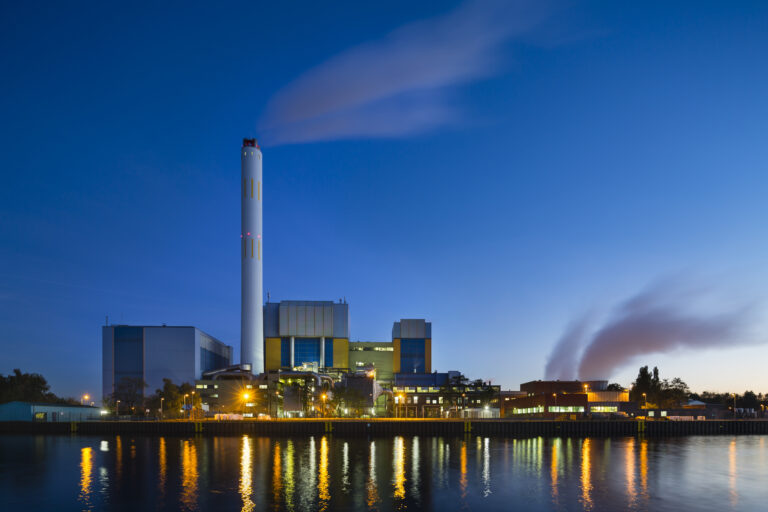
A waste-to-energy boiler operates as a high-temperature combustion system that burns municipal solid waste to generate steam, which drives turbines to produce electricity. Inside the boiler, temperatures in the furnace zone regularly exceed 850°C, and the system must handle an unpredictable fuel mix that creates unique challenges for heat transfer, deposit formation, and long-term efficiency. The sections below answer the most common technical questions about what actually happens inside a WtE boiler during live operation.
What temperatures and pressures does a waste-to-energy boiler actually reach?
In a waste-to-energy boiler, furnace temperatures typically range between 850°C and 1,100°C during normal combustion. Steam pressures in modern WtE plants commonly operate between 40 and 60 bar, with steam temperatures reaching 400°C or higher depending on the plant design. These operating conditions are set partly by efficiency targets and partly by regulatory requirements for complete combustion of hazardous compounds.
The 850°C minimum furnace temperature is not arbitrary. European regulations require that flue gases remain at or above this temperature for at least two seconds to ensure the thermal destruction of dioxins and furans. This regulatory floor shapes the entire thermal design of the boiler and influences where heat exchange surfaces are positioned.
Compared to coal-fired power plants, WtE boilers typically operate at lower steam parameters. This is a deliberate design choice driven by the corrosive nature of the flue gas. Higher steam temperatures would require more aggressive alloys in the superheater zone, where chlorine-rich deposits accelerate metal wastage. Plant operators therefore balance the efficiency gains of higher steam parameters against the accelerated corrosion and maintenance costs that come with them.
How does combustion work when the fuel is municipal solid waste?
Combustion in a waste-to-energy boiler follows the same fundamental chemistry as any carbon-based fuel: organic material reacts with oxygen to release heat, carbon dioxide, and water vapour. However, municipal solid waste is an extremely heterogeneous fuel. Its composition changes hour by hour depending on what households and businesses discard, which makes stable combustion significantly harder to achieve than with coal or natural gas.
Most WtE plants use a moving grate system to manage this variability. Waste is fed onto a series of mechanical grates that agitate and advance the material through the furnace, exposing fresh surfaces to the combustion air. Primary air is injected from below the grate to support ignition and burnout of the solid material. Secondary air is injected at higher levels to complete combustion of volatile gases rising from the burning waste and to control flame shape and temperature distribution.
The calorific value of municipal solid waste varies considerably. Wet organic fractions reduce the effective energy content, while plastics and paper increase it. Operators must continuously adjust air supply, grate speed, and waste feed rate to maintain stable combustion and keep furnace temperatures within the required range. This variability is one reason why deposit formation inside WtE boilers is more aggressive and less predictable than in plants burning homogeneous fuels.
What causes fouling and slagging inside a waste-to-energy boiler?
Fouling and slagging in a waste-to-energy boiler are caused by the deposition of ash particles, condensed salts, and partially melted mineral compounds on heat transfer surfaces. Municipal solid waste contains high concentrations of chlorine, alkali metals such as potassium and sodium, and heavy metals. When these compounds combust and enter the flue gas stream, they condense or solidify on cooler surfaces, forming layers of deposit that grow progressively thicker over time.
Slagging in the furnace zone
Slagging occurs primarily in the furnace where temperatures are highest. Ash particles that reach a semi-molten or sticky state adhere to furnace walls and form hard, glassy deposits. The furnace alone accounts for approximately 50% of total heat transfer in a boiler, making slagging in this zone particularly damaging to overall plant performance. As slag layers build up, they insulate the membrane walls, reducing heat absorption and forcing more thermal energy into the downstream passes. Large clinker formations can also break away under their own weight and fall into the hopper area, causing mechanical damage.
Fouling in convective passes
Further downstream, where flue gas temperatures drop, fouling takes a different form. Alkali chlorides and sulphates condense onto superheater tubes and economiser surfaces, forming softer but highly corrosive deposits. These layers are chemically aggressive because chlorine compounds attack the protective oxide layer on tube surfaces, accelerating metal loss. The distribution of deposits across convective passes is rarely uniform. Flue gas velocity, local temperature gradients, and tube geometry all influence where deposits accumulate most heavily, which makes targeted cleaning more effective than blanket cleaning schedules.
How do deposits affect heat transfer and boiler efficiency?
Deposits act as thermal insulators on heat transfer surfaces. Even a thin layer of ash or slag significantly reduces the rate at which heat passes from the flue gas into the water or steam inside the tubes. As deposit thickness increases, the boiler must burn more fuel to achieve the same steam output, fuel consumption rises, and overall plant efficiency falls.
The relationship between deposit thickness and efficiency loss is not linear. Initial deposit layers form quickly and cause a disproportionate drop in heat transfer because the first millimetres of insulating material have the greatest effect. Subsequent layers add less marginal resistance, but they increase the risk of corrosion beneath the deposit and raise the probability of a forced shutdown for manual cleaning.
Reduced heat absorption in the furnace and early convective passes also means that flue gas arrives at downstream surfaces at higher temperatures than designed. This shifts the thermal load onto sections of the boiler that were not sized to handle it, accelerating wear and potentially pushing flue gas temperatures at the stack above permitted limits. For plant operators, the practical consequence is a narrowing window between acceptable performance and a situation that requires taking the unit offline.
What happens to flue gas as it travels through the boiler passes?
Flue gas generated in the furnace travels upward and then through a series of convective passes, losing heat progressively at each stage. In the first empty pass above the furnace, gas temperatures are still high enough that deposits remain partially molten. As the gas moves through the superheater, reheater, and economiser zones, temperatures drop steadily and the character of the deposits changes from sticky slag to harder, more crystalline fouling layers.
In the superheater zone, flue gas temperatures typically fall from around 700-900°C at the inlet to 400-500°C at the outlet, depending on plant design. This is the zone where corrosion risk is highest because chlorine-rich deposits are most chemically active at these intermediate temperatures. The economiser recovers additional heat from the flue gas before it exits to the air pollution control system, with gas temperatures dropping to 150-250°C at the economiser outlet.
Throughout this journey, the flue gas carries particulate matter, condensing vapours, and reactive chemical species. The velocity and direction of the gas flow influence where particles drop out of suspension and where they impact surfaces. Bends, tube banks, and changes in duct cross-section create turbulence that concentrates deposition in specific areas. Understanding these flow patterns is important for positioning cleaning equipment where it will have the greatest effect on maintaining heat transfer performance.
How is boiler cleaning carried out during live operation?
On-load boiler cleaning removes deposits from heat transfer surfaces while the boiler continues to operate at full or partial load, avoiding the need for costly shutdowns. The cleaning medium is either steam, air, or water, delivered through equipment positioned at strategic points across the boiler. Different zones of the boiler require different cleaning approaches depending on the type and hardness of the deposits present.
In the furnace zone, where slagging deposits are hardest and most adherent, water-based cleaning systems deliver the greatest impact energy. Water jets can be directed in precise patterns across the membrane walls to dislodge slag before it reaches a size where it poses a mechanical risk. Sootblowers using steam or air are more commonly used in the convective passes, where deposits are softer and the cleaning medium can penetrate between tube rows.
Modern cleaning systems move away from fixed time-based cleaning schedules toward demand-driven approaches. Rather than activating every blower at set intervals regardless of actual deposit conditions, demand-driven systems use sensor data and boiler performance indicators to identify where deposits are building up and direct cleaning effort to those specific areas. This approach reduces unnecessary cleaning cycles, lowers steam consumption, and extends the service life of cleaning equipment. It also allows operators to adapt cleaning intensity when fuel quality changes, which is a frequent occurrence in WtE plants where waste composition shifts with the seasons and with changes in collection catchment areas.
Rapping systems offer an alternative for economiser and convective pass surfaces where deposits are loose enough to be dislodged by mechanical vibration rather than a fluid jet. These systems are particularly useful in plants handling varying fuel types where deposit character is inconsistent.
How Clyde Bergemann supports waste-to-energy boiler efficiency
We have spent more than 60 years developing cleaning and heat recovery solutions specifically for the conditions described in this article. Our work in WtE and biomass plants has given us direct experience with the fouling patterns, corrosion mechanisms, and operational pressures that maintenance managers and technical teams face every day. Here is what we bring to WtE boiler operation specifically:
- On-load cleaning systems for every boiler zone including water-based furnace cleaning, retractable and part-retractable sootblowers for superheater and reheater passes, and rapping systems for economiser surfaces with loose deposits
- Demand-driven cleaning logic through our SMART Clean platform, which targets cleaning effort based on actual deposit conditions rather than fixed schedules, reducing steam consumption and extending equipment service life
- Waste heat recovery equipment with over 60 years of design and manufacturing experience, covering capacities from 0.5 MW to 50 MW and built to AS, BS, and ASME standards
- Spare parts and service support tailored to individual plant requirements, including surveys, maintenance, and operator training delivered by our own engineers
- Flexible operation capability for plants handling varying fuel mixtures or variable fuel quality, which is a daily reality in municipal waste incineration
Our Clyde Bergemann boiler efficiency solutions are used across WtE, biomass, and power generation plants in more than 130 countries. If you want to discuss the specific deposit challenges in your plant or explore which cleaning approach fits your operating conditions, get in touch and we will connect you with an engineer who knows your application.
Related Articles
- Why does boiler cleaning performance vary between plants?
- Why reactive sootblowing strategies are failing modern industrial boilers
- Why does steam output drop even when boiler load remains stable?
- How often should industrial boiler cleaning systems be serviced?
- 5 common causes of unplanned downtime in waste-to-energy plants