

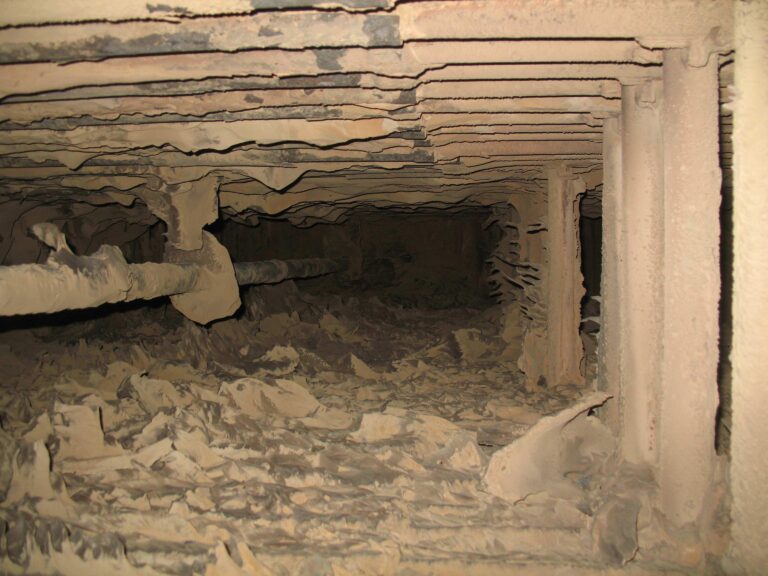
The convection pass in a boiler is the downstream section of the flue gas path where heat transfer occurs primarily through convection rather than radiation. It sits after the furnace and contains tube banks such as superheaters, reheaters and economisers that absorb heat from hot flue gases flowing across them. The convection pass fouls first because flue gas temperatures at that point are ideal for sticky ash and condensing compounds to adhere to tube surfaces. This article unpacks exactly how that process works, what deposits form and what the consequences are for boiler efficiency.
Where in the boiler does the convection pass sit?
The convection pass is the section of the boiler located immediately downstream of the furnace, where flue gases travel after combustion. It typically begins where radiation heat transfer becomes negligible and extends through the superheater, reheater and economiser tube banks before the flue gas exits towards the air preheater and flue gas treatment systems.
In a conventional boiler layout, the furnace handles the bulk of heat absorption through direct radiation from the flame. The furnace alone accounts for approximately 50% of total heat transfer in a boiler. Once flue gases leave the furnace and enter the convection pass, they have already dropped significantly in temperature but still carry substantial thermal energy. That energy is extracted as the gases flow across closely spaced tube banks arranged in horizontal or vertical passes.
The physical arrangement varies by boiler design. In tower-type boilers, the convection pass runs vertically above the furnace. In two-pass designs, flue gas turns and travels downward through a separate enclosure. In either case, the convection pass represents the zone where fine-tuning of steam temperature and feedwater heating takes place, making it operationally important for overall plant performance.
How does heat transfer work in the convection pass?
Heat transfer in the convection pass works by forcing hot flue gases across tube surfaces, where thermal energy moves from the gas into the tube walls and then into the water or steam inside. This is convective heat transfer, driven by the temperature difference between the gas and the tube surface and by the velocity of the gas flowing across the tubes.
The rate of convective heat transfer depends on several factors. Gas velocity is particularly important: higher velocity increases turbulence, which improves the mixing of hot and cooler gas layers near the tube surface and raises the heat transfer coefficient. Tube arrangement also matters. Staggered tube banks force gas to follow a more tortuous path, increasing contact time and turbulence compared to in-line arrangements.
The temperature gradient across the tube wall drives the actual energy transfer. On the gas side, a thin boundary layer of slower-moving gas acts as a thermal resistance. On the steam or water side, the fluid absorbs heat and either increases in temperature or changes phase. Any deposit layer on the outer tube surface adds an additional thermal resistance, reducing the effective heat flux even when gas temperatures and velocities remain constant. This is why even thin fouling layers have a measurable impact on heat transfer performance.
Why does the convection pass foul before other boiler sections?
The convection pass fouls before other boiler sections because the flue gas temperature in this zone falls into the range where ash particles become sticky and certain chemical compounds condense onto tube surfaces. In the furnace, temperatures are high enough that many ash components remain molten or gaseous. As gases cool through the convection pass, those components transition into a state where they bond readily to metal surfaces.
Several mechanisms drive this preferential fouling. Alkali compounds such as potassium and sodium sulphates, which are common in biomass and waste-derived fuels, condense at temperatures typically between 600°C and 800°C. This range often coincides with the leading superheater banks in the convection pass. Once a thin initial layer forms, it acts as a trap for additional particles, and the deposit grows progressively.
The tube geometry amplifies the problem. Flue gas accelerates through the narrow gaps between tubes, and particles carried in the gas stream impact tube surfaces at higher velocities. Leading edges of tubes facing the gas flow receive the heaviest particle bombardment. In waste-to-energy and biomass boilers, the fuel variability makes this worse: changing fuel mixtures alter the ash chemistry and the temperature at which compounds become adhesive, making deposit behaviour less predictable than in coal-fired plants.
The furnace, by contrast, operates at temperatures where deposits either remain fluid enough to drain or are removed by the intense radiant heat environment. The air preheater downstream of the convection pass operates at lower temperatures where different fouling mechanisms apply. The convection pass sits in the middle of this thermal gradient, consistently in the zone most prone to sticky deposit formation.
What types of deposits form on convection pass tubes?
Deposits on convection pass tubes fall into two broad categories: sintered ash deposits and chemically bonded fouling layers. Sintered deposits form when fine ash particles land on tube surfaces and partially fuse together under heat, creating a porous but increasingly hard layer. Chemically bonded deposits form when sulphates, chlorides and alkali compounds condense directly onto tube metal and react with the surface or with other deposit components.
Sintered and particulate ash deposits
Fly ash carried in the flue gas stream is the primary source of particulate deposits. In coal combustion, these deposits are relatively well characterised. In waste-to-energy and biomass combustion, the ash composition varies significantly depending on the fuel mix. Silica, alumina, calcium and iron oxides form the bulk of the deposit matrix. Over time, sintering under heat makes these deposits progressively harder and more difficult to remove with conventional cleaning methods.
Alkali sulphate and chloride fouling
Alkali sulphate fouling is particularly aggressive in biomass and waste-to-energy boilers. Potassium and sodium released during combustion react with sulphur dioxide in the flue gas to form sulphates that condense on tube surfaces at temperatures common in the superheater region. Chloride compounds present in municipal solid waste and certain biomass fuels add another layer of complexity. Chlorides can form low-melting-point eutectics that remain sticky across a wide temperature range and also accelerate corrosion beneath the deposit layer, attacking the tube metal directly.
What happens to boiler efficiency when the convection pass fouls?
When the convection pass fouls, boiler efficiency drops because the deposit layer insulates tube surfaces and reduces the rate of heat transfer from flue gas to steam or water. The flue gas exits the boiler at a higher temperature than it should, carrying away thermal energy that should have been captured. This directly increases fuel consumption for the same steam output.
The efficiency loss compounds over time. An initial thin deposit layer causes a modest reduction in heat transfer. As the deposit thickens, the insulating effect grows non-linearly because heat must conduct through an increasingly thick layer of material with low thermal conductivity. Operators often observe rising flue gas exit temperatures as the first measurable sign that fouling is accumulating.
Beyond the direct efficiency loss, heavy deposits create secondary problems. Uneven deposit distribution causes localised overheating of tube sections, accelerating thermal fatigue and increasing the risk of tube failure. In extreme cases, large deposit masses can detach suddenly, causing mechanical damage to tube banks below. Increased pressure drop across fouled tube banks also forces induced-draft fans to work harder, adding to auxiliary power consumption. In waste-to-energy and biomass plants, where fuel quality varies and operators are already managing tight efficiency margins, these compounding effects can force unplanned shutdowns that carry significant financial consequences.
How is fouling in the convection pass typically managed?
Fouling in the convection pass is typically managed through on-load cleaning systems that remove deposits while the boiler remains in operation, avoiding the need for costly shutdowns. The most widely used technologies are sootblowers, which direct jets of steam or air across tube surfaces to dislodge deposits, and water-based cleaning systems for heavier fouling conditions.
Sootblower systems
Retractable sootblowers are the standard solution for superheater and reheater sections. They insert a lance into the flue gas path, rotate it and retract it while directing a high-velocity steam or air jet across the tube banks. This mechanical action breaks up sintered deposits and carries the loosened material downstream. Oscillating sootblowers cover wider areas with a sweeping motion and are suited to sections where full retraction is not practical. The cleaning medium, typically steam extracted from the boiler itself, must be managed carefully to avoid thermal shock to tubes or excessive steam consumption.
Demand-driven and intelligent cleaning
Fixed-schedule cleaning, where sootblowers operate on a timed cycle regardless of actual deposit conditions, wastes cleaning medium and can cause unnecessary thermal stress. Demand-driven cleaning adjusts cleaning frequency and intensity based on real-time monitoring of heat transfer performance, flue gas temperatures and pressure drop across tube banks. This approach reduces steam consumption, extends the service life of cleaning equipment and ensures that cleaning effort is concentrated where deposits are actually forming rather than applied uniformly across all zones.
For the most stubborn deposits in waste-to-energy and biomass boilers, water-based cleaning systems offer a more instensive cleaning then steam alone. Water jets can remove hardened sintered deposits that steam blowing cannot dislodge, though their use requires careful management of thermal gradients to protect tube integrity. Combining steam-based routine cleaning with targeted water-based intervention for heavy fouling events gives operators the flexibility to maintain heat transfer performance across varying fuel conditions.
How Clyde Bergemann supports convection pass cleaning
We have been developing boiler cleaning solutions for more than a century, and convection pass fouling sits at the centre of what we do. Our Clyde Bergemann boiler efficiency solutions are designed specifically for the conditions that make convection pass fouling difficult to manage: variable fuel quality, aggressive ash chemistry and the need to keep plants running without unplanned downtime.
- Retractable, part-retractable and oscillating sootblowers for superheater, reheater and economiser sections, covering flue gas temperatures up to 1,400°C
- Water-based cleaning systems for heavy fouling in waste-to-energy and biomass boilers, where alkali chloride and sulphate deposits resist steam cleaning
- SMART Clean intelligent boiler cleaning platform that monitors actual deposit conditions and adjusts cleaning cycles in real time, reducing steam consumption and thermal stress
- More than 60 years of procedural expertise in power plant boiler cleaning, with engineers who understand how deposit behaviour changes with fuel type and combustion conditions
- Spare parts supply, on-site surveys, maintenance support and operator training tailored to your specific plant configuration
If you are dealing with rising flue gas exit temperatures, increasing pressure drop across tube banks or recurring deposit-related shutdowns, we can help you assess the situation and identify the right cleaning strategy. Get in touch to speak with one of our engineers.
Related Articles
- 7 sootblower maintenance mistakes that shorten equipment service life
- Why unplanned boiler downtime costs more than most plant managers realize
- What causes slagging in waste-to-energy boilers and how to prevent it
- 5 common causes of unplanned downtime in waste-to-energy plants
- What is the difference between on-load and offline boiler cleaning?