

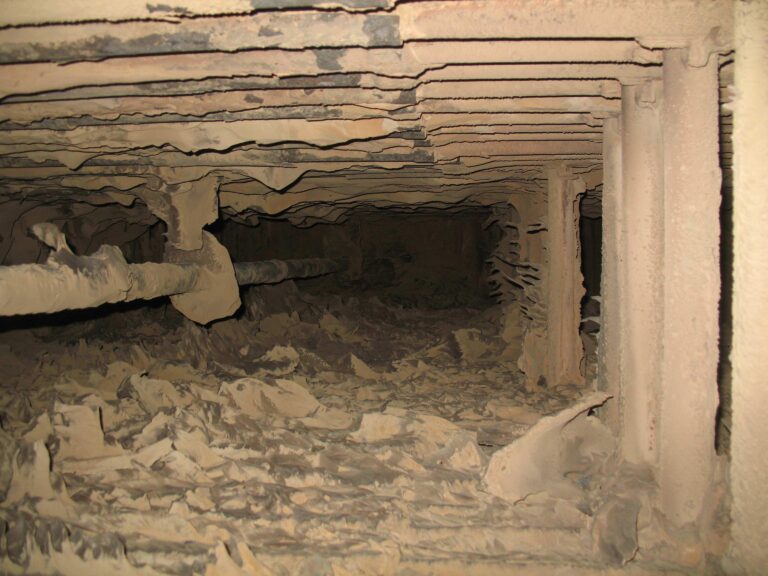
Fuel type is one of the most important factors determining how quickly and severely deposits form in a boiler. Different fuels produce ash with distinct chemical compositions, melting points and particle characteristics, and these differences directly shape where deposits accumulate, how hard they are to remove and how much they reduce heat transfer efficiency. The sections below work through the most common fuel types, the deposit mechanisms they trigger and what that means for cleaning strategy.
Which fuel types cause the most severe boiler fouling?
Coal, municipal solid waste and certain biomass fuels cause the most severe boiler fouling. Coal combustion produces high volumes of fly ash that can form hard, glassy slag deposits at elevated temperatures. Waste fuels introduce chlorine, heavy metals and highly variable ash chemistry. Biomass fuels high in alkali metals, particularly potassium, generate sticky, low-melting-point deposits that bond aggressively to heat transfer surfaces.
The severity of fouling depends on two interacting factors: the quantity of ash a fuel produces and the chemical behaviour of that ash at combustion temperatures. A fuel that generates relatively little ash but with a low melting point can cause more operational disruption than a high-ash fuel whose deposits remain friable and easy to remove. This is why fuel ash chemistry matters as much as fuel ash volume when assessing fouling risk.
Fuels with high sulphur content add another layer of complexity. Sulphur oxides react with ash particles and boiler surfaces to form sulphate compounds that bind deposits more firmly, particularly in cooler zones such as economisers and air preheaters. The combination of high alkali content and high sulphur content, common in some agricultural biomass fuels, produces some of the most tenacious deposit types encountered in industrial boiler operation.
How does biomass combustion lead to different deposits than coal?
Biomass combustion produces deposits that are chemically and structurally different from coal ash because biomass fuels contain far higher concentrations of alkali metals, particularly potassium and sodium. These elements vaporise during combustion and then condense on cooler boiler surfaces as sticky, low-melting-point compounds, primarily alkali chlorides and sulphates, that bond to tube surfaces and trap incoming fly ash particles.
Coal ash, by contrast, is dominated by silica and alumina compounds with relatively high melting points. Coal deposits tend to form as hard, glassy slag in high-temperature zones and as dry, powdery fly ash in cooler regions. Both are problematic, but they respond differently to cleaning. Coal slag requires high-impact cleaning energy to dislodge, while biomass deposits, though initially sticky, can sometimes be removed more effectively with targeted water or steam cleaning before they sinter and harden.
The chlorine content of many biomass fuels introduces an additional risk. Alkali chlorides depositing on superheater tubes create conditions for accelerated high-temperature corrosion. The deposit acts as a flux, lowering the melting point of the protective oxide layer on tube surfaces and allowing corrosive attack to proceed at temperatures that would otherwise be safe. This means biomass boiler fouling is not just an efficiency problem, it is also a materials integrity concern that shortens tube service life if left unmanaged.
Fuel variability compounds the challenge. Biomass is rarely a consistent feedstock. Wood chips, agricultural residues, energy crops and co-firing blends all carry different ash compositions. A cleaning strategy calibrated for one biomass type may be inadequate when the fuel mix changes, which is why demand-driven, adaptive cleaning approaches are particularly relevant in biomass applications.
What makes waste-to-energy boilers especially prone to fouling?
Waste-to-energy boilers are especially prone to fouling because municipal solid waste is the most chemically heterogeneous fuel used in industrial combustion. Every load of waste contains a different mixture of plastics, organic material, metals, glass and textiles, each contributing different elements to the flue gas and ash. This unpredictability makes deposit formation harder to anticipate and harder to control than in boilers running on a single, consistent fuel.
Chlorine is the defining challenge in waste-to-energy combustion. Plastics and other chlorine-containing materials release hydrogen chloride during combustion, which reacts with alkali metals to form alkali chlorides. These compounds deposit on superheater surfaces at relatively low temperatures, creating a corrosive layer that both reduces heat transfer and attacks tube materials. The combination of fouling and corrosion in the same deposit is a characteristic feature of waste-to-energy boiler operation that distinguishes it from most other fuel types.
Heavy metals present in waste streams, including lead, zinc and cadmium, further complicate deposit chemistry. These elements can form low-melting-point eutectics within deposits, making them particularly adhesive and difficult to remove mechanically. Deposits in waste-to-energy furnaces and empty passes tend to be inhomogeneous in their distribution, meaning some areas accumulate heavy buildups while adjacent surfaces remain relatively clean. This uneven pattern makes fixed-schedule cleaning inefficient, as it applies cleaning energy where it may not be needed while leaving problem areas undertreated.
How does fuel ash chemistry determine deposit location in a boiler?
Fuel ash chemistry determines deposit location primarily through the relationship between ash melting behaviour and local gas temperatures at different points along the boiler gas path. Ash particles that are still molten or semi-molten when they contact a surface will stick and form slag. Particles that have cooled below their solidification temperature arrive as solid particles and form softer, more porous deposits. The transition between these two states happens at different points in the boiler depending on the fuel’s specific ash chemistry.
In the furnace, where gas temperatures are highest, fuels with low-melting-point ash, including many biomass and waste fuels, produce slagging on furnace walls and membrane surfaces. The furnace alone accounts for approximately half of total heat transfer in a boiler, so heavy slagging here has an immediate and significant impact on steam generation efficiency. Hard clinker formations can also develop in the hopper area, creating a risk of mechanical damage if large deposits detach suddenly.
Moving downstream into the superheater and reheater zones, gas temperatures drop but remain high enough for alkali chloride and sulphate compounds to condense from the vapour phase onto tube surfaces. This is where the most corrosive deposits typically form in biomass and waste-to-energy boilers. Further downstream still, in the economiser and air preheater, deposits tend to be drier and more powdery, dominated by fly ash and ammonium sulphate compounds in plants using selective catalytic reduction for NOₓ control.
Understanding this temperature-dependent deposit map for a specific fuel is the foundation of any effective cleaning strategy. Applying the wrong cleaning method in the wrong zone, for example, using low-energy steam blowing in a zone where hard slag has formed, will produce little result while consuming cleaning medium unnecessarily.
What happens to boiler efficiency when fuel-specific deposits go untreated?
When fuel-specific deposits go untreated, boiler efficiency declines progressively as the insulating layer of ash and slag on heat transfer surfaces forces the combustion gases to carry more heat out of the boiler rather than transferring it to the steam cycle. Even a thin deposit layer measurably reduces heat transfer. As deposits thicken, the efficiency loss accelerates and the plant must burn more fuel to maintain the same steam output.
The consequences extend beyond fuel consumption. Untreated deposits increase flue gas exit temperatures, which raises emissions and can push the plant outside permitted operating limits. In the furnace, heavy slagging can cause large deposit masses to detach suddenly, damaging the hopper area and potentially forcing an unplanned shutdown. In the superheater, corrosive deposits that go unaddressed accelerate tube wall thinning, shortening the interval between tube replacements and increasing maintenance costs.
Corrosion driven by chlorine-rich deposits in waste-to-energy and biomass boilers is particularly damaging because it proceeds continuously as long as the deposit remains in contact with the tube surface. Unlike mechanical wear, which is visible and predictable, under-deposit corrosion can progress unseen until a tube fails. The financial impact of an unplanned outage caused by tube failure, including lost generation revenue, emergency repair costs and regulatory reporting obligations, typically far exceeds the cost of the cleaning system that could have prevented it.
Plants operating with flexible fuel mixes face compounded risk. A cleaning schedule calibrated for one fuel type may be entirely inadequate when the fuel changes, leaving deposits to build up faster than the cleaning system can manage them.
How should boiler cleaning strategies adapt to fuel type?
Boiler cleaning strategies should adapt to fuel type by matching the cleaning method, cleaning medium and cleaning frequency to the specific deposit characteristics that the fuel produces. A single fixed cleaning schedule applied uniformly across all boiler zones is rarely optimal for any fuel and becomes actively counterproductive when fuel composition varies. Effective cleaning strategy starts with understanding the deposit map for the fuel in question and then selecting tools that address each zone’s specific fouling pattern.
Matching cleaning technology to deposit type
Hard, high-temperature slag in furnace zones requires high-impact cleaning energy. Water-based cleaning systems deliver the thermal shock and mechanical force needed to dislodge bonded slag from furnace walls and membrane surfaces. Steam and air-based wall blowers are effective for lighter, more friable deposits but may be insufficient against the dense slagging that biomass and waste fuels produce in larger incinerators.
In superheater and reheater zones, retractable and oscillating sootblowers using steam or air are the standard approach for removing the softer, more porous deposits that form as flue gas temperatures drop. In economiser zones, where deposits are typically dry and loosely bonded, rapping systems can be effective, particularly in plants handling varying fuel mixes where deposit character changes frequently.
Demand-driven cleaning versus fixed schedules
Fixed cleaning schedules were designed for plants running a single, consistent fuel at stable load. They apply cleaning at predetermined intervals regardless of actual deposit conditions, which means they often clean surfaces that do not need it while missing areas where deposits are building faster than expected. For plants burning biomass, waste or variable fuel blends, this approach wastes cleaning medium and fails to protect the boiler adequately.
Demand-driven cleaning addresses this by using sensor data and diagnostic monitoring to identify where deposits are actually forming and applying cleaning only where and when it is needed. This approach reduces steam consumption, extends the service life of cleaning equipment and provides a much more accurate response to the deposit variability that comes with heterogeneous fuels. As fuel flexibility becomes more common, particularly in plants co-firing biomass with coal or handling variable waste streams, demand-driven cleaning becomes increasingly relevant as the more effective and efficient approach.
How Clyde Bergemann supports fuel-specific boiler cleaning
We work with plant operators across the waste-to-energy, biomass and power generation sectors to develop cleaning strategies that reflect the actual deposit behaviour of the fuels they burn. Our approach is built on more than 60 years of experience in boiler cleaning, and on the understanding that no two plants face exactly the same fouling challenge.
- Targeted cleaning for each boiler zone: We supply cleaning systems matched to the deposit type and temperature conditions in each section of the boiler, from high-impact water-based systems for furnace slagging to retractable sootblowers for superheater and reheater zones and rapping systems for economisers handling loose, variable deposits.
- SMART Clean demand-driven cleaning: Our SMART Clean platform applies cleaning according to actual deposit conditions rather than fixed schedules, reducing cleaning medium consumption and responding accurately to the deposit variability that comes with flexible fuel operation or changing fuel quality.
- Controls and diagnostics integration: Our digital boiler controls and diagnostic technology identify where deposits are forming and manage when, where and how frequently cleaning is applied, giving operators visibility and control over deposit build-up across the entire boiler.
- Support for flexible fuel operation: Our systems are designed to handle changing fuel mixes and varying fuel quality without requiring manual recalibration of the cleaning schedule, important for plants co-firing biomass, managing variable waste streams or adapting to fuel supply changes.
- Comprehensive service and spare parts: We provide inspection, maintenance and training support alongside spare parts availability because cleaning systems operating under extreme thermal and mechanical conditions need reliable service backing to remain effective.
Our Clyde Bergemann boiler efficiency solutions cover the full range of application zones and fuel types described in this article. If you are reviewing your current cleaning strategy or evaluating options for a new fuel type, we are available for a technical consultation.
Related Articles
- What the data reveals about on-load cleaning ROI for plant operators
- What to look for when evaluating boiler cleaning systems for industrial plants
- How is boiler fouling different in waste-to-energy plants compared to coal?
- How do deposits form on boiler heat exchange surfaces?
- 5 common causes of unplanned downtime in waste-to-energy plants