

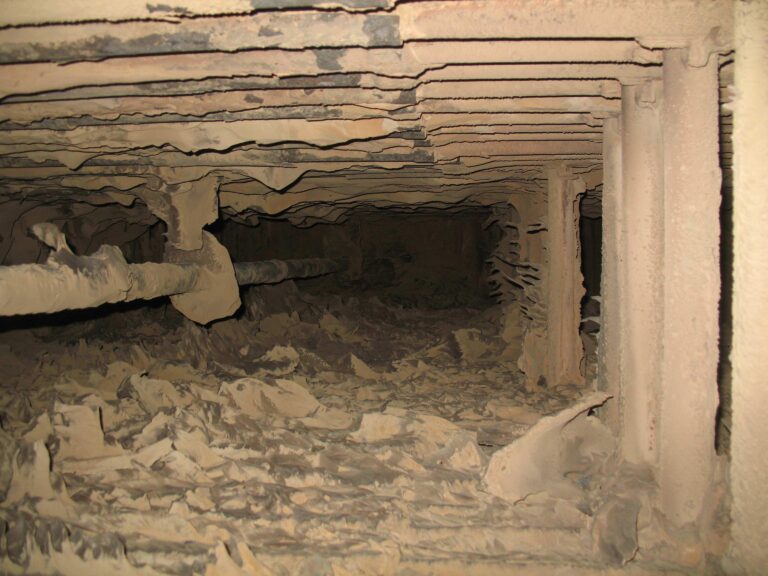
Boiler performance declines over time primarily because deposits accumulate on heat transfer surfaces, reducing the efficiency with which heat passes from combustion gases into the water or steam cycle. This process is gradual but relentless, and it affects every type of industrial boiler system regardless of fuel type or design. The sections below unpack the specific mechanisms, causes and practical responses that maintenance managers and technical decision-makers encounter most often.
What happens inside a boiler as deposits build up?
As deposits accumulate on heat transfer surfaces, they act as an insulating layer between the hot combustion gases and the tube walls. Heat that should transfer into the water or steam cycle instead stays in the flue gas stream, raising exhaust temperatures and reducing the amount of useful energy extracted. Over time, even a thin layer of ash or slag measurably reduces boiler efficiency and increases fuel consumption.
The furnace alone accounts for approximately 50% of total heat transfer in a boiler, which makes it the zone where deposit-related losses have the greatest impact. When slagging builds up on furnace walls, steam generator efficiency drops, clinker formations can grow large enough to fall and damage the hopper area, and corrosion accelerates on the affected surfaces. In the convective passes, deposits on superheater, reheater and economiser tubes compound the problem further down the gas path.
The distribution of deposits is rarely uniform. Variations in combustion conditions, fuel composition and gas flow patterns mean that some areas accumulate material far faster than others. This uneven build-up makes it difficult to predict performance loss from a fixed cleaning schedule alone.
What are the main causes of slagging and fouling in boilers?
Slagging and fouling in industrial boiler systems are caused by the deposition of ash, mineral compounds and partially combusted material on heat transfer surfaces. The specific mechanism depends on where in the boiler the deposit forms: slagging typically refers to molten or partially molten deposits in the high-temperature furnace zone, while fouling describes bonded ash deposits in the lower-temperature convective sections.
The primary drivers are:
- Ash chemistry: Fuels with high alkali, chlorine or sulphur content produce ash that melts at lower temperatures and bonds more aggressively to tube surfaces.
- Combustion temperature: Higher flame temperatures increase the likelihood that ash particles arrive at tube surfaces in a sticky, partially molten state.
- Gas velocity and flow distribution: Uneven gas flow concentrates particle impingement in specific zones, accelerating local deposit growth.
- Boiler load variations: Frequent load changes alter temperature profiles and gas velocities, shifting where deposits form and how quickly they harden.
Corrosion beneath deposits is a secondary but serious consequence. Trapped chlorine and sulphur compounds create aggressive chemical environments at the tube surface, particularly in Waste-to-Energy and biomass applications where fuel composition is variable and often contains high chlorine levels.
How does fuel type affect the rate of boiler performance loss?
Fuel type is one of the strongest predictors of how quickly deposits form and how difficult they are to remove. Fuels with consistent, well-characterised ash chemistry allow operators to establish reliable cleaning intervals. Fuels with variable or aggressive ash chemistry accelerate deposit formation and demand more responsive cleaning strategies.
Coal, biomass and municipal solid waste each present distinct challenges:
- Coal: Deposit behaviour is relatively well understood and varies mainly with ash content and mineral composition. Hard, sintered deposits are common in high-temperature zones.
- Biomass: High potassium and chlorine content produces low-melting-point ash that bonds readily to surfaces. Deposit formation rates can be significantly higher than with coal, and the deposits are often more corrosive.
- Municipal solid waste (Waste-to-Energy): Fuel composition changes continuously, making deposit behaviour unpredictable. High chlorine levels accelerate corrosion, and the inhomogeneous nature of the fuel creates uneven deposit distribution across the furnace and empty passes.
Plants that switch fuels or blend multiple fuel types face the added complexity of changing deposit characteristics mid-operation. A cleaning approach calibrated for one fuel mix may be inadequate when the mix changes, which is why demand-driven cleaning strategies that respond to actual deposit conditions outperform fixed-interval schedules in these environments.
Why does reduced heat transfer lead to higher fuel consumption?
When deposits insulate heat transfer surfaces, the boiler must burn more fuel to produce the same amount of steam. The combustion gases leave the boiler at a higher temperature than they should, carrying away energy that was never transferred to the water cycle. To compensate and maintain steam output, the fuel feed rate increases, directly raising operating costs.
The relationship is straightforward: every degree of avoidable temperature rise in the flue gas represents heat that was not recovered. In a large industrial boiler, even a modest increase in exit gas temperature translates into a measurable percentage increase in fuel consumption. Over a full operating year, this adds up to significant additional cost and CO₂ output.
There is also a secondary effect on steam quality. As heat transfer deteriorates, maintaining target steam temperatures and pressures requires pushing the boiler harder, which increases thermal stress on components and accelerates wear. The efficiency loss and the mechanical strain reinforce each other, compounding the long-term cost of allowing deposits to go unchecked.
How does boiler fouling contribute to unplanned downtime?
Boiler fouling contributes to unplanned downtime through two main pathways: deposit-driven failures and forced shutdowns for manual cleaning. Both are avoidable with the right approach, but both are common in plants where cleaning systems are inadequate or poorly matched to the actual deposit situation.
Large clinker formations are a direct physical hazard. When slag accumulates to a critical mass and then detaches, it can fall into the hopper area with enough force to damage components. This kind of event typically forces an immediate, unplanned shutdown for inspection and repair. The downtime is not just the cleaning time but the full inspection, repair and restart cycle.
Corrosion under deposits is a slower but equally disruptive mechanism. Aggressive chemical compounds trapped beneath ash layers attack tube walls over months or years, eventually causing leaks or tube failures that require emergency shutdowns. In Waste-to-Energy and biomass plants, where chlorine-driven corrosion is particularly aggressive, this is a recurring maintenance challenge.
Plants that rely on periodic offline cleaning rather than continuous on-load cleaning also accept planned downtime as a structural cost. Every hour a boiler is offline for cleaning is an hour it is not generating revenue. Reducing the frequency and duration of these interventions directly improves plant availability.
What slows down boiler performance decline in practice?
The most effective way to slow boiler performance decline is to remove deposits before they harden, grow large or cause secondary damage. On-load boiler cleaning, which operates while the boiler is running, prevents the accumulation cycle from reaching the point where efficiency losses or mechanical damage become significant. The earlier and more precisely deposits are addressed, the less impact they have on performance.
Several practical factors determine how well a cleaning approach works:
- Matching the cleaning method to the deposit type: Steam or air blowing suits lighter, loose deposits. Water-based cleaning is more effective against heavy slagging and bonded fouling, particularly in furnace zones.
- Targeting actual deposit locations: Fixed cleaning schedules treat all zones equally regardless of where deposits are actually forming. Demand-driven cleaning, guided by real-time diagnostics, directs cleaning effort where it is needed and avoids unnecessary cleaning where it is not.
- Covering all boiler zones: Furnace, superheater, reheater, economiser and air preheater each require appropriate cleaning technology. A gap in coverage in any zone allows deposits to build unchecked.
- Adapting to fuel changes: When fuel composition shifts, deposit behaviour changes. Cleaning systems that can be adjusted without shutting down the boiler maintain effectiveness across varying operating conditions.
Consistent maintenance of cleaning equipment itself also matters. Sootblowers, cannons and other cleaning devices operate under extreme conditions and wear over time. A cleaning system that is not maintained to specification delivers less effective cleaning, allowing deposits to gain ground even when the system appears to be operating.
How Clyde Bergemann supports boiler efficiency
We have been developing on-load boiler cleaning solutions for close to 100 years, and the challenges described in this article are exactly what our products are designed to address. Our approach combines the right cleaning technology for each boiler zone with intelligent controls that respond to actual deposit conditions rather than fixed schedules.
- Full boiler coverage: We offer cleaning solutions for every zone, from the furnace through to the air preheater, using water, steam or air as the cleaning medium depending on the deposit type and location.
- Demand-driven cleaning: Our SMART Clean platform uses real-time diagnostics to direct cleaning where deposits are actually forming, reducing unnecessary cleaning cycles and improving overall efficiency.
- Fuel flexibility: Our systems are designed to handle variable fuel compositions, including biomass and municipal solid waste, where deposit behaviour changes with every load.
- Extended plant availability: By keeping heat transfer surfaces clean on-load, we help reduce both unplanned shutdowns and the frequency of offline cleaning interventions.
- Service and spare parts: We support our equipment with global service coverage and spare parts availability, because a cleaning system that is not maintained to specification does not deliver the performance it was designed for.
If you want to understand how deposit build-up is affecting your specific plant and what cleaning approach would be most effective, you can explore our Clyde Bergemann boiler efficiency solutions or get in touch to discuss your situation with one of our engineers.
Related Articles
- How to improve heat transfer efficiency in biomass boiler systems
- How do grate-fired and fluidized-bed boilers handle fouling differently?
- Why do waste-to-energy boilers lose efficiency between shutdowns?
- What is demand-based boiler cleaning and how does it work?
- 5 common causes of unplanned downtime in waste-to-energy plants