

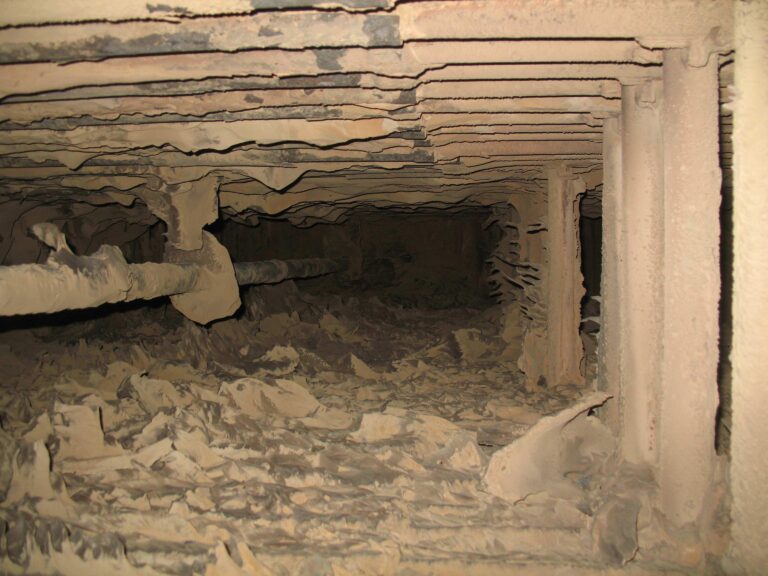
Waste-to-energy plants burn municipal solid waste to generate electricity and heat. That sounds straightforward, but the fuel they process is anything but. Unlike coal or natural gas, municipal waste is chemically unpredictable, moisture-laden and full of corrosive compounds. The boilers that handle it operate under conditions that most conventional cleaning systems were simply never designed to manage. Understanding why legacy boiler cleaning solutions underperform in these environments starts with understanding what makes WtE boilers fundamentally different from the systems those solutions were built for.
This article walks through the problem from the ground up: the unique characteristics of WtE boilers, how fouling and slagging develop inside them, why older cleaning technologies fall short and what the operational consequences look like in practice. By the end, you will have a clear picture of what effective boiler cleaning actually requires in a waste-to-energy context.
What makes waste-to-energy boilers different from conventional ones
Conventional power boilers are designed around predictable fuels. Coal, gas and oil have known calorific values, combustion temperatures and chemical compositions. Engineers can design cleaning systems around those parameters and expect consistent results over years of operation.
Waste-to-energy boilers operate on a fundamentally different premise. The fuel arriving at a WtE plant on any given day is a mixture of plastics, organic matter, textiles, metals, paper and everything else that ends up in municipal waste streams. Its composition shifts constantly, and so do its calorific value, moisture content and the chemical compounds it releases during combustion.
This variability has direct consequences for the boiler. Combustion temperatures fluctuate more widely than in conventional plants. Flue gases carry a far more aggressive mix of chlorine compounds, heavy metals and alkali salts. The furnace and heat transfer surfaces are exposed to conditions that change not just seasonally but from hour to hour. A cleaning system calibrated for stable fuel and predictable deposit chemistry will struggle to keep pace with that level of variation.
How fouling and slagging develop inside WtE boiler systems
Fouling and slagging are the two main deposit mechanisms that reduce boiler efficiency, and they behave differently depending on where they form and what compounds drive them.
Slagging refers to molten or partially molten deposits that form on furnace walls and other surfaces exposed to the highest temperatures. In WtE plants, the alkali metals and chlorine compounds in waste fuel lower the melting point of ash particles, making them sticky at temperatures where conventional ash would remain dry and loose. These deposits bond to membrane wall surfaces and, if left untreated, grow into hard clinker formations that are difficult to remove and can fall into the hopper area, causing mechanical damage.
Fouling describes the accumulation of ash and condensed compounds on convective heat transfer surfaces further downstream, such as superheaters and economisers. In WtE systems, the high chlorine content of flue gas accelerates corrosion beneath these deposits, meaning fouling is not just an efficiency problem but a structural one.
The distribution of deposits across a WtE boiler is also uneven. Because fuel composition and combustion conditions vary continuously, deposits build up at different rates in different zones. A fixed cleaning schedule that treats all surfaces equally will inevitably over-clean some areas and under-clean others, leaving the most problematic zones inadequately addressed.
Why legacy cleaning systems were not designed for these conditions
Most legacy boiler cleaning systems were developed for coal-fired power generation, where fuel quality is consistent and deposit behaviour is well understood. The dominant technology in that context is the steam sootblower, which uses high-pressure steam or air to dislodge dry, relatively loose ash deposits from heat transfer surfaces.
Steam sootblowers work well when deposits are dry and friable. In WtE boilers, the deposits are often sticky, dense and chemically bonded to surfaces. Steam jets that would easily clear coal ash may have little effect on the harder, more adhesive slag formations typical of waste combustion. The cleaning medium and the mechanical force it delivers are simply not matched to the problem.
Beyond the cleaning medium itself, legacy systems typically operate on fixed schedules. They activate at set intervals regardless of actual deposit conditions. In a WtE environment where fouling rates vary with fuel composition, a fixed schedule creates two problems simultaneously: unnecessary cleaning cycles that consume steam and accelerate wear on surfaces, and missed cleaning events when deposits build up faster than the schedule anticipates.
There is also a design context issue. Many WtE plants were built with cleaning systems selected for lowest upfront cost rather than long-term performance. Those systems were often carried over from coal plant designs without adaptation for the specific chemical and thermal conditions of waste combustion. The result is a mismatch between the cleaning technology installed and the environment it is asked to operate in.
The operational and financial cost of underperforming cleaning
When boiler cleaning cannot keep pace with deposit formation, the consequences compound quickly. The furnace is responsible for roughly half of the total heat transfer in a boiler. Deposits on furnace walls act as insulation, reducing the rate at which heat transfers to the working fluid. The boiler must burn more fuel to maintain output, and steam generation efficiency falls.
As deposits thicken, the risks escalate beyond efficiency loss:
- Clinker formations grow until they detach under their own weight, falling into the hopper and potentially damaging grate systems or ash handling equipment
- Corrosion accelerates beneath deposits, particularly in the presence of chlorine compounds, shortening the service life of heat transfer surfaces
- Unplanned shutdowns become more frequent as deposit-related failures force emergency maintenance
- Each unplanned shutdown translates directly into lost throughput, missed energy generation and the cost of emergency repair work
Planned maintenance intervals also lengthen when cleaning systems are ineffective, because more manual intervention is required to remove deposits that automated systems failed to address. Over time, the cumulative cost of reduced efficiency, accelerated wear and unplanned downtime significantly exceeds the cost of a properly specified cleaning solution.
What effective boiler cleaning looks like in a WtE context
Effective boiler cleaning in a waste-to-energy plant addresses three requirements that legacy systems typically cannot meet: the right cleaning medium for the deposit type, the ability to adapt to variable conditions and coverage across all relevant zones of the boiler.
For furnace cleaning, where slagging is most severe, water has proven to be a more effective cleaning medium than steam or air. Water jets deliver greater impact energy and can break up the harder, more adhesive deposits that form in WtE furnaces. The cleaning pattern matters too: a system that creates a meander-shaped jet path across furnace walls reaches deposits that a fixed-angle blower would miss entirely.
For convective surfaces further downstream, the approach depends on deposit characteristics in each zone. Retractable sootblowers remain appropriate for superheater and economiser cleaning where deposits are less adhesive, but they need to be matched to the specific flue gas temperatures and travel distances of the installation.
The most important shift from legacy thinking is moving away from fixed cleaning schedules toward demand-driven cleaning. Rather than activating cleaning systems at set intervals, demand-driven systems respond to actual deposit conditions detected through sensors and diagnostic tools. This means cleaning happens where and when it is needed, not according to a calendar. The result is more effective deposit control, reduced steam consumption and less mechanical wear on cleaning equipment.
For plants operating with variable fuel mixtures, which describes most WtE facilities, this adaptability is not a luxury. It is what separates a cleaning system that maintains efficiency across changing conditions from one that performs adequately only when conditions happen to match its design assumptions.
How Clyde Bergemann supports WtE boiler cleaning
We have been developing on-load boiler cleaning solutions for over 100 years, and waste-to-energy has been part of our focus since the early 2000s. Our experience across hundreds of installations gives us a detailed understanding of the deposit challenges specific to WtE combustion conditions.
Our Clyde Bergemann boiler efficiency solutions for waste-to-energy plants are built around the principles described in this article:
- Water-based furnace cleaning systems including the SMART Cannon and Shower-Clean System, designed to remove the sticky, adhesive slag deposits that steam blowers cannot effectively address
- Retractable and part-retractable sootblowers for superheater, reheater and economiser zones, matched to the specific temperature and geometry of each application
- SMART Clean controls and diagnostics that enable demand-driven cleaning based on actual deposit conditions rather than fixed schedules
- Flexible system configurations that accommodate changing fuel mixtures and varying fuel quality without requiring manual recalibration
- Spare parts availability and service support for systems operating under the extreme thermal and chemical conditions of WtE combustion
If you are evaluating whether your current cleaning system is matched to your plant’s actual operating conditions, we are happy to discuss your specific situation. Get in touch and we can help you assess where improvements are possible.
Related Articles
- Can on-load cleaning systems reduce corrosion in waste boilers?
- How to improve heat transfer efficiency in biomass boiler systems
- What is sootblowing and why does it matter for boilers?
- How do you know if your boiler needs more frequent soot cleaning?
- How modern on-load cleaning systems reduce maintenance costs over time