

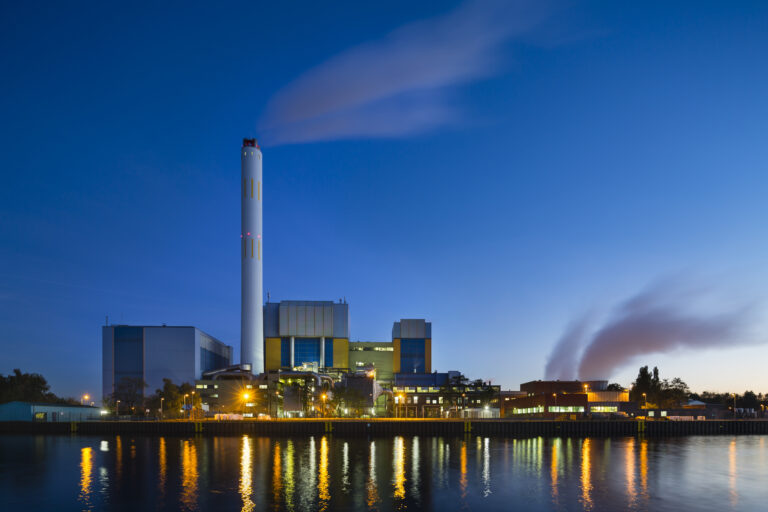
Industrial boilers are among the hardest-working pieces of equipment in any power generation or waste processing facility. They run continuously, under extreme temperatures and pressures, converting fuel into usable energy day after day. Yet one of the most persistent threats to their performance is also one of the most predictable: the gradual build-up of deposits on heat transfer surfaces. On-load boiler cleaning is the practice of managing those deposits while the boiler continues to operate, and understanding how it works can help you make better decisions about your plant’s efficiency and reliability.
This article walks through the fundamentals of on-load boiler cleaning, from how deposits form to how different cleaning technologies address them, and what the consequences are when cleaning is insufficient. Whether you are evaluating your current setup or building a case for an upgrade, the following sections give you the technical grounding to think clearly about the problem and the available solutions.
What is on-load boiler cleaning?
On-load boiler cleaning refers to any system or method that removes fouling deposits from boiler heat transfer surfaces while the boiler remains in full operation. The term “on-load” is the defining characteristic: cleaning happens continuously or at scheduled intervals during normal production, without requiring a shutdown.
This stands in contrast to off-load cleaning, which takes place during planned maintenance outages when the boiler is taken out of service. Off-load cleaning can be thorough, but it is also costly in terms of lost production time. On-load cleaning addresses the same problem in real time, preventing deposits from accumulating to the point where they cause measurable efficiency losses or force an unplanned stop.
The most widely used on-load cleaning technologies include sootblowers, which direct jets of steam, air or water at fouled surfaces, as well as rapping systems, which dislodge loose deposits through mechanical vibration, and water-based shower cleaning systems designed for areas with heavier fouling. Each technology targets specific zones within the boiler and is selected based on the type of deposit, the temperature environment and the fuel being burned.
How deposits form and why they reduce boiler efficiency
To understand why on-load cleaning matters, you first need to understand how deposits form. When fuel burns inside a boiler, it releases combustion gases that carry fine particles of ash, unburned carbon and chemical compounds. As these gases travel through the boiler and across heat transfer surfaces, some of that material sticks to the tube walls and membrane surfaces.
The furnace alone accounts for approximately 50% of total heat transfer in a boiler. When deposits build up on furnace walls and other surfaces, they act as an insulating layer between the hot combustion gases and the water or steam inside the tubes. Heat that should be transferred into the working fluid instead stays trapped in the gas stream, reducing the boiler’s thermal efficiency and increasing fuel consumption to maintain the same output.
Beyond efficiency losses, deposits create additional problems:
- Slagging: Heavy deposits on furnace walls can fuse into clinker formations. When these break away under their own weight, they fall into the hopper area and can cause physical damage to the structure below.
- Corrosion: Certain deposit chemistries, particularly those involving chlorine or sulphur compounds common in waste-to-energy and biomass fuels, accelerate corrosion of the underlying heat transfer surfaces.
- Uneven distribution: Deposits rarely form uniformly. Localised hot spots and cold spots develop, creating thermal stress that shortens the service life of tubes and panels.
The rate at which deposits form depends heavily on fuel type. Biomass and municipal solid waste, for example, produce combustion gases with higher concentrations of alkali compounds and chlorine than coal, which means fouling tends to be more aggressive and chemically complex in these applications.
How on-load cleaning systems work in practice
Building on the deposit formation process described above, it becomes clear that effective cleaning needs to reach the right surfaces, at the right time, with enough energy to dislodge the specific type of deposit present. Different technologies achieve this in different ways.
Sootblowers
Sootblowers are the most established on-load cleaning technology. They use a directed jet of steam or compressed air to blast deposits from tube surfaces. Retractable sootblowers extend a lance into the flue gas path, rotate while blowing and then retract, covering a defined cleaning radius. They are well suited to superheaters, reheaters and economisers where deposits are relatively loose and the geometry allows lance insertion.
Water-based cleaning systems
For areas with heavier or more adhesive fouling, water is a more effective cleaning medium than steam or air. Water carries significantly more kinetic and thermal energy per unit volume, making it capable of removing deposits that a steam jet cannot shift. Shower cleaning systems, for example, use nozzles positioned on the boiler roof that spray water in a continuous 360-degree pattern as they are lowered into the furnace or empty passes. This approach is particularly effective in waste-to-energy and biomass applications where sticky, chemically aggressive deposits are common.
Rapping systems
Rapping systems take a different approach entirely: instead of directing a cleaning medium at the surface, they transmit mechanical impulses through the structure to shake loose deposits that have not yet bonded firmly. This method works well for economisers and heating surfaces in facilities burning fuels that produce dry, loosely adhering ash. Because no cleaning medium is required, rapping systems have lower operating costs and no associated steam or water consumption.
Intelligent control systems
Modern on-load cleaning installations are increasingly managed by intelligent control platforms that monitor boiler conditions in real time and trigger cleaning sequences based on actual fouling levels rather than fixed time intervals. This approach avoids both under-cleaning, which allows deposits to accumulate, and over-cleaning, which wastes cleaning medium and can cause unnecessary thermal stress on tube surfaces.
When and where on-load cleaning makes the biggest difference
On-load cleaning delivers the greatest benefit in operating environments where fouling is continuous, aggressive or chemically complex. Three situations stand out.
Waste-to-energy plants burn heterogeneous municipal solid waste with highly variable composition. The resulting combustion gases contain elevated levels of chlorine, heavy metals and alkali compounds that produce sticky, corrosive deposits. Without active on-load cleaning, these deposits accumulate rapidly and can force unplanned shutdowns within days rather than weeks.
Biomass plants face similar challenges. Biomass fuels, particularly agricultural residues and wood waste, contain potassium and chlorine compounds that create low-melting-point deposits on furnace walls and superheater surfaces. These deposits are particularly prone to causing slagging and accelerated corrosion, making timely cleaning important for protecting tube integrity.
Flexible-load power plants that cycle between different output levels or switch between fuel types experience variable combustion conditions that change the rate and character of deposit formation. On-load cleaning systems with adaptive controls can respond to these changes in real time, maintaining cleaning effectiveness across a range of operating modes.
In all three cases, the furnace and the empty passes immediately downstream are the zones where on-load cleaning has the most direct impact on overall boiler efficiency, given the furnace’s dominant role in total heat transfer.
What happens when on-load cleaning is absent or inadequate
Understanding the consequences of insufficient cleaning helps quantify the value of getting it right. The effects are cumulative and tend to compound over time.
In the short term, deposit build-up reduces heat transfer efficiency. The boiler must burn more fuel to produce the same amount of steam, increasing operating costs and emissions per unit of output. Even a thin layer of insulating deposit on furnace walls can produce a measurable drop in steam temperature and pressure.
As deposits thicken, the risk of clinker formation increases. Large clinker masses that detach suddenly can damage the hopper area, grates or other components below, leading to repair costs and forced outages that far exceed the cost of the cleaning system that could have prevented them.
Over the longer term, inadequate cleaning accelerates corrosion. Deposits trap corrosive compounds against tube surfaces, and the combination of high temperature and chemical attack degrades tube walls faster than normal wear would. This shortens the interval between tube replacements and increases the risk of tube failures during operation.
Plants that rely solely on off-load cleaning during scheduled maintenance outages often find that deposit accumulation between outages is severe enough to cause efficiency losses that are difficult to recover fully, even with thorough cleaning during the shutdown.
Choosing the right on-load cleaning approach for your boiler
Selecting an on-load cleaning system is not a one-size-fits-all decision. The right approach depends on several factors that are specific to your plant and operating conditions.
- Fuel type and deposit character: Fuels that produce sticky, chemically aggressive deposits generally require water-based cleaning systems. Fuels that produce dry, loosely adhering ash may be managed effectively with steam sootblowers or rapping systems.
- Boiler zone: Different areas of the boiler experience different temperatures, gas velocities and deposit types. The furnace, superheater, economiser and air preheater each have cleaning requirements that may call for different technologies.
- Operating flexibility: If your plant operates across a range of loads or fuel mixes, an intelligent control system that adapts cleaning intensity to actual conditions will outperform a fixed-interval approach.
- Cleaning medium availability: Steam and compressed air are readily available in most plants, but their use for cleaning has an associated cost. Water-based systems eliminate the need for steam as a cleaning medium, which can reduce operating costs, though they require water supply and drainage infrastructure.
- Existing installation constraints: Retrofitting a cleaning system into an existing boiler requires careful engineering to work within the available space and access points. The geometry of the boiler and the location of existing penetrations influence which technologies are practical.
A thorough assessment of deposit samples, boiler geometry and operating history is the starting point for any well-engineered cleaning solution. Generic systems chosen on the basis of upfront cost alone frequently underperform in practice, particularly in demanding applications like waste-to-energy and biomass, where deposit conditions are more challenging than in conventional coal-fired boilers.
How Clyde Bergemann supports your boiler cleaning strategy
We have been developing and supplying boiler cleaning systems for more than a century, and our portfolio covers every major cleaning technology and boiler zone. Whether your plant burns waste, biomass or conventional fuels, we engineer solutions based on the specific deposit conditions, boiler geometry and operating requirements of your facility, not on a standard catalogue selection.
Our boiler efficiency solutions include:
- Retractable and part-retractable sootblowers for superheaters, reheaters and economisers
- Water-based shower cleaning systems for furnaces and empty passes with heavy or sticky deposits
- Rapping systems for economisers and heating surfaces with dry, loose ash
- Intelligent control platforms that trigger cleaning based on real-time fouling data rather than fixed schedules
- Global service support and spare parts availability to keep your systems running under demanding conditions
If you are reviewing your current cleaning setup or planning a new installation, we are glad to discuss the specifics of your plant. Get in touch and we can help you identify the approach that fits your operating conditions and efficiency goals.
Related Articles
- How to improve heat transfer efficiency in biomass boiler systems
- Can on-load cleaning extend the lifespan of your boiler?
- How to extend boiler service life under high-temperature operating conditions
- What is demand-based boiler cleaning and how does it work?
- Why boiler heat transfer efficiency drops over time