

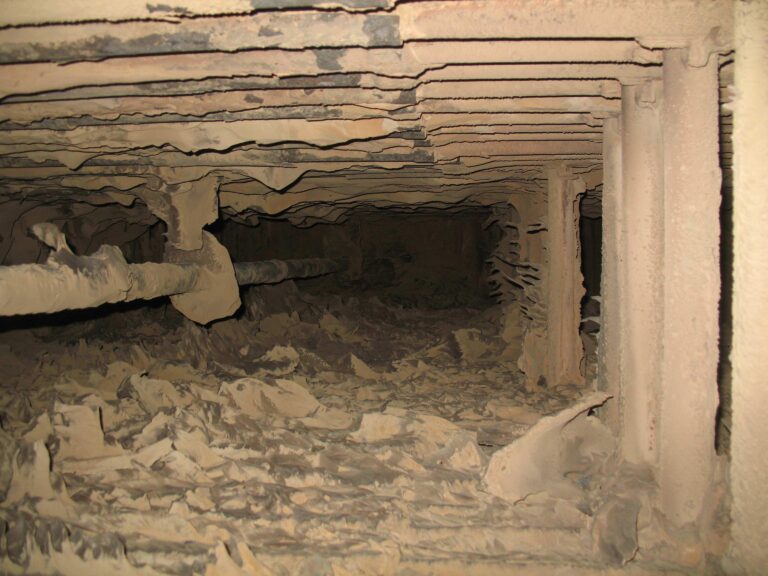
Boiler deposits reduce plant performance by restricting heat transfer between combustion gases and the working fluid, forcing the boiler to burn more fuel to achieve the same steam output. Over time, even thin layers of ash, slag or fouling material on heating surfaces create measurable drops in efficiency, increase the risk of corrosion and can ultimately trigger unplanned shutdowns. The sections below unpack each dimension of this problem in detail.
What types of deposits form inside industrial boilers?
Industrial boilers accumulate three main categories of deposits: slagging, fouling and corrosive scale. Slagging refers to molten or partially molten ash particles that stick to furnace walls and solidify. Fouling describes the bonding of fine fly ash particles to convective heating surfaces such as superheaters and economisers. Corrosive scale forms when chemical compounds in the flue gas react with metal surfaces at high temperatures.
The exact composition of deposits depends heavily on fuel type. Waste-to-energy plants burning municipal solid waste deal with chlorine-rich deposits that are particularly aggressive toward metal surfaces. Biomass combustion introduces alkali compounds such as potassium and sodium, which lower the melting point of ash and make slagging more likely even at moderate furnace temperatures. Coal-fired boilers tend to produce harder, more silica-based slag that bonds firmly to membrane walls.
Deposit distribution is rarely uniform. Turbulence patterns, local temperature gradients and variations in fuel quality all influence where material accumulates first. This inhomogeneous distribution means that a single cleaning approach applied at fixed intervals often misses the areas where fouling is most severe.
How do boiler deposits reduce heat transfer efficiency?
Deposits act as thermal insulation on heating surfaces. Because ash and slag conduct heat far less effectively than steel, even a relatively thin layer forces combustion gases to exit the boiler at a higher temperature than intended, carrying away energy that should have been transferred to the steam cycle. The result is a direct reduction in boiler efficiency and an increase in fuel consumption per unit of steam produced.
The furnace alone accounts for approximately 50% of total heat transfer in a boiler. Heavy slagging on furnace walls therefore has a disproportionate impact on overall performance. As deposits thicken, the temperature differential across the fouled surface grows, and the boiler control system compensates by increasing fuel input. This creates a compounding effect: more fuel means higher flue gas temperatures, which can accelerate further deposit formation in downstream sections such as the superheater and economiser.
In convective passes, fouling narrows the gas flow channels between tube banks. This raises flue gas velocity and pressure drop across the section, increasing the load on induced draft fans and adding to auxiliary power consumption. The efficiency loss is therefore not limited to heat transfer alone but extends to the mechanical systems that move gas through the boiler.
What causes unplanned shutdowns in fouled boiler systems?
Unplanned shutdowns in fouled boilers are most commonly triggered by three mechanisms: large-scale slag detachment, accelerated corrosion and blocked gas passes. When slag accumulates to a critical mass on furnace walls, it detaches suddenly and falls into the hopper area. These clinker falls can damage the hopper structure, grate or ash handling equipment and force an immediate outage for inspection and repair.
Corrosion is a slower but equally serious cause of forced shutdowns. Chlorine and sulphur compounds in deposits react with tube metal at elevated temperatures, thinning tube walls over time. When a tube fails, the resulting steam leak requires the boiler to be taken offline immediately. In waste-to-energy and biomass plants, where fuel chemistry is variable and often aggressive, corrosion-related tube failures are a recurring maintenance challenge.
Blocked convective passes represent a third failure mode. If fouling in the superheater or economiser is allowed to build up without intervention, gas flow can become severely restricted. This raises back pressure across the boiler, reduces combustion air supply and can force a controlled shutdown before a more serious failure occurs. In each of these scenarios, the common factor is deposit accumulation that was not addressed early enough.
How quickly do deposits build up in waste-to-energy and biomass boilers?
In waste-to-energy and biomass boilers, significant deposit accumulation can occur within hours to days of operation, depending on fuel composition and boiler load. These fuel types introduce higher concentrations of alkali metals, chlorine and moisture than conventional coal, all of which accelerate the rate at which sticky, corrosive deposits form on heating surfaces.
The rate of build-up is not constant. It accelerates when fuel quality varies, for example when the calorific value of incoming waste fluctuates or when biomass moisture content changes between deliveries. Flexible boiler operation, such as load cycling to follow grid demand, also creates thermal stress cycles that cause existing deposits to crack and create fresh bonding surfaces for new material.
Because deposit growth is uneven and influenced by so many variables, a fixed cleaning schedule based on operating hours alone is rarely optimal. Cleaning too infrequently allows deposits to harden and bond more firmly, making removal more difficult and increasing the risk of the failure modes described above. Cleaning too frequently wastes cleaning medium, adds thermal stress to tubes and increases maintenance costs without delivering proportional benefit.
What are the financial consequences of boiler fouling for plant operators?
The financial impact of boiler fouling falls into three categories: increased fuel costs, reduced revenue from lost generation and direct repair costs from deposit-related damage. Each hour of unplanned downtime in a waste-to-energy or power generation facility translates directly into lost throughput and, depending on the plant’s contractual position, potential penalty payments or missed capacity obligations.
Fuel cost increases are continuous and often underestimated. A boiler operating with fouled heating surfaces burns more fuel to maintain steam output, and this overconsumption accumulates across thousands of operating hours. The additional CO₂ emissions associated with this inefficiency also carry a financial dimension in markets where carbon costs apply.
Repair costs from clinker falls, tube corrosion and damaged hopper structures can be substantial. Beyond the direct cost of replacement components, repairs require scaffold access, specialist labour and extended outage windows. Plants that inherited suboptimal cleaning systems during construction, often selected for lowest upfront cost rather than long-term performance, frequently find that the total cost of ownership is far higher than a more capable system would have delivered.
How can online boiler cleaning prevent deposit-related performance loss?
Online boiler cleaning, also called on-load cleaning, removes deposits while the boiler continues to operate at full load, eliminating the need to shut down for cleaning. By intervening before deposits harden or reach a critical mass, on-load cleaning systems maintain heat transfer efficiency, reduce corrosion rates and prevent the accumulation that leads to unplanned outages.
Different zones of the boiler require different cleaning approaches. In the furnace, water-based systems such as water cannons and shower-clean systems are effective at removing heavy slagging from membrane walls. In convective sections, sootblowers using steam or air dislodge fouling from superheater and reheater tube banks. Economisers and air preheaters can be served by retractable or oscillating sootblowers depending on the geometry and deposit type.
The most significant advance in on-load cleaning is the shift from fixed-interval cleaning to demand-driven cleaning. Rather than activating cleaning equipment on a predetermined schedule, demand-driven systems use sensor data and diagnostic analysis to identify where deposits are forming and clean only those areas, at the right time and with the right intensity. This approach reduces unnecessary cleaning cycles, lowers steam and water consumption and extends the service life of cleaning equipment. It also makes it possible to maintain stable boiler performance even when fuel quality varies, which is a particular advantage in waste-to-energy and biomass plants where incoming fuel is rarely consistent.
How Clyde Bergemann supports boiler efficiency in industrial plants
We have spent more than 60 years developing on-load boiler cleaning solutions for power generation, waste-to-energy and biomass plants. Our approach combines proven hardware with intelligent controls to address deposit-related performance loss across every zone of the boiler.
- Full coverage across boiler zones: Our Clyde Bergemann boiler efficiency solutions cover the furnace, superheater, reheater, economiser and air preheater, with cleaning systems matched to the deposit type and fuel chemistry of each application.
- Demand-driven cleaning with SMART Clean: Our SMART Clean platform replaces fixed cleaning schedules with deposit-driven decisions, reducing cleaning medium consumption and protecting tube surfaces from unnecessary thermal stress.
- Flexible operation support: Our systems are designed to maintain controlled deposit build-up even when fuel mixture or fuel quality changes, which is particularly relevant for plants handling variable waste streams or mixed biomass fuels.
- Reduced maintenance costs: Water-based furnace cleaning systems require neither compressed air nor steam as a cleaning medium, lowering the operational cost of the cleaning system itself.
- Service and expertise: We provide spare parts, maintenance support and employee training, backed by engineering experience across more than 130 countries.
If you are dealing with fouling-related efficiency losses or evaluating cleaning options for a new or existing plant, we are happy to discuss your specific situation. Get in touch to speak with one of our engineers.
Related Articles
- Can on-load cleaning systems reduce corrosion in waste boilers?
- Can on-load cleaning extend the lifespan of your boiler?
- Can you retrofit an on-load cleaning system to an existing boiler?
- How do you measure the cleaning effectiveness of a boiler sootblower?
- 5 common causes of unplanned downtime in waste-to-energy plants