

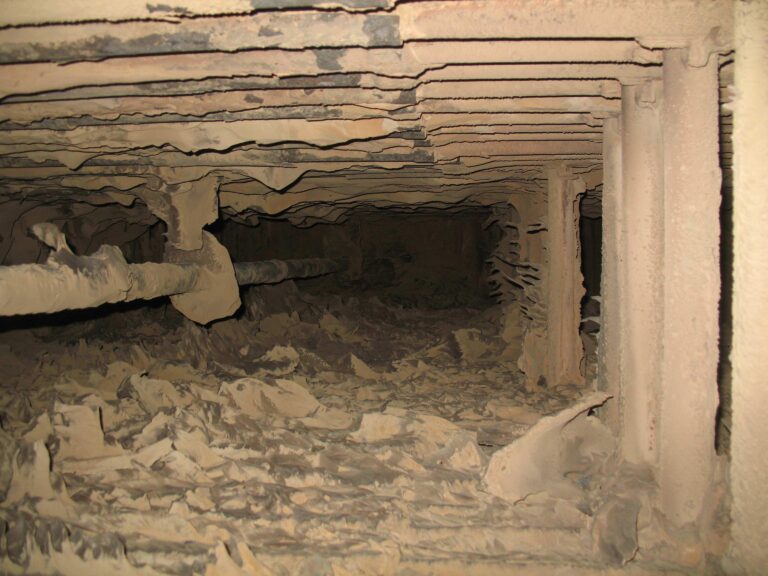
Waste-to-energy boilers lose efficiency between shutdowns primarily because combustion byproducts accumulate on heat transfer surfaces, forming insulating layers that progressively reduce the amount of heat reaching the working fluid. This fouling process is continuous and self-reinforcing: the more deposits build up, the hotter the flue gas stays, which accelerates further deposit formation. The sections below explain the mechanisms behind this cycle and what plant operators can do to slow it down.
What causes deposits to build up inside waste-to-energy boilers?
Deposits form inside waste-to-energy boilers because municipal solid waste is a chemically inconsistent fuel. Unlike coal or natural gas, waste contains varying concentrations of chlorine, sulfur, alkali metals, and heavy metals. During combustion, these compounds vaporize and then condense or react on cooler heat transfer surfaces, forming sticky, corrosive layers. Fly ash particles carried in the flue gas stream collide with these surfaces and bond to them, building up layer by layer.
The distribution of deposits is rarely uniform. Turbulence patterns, local temperature gradients, and variations in fuel composition all influence where fouling concentrates. Some zones accumulate hard, sintered slag that bonds tightly to tube walls, while other areas collect softer, powdery ash that is easier to dislodge. This inhomogeneous distribution makes deposit management more complex than in conventional power generation, because a single cleaning approach rarely addresses all fouling types equally well.
The furnace itself is particularly vulnerable. It accounts for roughly half of the total heat transfer in a boiler, and the high temperatures combined with variable fuel chemistry create ideal conditions for heavy slagging on furnace walls. When clinker formations grow large enough, they can detach and fall, causing mechanical damage to the hopper area below.
How do boiler deposits reduce heat transfer efficiency?
Boiler deposits reduce heat transfer efficiency because they act as thermal insulation between the hot flue gas and the water or steam inside the tubes. Even a thin layer of ash or slag has a significantly lower thermal conductivity than clean steel, so heat that should pass into the working fluid instead stays in the flue gas and exits through the stack. The result is lower steam output for the same fuel input, or the same steam output at higher fuel consumption.
The relationship between deposit thickness and efficiency loss is not linear. A relatively thin initial layer causes a disproportionately large drop in heat transfer because it interrupts direct contact between the gas and the metal surface. As the layer thickens, each additional millimeter adds less marginal resistance, but the cumulative effect on boiler efficiency continues to grow. Flue gas temperatures at the stack rise as deposits accumulate, which is one of the clearest measurable indicators that fouling is reducing performance.
Corrosion compounds the problem. Many of the chemical species deposited on tube surfaces, particularly chlorides and sulfates from waste combustion, are corrosive at elevated temperatures. When deposits trap heat against the tube wall, local metal temperatures rise above design limits, accelerating corrosion and shortening tube service life. This means fouling does not just reduce efficiency in the short term; it degrades the physical integrity of the industrial boiler system over time.
Why does efficiency loss accelerate the longer a boiler runs?
Efficiency loss accelerates over time because fouling is a self-reinforcing process. As deposits thicken, flue gas temperatures rise. Higher flue gas temperatures increase the rate at which volatile compounds condense on surfaces and the rate at which sticky particles adhere to existing deposit layers. The boiler effectively becomes progressively worse at resisting further fouling the more fouled it already is.
There is also a structural dimension to this acceleration. Early-stage deposits are often loose and partially self-cleaning under the mechanical action of the gas flow. Over time, thermal cycling and chemical reactions sinter these loose particles into hard, dense formations that are far more difficult to remove. Once slag reaches this state, it insulates more effectively and is more resistant to conventional cleaning methods, meaning the efficiency penalty per unit of deposit mass increases as the run progresses.
Flexible boiler operation, which is increasingly common as plants adapt to variable waste inputs and grid demands, adds further complexity. Frequent changes in load or fuel composition create thermal stress cycles that can cause deposits to crack and partially detach, only to be redeposited downstream. This redistribution of fouling material can block convective pass surfaces and reduce heat transfer in zones that were previously performing adequately.
What are the operational and financial consequences of fouling?
The operational consequences of fouling in waste-to-energy boilers range from gradual efficiency degradation to unplanned shutdowns. As heat transfer surfaces become insulated by deposits, operators must either accept reduced steam output or compensate by increasing fuel throughput, both of which carry direct financial costs. When fouling reaches a critical threshold, it can force an unscheduled outage for manual cleaning, which is significantly more expensive than planned maintenance.
Unplanned shutdowns are the most financially damaging outcome. Every hour a waste-to-energy plant is offline represents lost gate fees, lost electricity revenue and, in some cases, contractual penalties for waste that cannot be processed. The cost of the shutdown itself, including labor, cleaning materials and any emergency repairs to corroded or damaged tubes, adds to the total. Plants that rely on infrequent, intensive cleaning campaigns rather than continuous deposit management tend to experience more frequent unplanned outages.
There are also longer-term asset consequences. Repeated cycles of heavy fouling and aggressive cleaning accelerate wear on tube surfaces and cleaning equipment alike. Corrosion driven by chloride and sulfate deposits shortens tube service life, increasing the frequency and cost of tube replacements. Over a plant’s operational lifetime, the cumulative cost of poor deposit management significantly exceeds the investment required to address it proactively.
How does on-load boiler cleaning limit efficiency loss between shutdowns?
On-load boiler cleaning limits efficiency loss by removing deposits continuously while the boiler remains in operation, preventing the self-reinforcing fouling cycle from gaining momentum. Rather than allowing deposits to build up until they force a shutdown or require intensive manual cleaning, on-load systems intervene at regular intervals to keep heat transfer surfaces clear. This maintains more consistent boiler efficiency across the entire operating period between planned shutdowns.
Different zones within a boiler require different cleaning approaches. In the furnace and empty passes, water-based systems are particularly effective at removing heavy slagging. Systems that use a precisely controlled water jet moving in a meander pattern across furnace walls can target specific fouling zones without flooding the combustion chamber. Shower-clean systems mounted on the boiler roof and using umbrella or multi-jet nozzles provide 360-degree coverage as they descend through the furnace and empty passes. For membrane wall surfaces, wall blowers using steam as the cleaning medium remain a well-established option for removing lighter deposits.
In the convective passes, retractable and oscillating sootblowers address fouling on superheater, reheater and economizer surfaces. The choice between steam, air and water as the cleaning medium depends on the deposit type and the thermal conditions in each zone. Demand-driven cleaning, where cleaning cycles are triggered by actual deposit conditions rather than fixed time intervals, makes on-load boiler cleaning more efficient and reduces unnecessary wear on both the cleaning equipment and the boiler tubes themselves.
When should a plant consider upgrading its boiler cleaning system?
A plant should consider upgrading its boiler cleaning system when the current setup can no longer maintain acceptable heat transfer efficiency across the full operating period between shutdowns, or when unplanned outages linked to fouling are occurring more than once per year. Other clear indicators include rising stack temperatures that cannot be explained by fuel quality alone, increasing tube corrosion rates and growing maintenance costs associated with deposit-related damage.
Plants that inherited their cleaning systems from the original construction phase are particularly likely to benefit from a review. Equipment specified at the lowest upfront cost during project development often lacks the coverage, cleaning medium flexibility or control sophistication needed to handle the actual operating conditions of the plant. As waste composition changes over time and plants are asked to operate more flexibly, a cleaning system designed for stable, predictable conditions may become inadequate.
The business case for an upgrade should account for more than the cost of the new equipment. Reduced fuel consumption, fewer unplanned shutdowns, extended tube service life and lower manual cleaning costs all contribute to the return on investment. Plants switching from fixed-interval cleaning to demand-driven systems often find that they can reduce the total number of cleaning cycles while achieving better deposit control, which also reduces wear on the cleaning equipment itself.
How Clyde Bergemann supports boiler efficiency in waste-to-energy plants
We have been developing and supplying on-load boiler cleaning systems for waste-to-energy, biomass and power generation plants for more than 60 years. Our approach is built around matching the right cleaning technology to the specific deposit conditions in each zone of your boiler, rather than applying a one-size-fits-all solution.
- Water-based furnace cleaning: Our SMART Cannon and Shower-Clean systems use precisely controlled water jets to remove heavy slagging from furnace walls and empty passes while the boiler remains in full operation.
- Steam and air sootblowing: Retractable, part-retractable and oscillating sootblowers address fouling in superheater, reheater and economizer zones, with cleaning medium selection matched to deposit type and local temperatures.
- Demand-driven cleaning control: Our SMART Clean diagnostics and control systems trigger cleaning cycles based on actual deposit conditions, reducing unnecessary cleaning cycles and extending equipment service life.
- Flexible fuel compatibility: Our systems are designed to handle the variable fuel compositions typical of waste-to-energy plants, including changing chlorine and alkali content that affects deposit behavior.
- Full service support: We provide spare parts, maintenance surveys and operator training to keep cleaning systems performing reliably under the extreme temperatures and pressure cycles of industrial boiler operation.
If your plant is experiencing rising stack temperatures, increasing fouling-related downtime or growing maintenance costs, our Clyde Bergemann boiler efficiency solutions are worth reviewing in detail. To discuss your specific situation with one of our engineers, get in touch and we will help you identify where the greatest gains are available.
Related Articles
- What are the main types of sootblowers used in industrial boilers?
- Why is regular sootblowing important for combustion efficiency?
- What fuels produce the most soot deposits in industrial boilers?
- 4 ways smart boiler cleaning systems reduce maintenance workload
- Why on-load cleaning systems are key to continuous boiler operation