

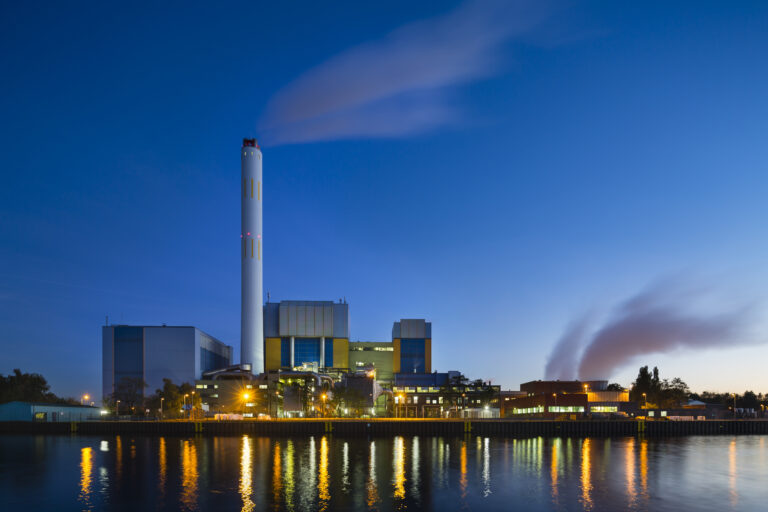
Grate-fired and fluidized-bed boilers handle fouling differently because their combustion mechanics, fuel contact patterns and temperature profiles create distinct deposit behaviors. In grate-fired systems, heavy slagging dominates the furnace walls, while fluidized-bed boilers tend to produce more distributed fouling across convective surfaces. Understanding these differences is the starting point for choosing the right cleaning strategy, and the sections below unpack each question in detail.
What causes fouling to build up inside waste and biomass boilers?
Fouling in waste and biomass boilers builds up when combustion gases carry ash particles, alkali compounds and heavy metals that condense or adhere to heating surfaces as the flue gas cools. The composition of the fuel is the primary driver: municipal solid waste (MSW), refuse-derived fuel (RDF) and agricultural residues all contain chlorine, potassium and sodium at levels that promote sticky, corrosive deposits. Woody biomass introduces its own alkali-rich ash chemistry, which behaves differently again depending on moisture content and combustion temperature.
Several factors combine to make deposit distribution uneven across the boiler. Flame shape, local gas velocity, surface temperature and fuel variability all influence where and how quickly deposits accumulate. A plant burning a consistent fuel blend will still experience fluctuating fouling rates as load changes or seasonal waste composition shifts. This inhomogeneous distribution is one reason why fixed cleaning schedules often fall short: the actual deposit situation rarely matches a predetermined timetable.
Two distinct fouling mechanisms are worth distinguishing. Slagging refers to molten or partially molten deposits that form in high-temperature zones, particularly on furnace walls. Fouling in the narrower sense describes the bonded ash layers that build up on convective surfaces such as superheaters and economisers, where gas temperatures are lower but deposit adhesion can still be severe. Both mechanisms reduce heat transfer, accelerate corrosion and, if left unmanaged, lead to unplanned shutdowns.
How does fouling behave differently in grate-fired boilers?
In grate-fired boilers, fouling is most aggressive in the furnace and empty passes, where large quantities of coarse ash and partially combusted material are carried upward by the combustion gases. The furnace walls are exposed to radiant heat and direct flame contact, making heavy slagging the dominant challenge. Clinker formations can develop on the membrane walls and in the hopper area, physically damaging surfaces and restricting gas flow if not removed promptly.
The grate itself moves fuel through distinct combustion zones (drying, ignition, burnout), which creates a wide range of local temperatures and gas compositions across the furnace cross-section. This variability means deposit character changes significantly from one wall to another and from the lower furnace to the upper passes. Alkali-rich deposits from waste fuels tend to be particularly adhesive at the temperatures found in the upper furnace, forming hard, bonded layers that resist simple mechanical disturbance.
Because grate-fired plants frequently process heterogeneous waste streams, fuel quality fluctuates continuously. A shift in chlorine content or moisture level can change deposit behavior within hours, making consistent cleaning response more difficult to achieve with static approaches. The furnace alone accounts for roughly half of total heat transfer in a boiler, so even moderate slagging on furnace walls has a measurable impact on steam generation efficiency.
How does fouling behave differently in fluidized-bed boilers?
Fluidized-bed boilers (both bubbling and circulating variants) combust fuel suspended in a bed of inert material, typically sand or ash, kept in motion by an upward air stream. This combustion method distributes heat more evenly and operates at lower peak temperatures than grate-fired systems, which reduces the risk of severe slagging in the furnace itself. However, the high gas velocities and fine particle loads characteristic of fluidized-bed operation shift the fouling challenge toward the convective heat transfer surfaces downstream.
Superheaters and reheaters in fluidized-bed boilers are particularly vulnerable. Fine ash particles entrained in the fast-moving flue gas impinge on tube banks and form bonded deposits that insulate the surfaces and reduce heat transfer effectiveness. In circulating fluidized-bed (CFB) systems, the cyclone separator returns unburned material to the bed, but fine carry-over still reaches the back-end surfaces in significant quantities. Biomass fuels with high potassium content are especially problematic here, as potassium-rich deposits have low melting points and bond readily to tube surfaces at typical superheater temperatures.
Compared to fouling in grate-fired boilers, fouling in fluidized-bed systems tends to be more evenly distributed across the convective section but can be harder to dislodge once bonded. The lower furnace temperatures that make CFB attractive from an emissions standpoint also mean that deposits in the back-end passes are less likely to self-clean through thermal cycling, requiring more deliberate and targeted cleaning interventions.
What are the operational consequences of unmanaged boiler fouling?
Unmanaged fouling in waste and biomass boilers leads directly to reduced heat transfer, higher flue gas exit temperatures and falling steam output, all of which translate into lower plant efficiency and higher fuel consumption per unit of energy produced. As deposit layers thicken, the boiler must work harder to maintain output, increasing wear on auxiliary equipment and raising operating costs.
Corrosion is a closely linked consequence. Many deposits found in waste and biomass boilers contain chlorine compounds that become chemically aggressive at elevated temperatures, attacking tube surfaces beneath the deposit layer. This accelerates metal loss and can shorten tube life significantly, leading to forced outages for tube replacement that are both costly and difficult to schedule.
The most serious operational risk is an unplanned shutdown. Heavy clinker formations in grate-fired furnaces can fall into the hopper and cause mechanical damage, while severe fouling in convective passes can block gas flow to the point where continued operation becomes unsafe. For waste-to-energy plants, any unplanned outage also interrupts waste processing, creating downstream logistical problems beyond the boiler itself. Proactive fouling management is therefore not just an efficiency question: it directly determines plant availability and long-term asset reliability.
How do on-load cleaning systems manage fouling in both boiler types?
On-load boiler cleaning systems remove deposits while the boiler continues to operate, avoiding the efficiency losses and downtime associated with offline cleaning. The cleaning medium and equipment type are matched to the fouling character of each boiler zone, which is why grate-fired and fluidized-bed plants typically require different combinations of cleaning technology across their furnace and convective sections.
Cleaning the furnace and empty passes
For the furnace and empty passes of grate-fired and biomass boilers, water-based cleaning systems are the most effective approach for removing heavy slagging from membrane walls. Systems that direct a water jet in a meander-shaped pattern across the side and opposite walls provide targeted, controlled cleaning without thermal shock damage. Shower-clean systems mounted on the boiler roof and using umbrella or multi-jet nozzles can cover the full furnace cross-section as they descend, making them well suited to larger incinerators. For membrane wall surfaces where steam is the preferred medium, wall blowers provide the conventional cleaning action.
Cleaning convective surfaces
Superheaters, reheaters and economisers (the zones most challenged in fluidized-bed boilers) are typically served by retractable sootblowers, part-retractable sootblowers and oscillating sootblowers, all using steam or air as the cleaning medium. In facilities handling varying fuel mixtures or loose deposits, rapping systems offer an alternative that requires neither steam nor air, reducing maintenance costs while still controlling deposit build-up effectively. For air preheaters and downstream surfaces, rotating element sootblowers extend the cleaning reach into areas where fixed equipment cannot access.
The most significant advance in fouling management is the shift from fixed cleaning schedules to demand-driven cleaning, where the system responds to the actual deposit situation rather than a predetermined timetable. Integrating cleaning equipment with boiler diagnostic and control technology allows operators to target fouled areas precisely, adjust cleaning intensity as fuel quality changes and avoid unnecessary cleaning cycles that waste steam or water. This approach is particularly valuable in waste and biomass plants where fuel variability is a constant operational reality.
How Clyde Bergemann supports fouling management in waste and biomass plants
We have spent more than 60 years developing on-load cleaning solutions for the specific challenges that waste and biomass boilers present. Our experience spans grate-fired, fluidized-bed and co-firing configurations across more than 130 countries, and we apply that knowledge to help plant operators maintain availability, protect heating surfaces and respond to changing fuel conditions without interrupting operation.
- Complete cleaning system coverage across all boiler zones: furnace, superheater, reheater, economiser and air preheater
- Water-based furnace cleaning technology for heavy slagging in grate-fired and biomass incinerators, including SMART Cannon and Shower-Clean systems
- Retractable, part-retractable and oscillating sootblowers for convective surface fouling in fluidized-bed and other boiler types
- Demand-driven SMART Clean platform that integrates cleaning equipment with boiler diagnostics to clean according to actual deposit conditions rather than fixed schedules
- Rapping systems for facilities with varying fuels and loose deposits, requiring no steam or air as a cleaning medium
- Comprehensive service support including spare parts, maintenance, surveys and employee training
Our Clyde Bergemann boiler efficiency solutions are designed to work together as an integrated system, giving your plant the flexibility to handle fuel variability while keeping fouling under control. If you want to discuss the specific fouling challenges in your plant, we are available for a consultation.
Related Articles
- What causes boiler performance to decline over time?
- How do you know if your current boiler cleaning system is underperforming?
- What are the most effective methods for on-load boiler cleaning?
- What is the difference between steam sootblowing and water washing in boilers?
- What is on-load boiler cleaning and why does it matter?