

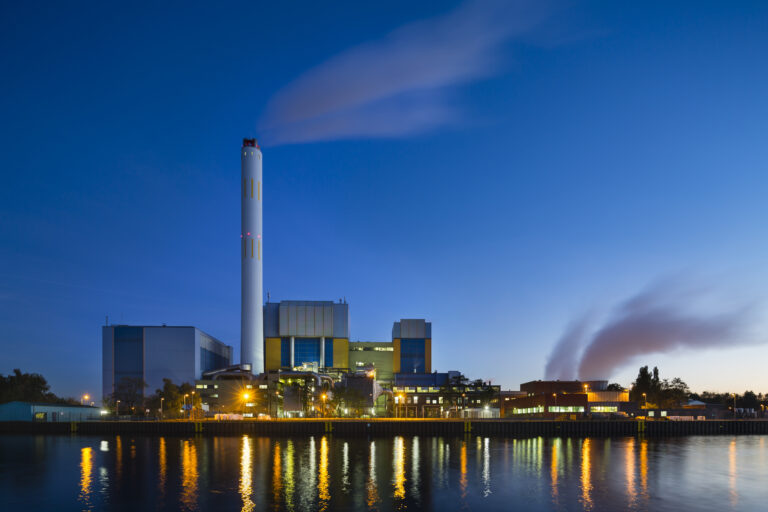
Waste-to-energy plants operate under some of the most demanding combustion conditions in the industrial world. The fuel is heterogeneous, the combustion chemistry is complex and the regulatory environment is tightening year by year. In 2026, emissions compliance is not a background concern for plant operators; it is a daily operational reality with direct financial and legal consequences.
What many maintenance managers and technical teams underestimate is how directly boiler fouling connects to emissions performance. This article builds that understanding from the ground up: starting with what fouling is and how it forms, moving through the combustion and heat transfer mechanics it disrupts, and arriving at practical strategies for managing it as a compliance risk. Each section builds on the one before it, so by the end you will have a clear framework for diagnosing and addressing fouling-driven emissions problems in your plant.
What is boiler fouling and how does it develop?
Boiler fouling is the accumulation of deposits on heat transfer and reaction surfaces inside a boiler. In waste-to-energy plants, these deposits form when combustion gases carry ash particles, condensed salts and partially burned material that stick to tube walls, furnace membranes and downstream heating surfaces as the gas cools.
The process is not uniform. Deposit distribution across a WtE boiler is inherently uneven because it depends on a combination of factors: local gas velocity, surface temperature, fuel composition and combustion zone geometry. Municipal solid waste is a particularly challenging fuel because its composition changes continuously; calorific value, moisture content, chlorine levels and ash chemistry all vary from load to load. This variability means fouling patterns shift over time and rarely follow a predictable schedule.
Deposits typically develop in layers. The first layer is often a thin, chemically bonded film that adheres directly to the tube surface. Subsequent layers build on top of this base, becoming progressively thicker and more insulating. In furnace zones, where temperatures are highest, these deposits can sinter and harden into clinker formations. In cooler downstream zones such as superheaters and economisers, sticky alkali sulfate and chloride compounds dominate. Understanding this layered, zone-specific nature of boiler deposits is the starting point for everything that follows.
How fouling disrupts combustion and heat transfer
The furnace accounts for approximately 50% of total heat transfer in a boiler. When deposits build up on furnace walls, they act as thermal insulation, reducing the rate at which heat is absorbed from the combustion gases and transferred to the working fluid. The immediate consequence is that gas temperatures leaving the furnace are higher than design values.
This elevated exit temperature has a cascading effect on the rest of the boiler. Downstream surfaces, superheaters, reheaters and economisers, receive hotter gas than they were designed to handle. This accelerates deposit formation on those surfaces too, compounds corrosion rates and can push metal temperatures beyond safe operating limits. The boiler is no longer operating as an integrated thermal system; it is operating in a degraded state where each zone is compensating for the failures of the one before it.
Combustion itself is also affected. Heavy slagging on furnace walls can alter the aerodynamics of the combustion zone, disrupting the mixing of fuel and combustion air. Poor mixing leads to incomplete combustion: pockets of unburned material, localised temperature gradients and unstable flame behaviour. For example, a furnace wall with significant slag buildup on one side can create asymmetric airflow patterns that push combustion gases unevenly through the system, creating hot spots and cold zones simultaneously. This is where the link between fouling and emissions begins to take shape.
Why poor combustion leads to emissions violations
Building on the combustion disruption described above, the connection to emissions violations becomes clear when you examine what incomplete or unstable combustion actually produces. Regulatory limits for WtE plants typically cover carbon monoxide, NOx, particulate matter, dioxins and furans, and hydrogen chloride. Fouling-driven combustion instability can push several of these beyond permitted thresholds simultaneously.
Carbon monoxide is the most direct indicator. When combustion is incomplete, because fouling has disrupted air-fuel mixing or reduced furnace temperatures below the threshold needed for full burnout, CO concentrations in the flue gas rise. Many regulatory frameworks treat sustained CO exceedances as a trigger for mandatory plant shutdown, making this a compliance risk with immediate operational consequences.
NOx emissions follow a different but related logic. NOx formation is strongly temperature-dependent. Fouling-induced temperature gradients create localised hot zones where thermal NOx formation accelerates, while simultaneously reducing overall combustion efficiency. The result is a flue gas profile that is harder to treat with downstream abatement systems because the pollutant concentrations and temperature conditions are no longer within the design envelope of those systems.
Particulate emissions are also affected. Incomplete combustion generates more unburned carbon particles, and clinker formations that break away from fouled furnace walls can introduce coarse particulate material into the gas stream. Downstream filters and electrostatic precipitators are designed for a specific particle load and size distribution; when fouling changes those parameters, abatement performance degrades.
How cleaning frequency and method affect compliance outcomes
Knowing that fouling drives emissions violations, the logical response is to clean more frequently. But cleaning frequency alone is not the right frame. The method, timing and targeting of cleaning all determine whether it actually improves compliance outcomes or simply adds operational cost without addressing the underlying problem.
Traditional fixed-schedule cleaning, where sootblowers or other cleaning devices operate on a time-based cycle regardless of actual deposit conditions, has a fundamental limitation: it cleans when the schedule says to, not when the deposits require it. In a WtE plant with variable fuel, this means the system may clean aggressively when deposits are light and miss critical buildup periods when fuel composition shifts toward higher ash or chlorine content.
Demand-driven cleaning addresses this by responding to actual deposit conditions rather than a fixed timetable. When cleaning is triggered by measured changes in heat transfer performance or deposit indicators, it targets the areas and moments where intervention has the greatest impact on combustion stability and emissions. The cleaning medium also matters: steam-based sootblowers are effective for loose deposits in convective passes, while water-based systems are better suited to heavy slagging in furnace zones where steam lacks the mechanical force to remove sintered material.
- Fixed-schedule cleaning: Predictable but unresponsive to actual deposit conditions; may over-clean in some periods and under-clean in others
- Demand-driven cleaning: Responds to measured deposit buildup; more efficient use of cleaning energy and better protection of combustion stability
- Steam-based systems: Well-suited to convective pass deposits and loose fouling in superheater and economiser zones
- Water-based systems: More effective against heavy slagging and sintered deposits in furnace and empty pass zones
The compliance implication is direct: a plant that cleans reactively and precisely maintains more stable combustion conditions, which translates into more consistent flue gas composition and more predictable abatement system performance.
Diagnosing fouling-driven compliance risks in your plant
Applying the concepts covered so far, the next step is developing a practical approach to identifying where fouling is creating compliance exposure in your specific plant. This requires looking at operational data through a fouling lens rather than treating emissions exceedances and efficiency losses as separate problems.
Start with heat transfer performance. A rising flue gas exit temperature from the furnace, when fuel input and steam output are held constant, is a reliable early indicator of deposit buildup on furnace walls. Similarly, a widening gap between design and actual steam temperatures in the superheater zone often signals fouling on those surfaces. These are not just efficiency metrics; they are early warning signals for the combustion instability that precedes emissions problems.
Cross-reference heat transfer trends with emissions monitoring data. If CO concentrations begin to rise during periods when furnace exit temperatures are also elevated, the causal chain is likely fouling-driven. If NOx spikes correlate with specific fuel batches that have higher ash or chlorine content, that points to deposit chemistry as a contributing factor.
Consider the following diagnostic indicators when assessing fouling-driven compliance risk:
- Increasing furnace exit gas temperature at constant load
- Rising CO concentrations in continuous emissions monitoring data
- Declining steam output or steam temperature at constant fuel input
- Increased frequency of clinker falls or hopper blockages
- Elevated corrosion rates on superheater tubes
- Abatement system performance degradation without changes to system settings
None of these indicators alone confirms a fouling problem, but a pattern across several of them, particularly when they coincide with fuel composition changes, is a strong signal that deposit management is affecting your emissions compliance posture.
Building a long-term fouling management strategy
A reactive approach to fouling, cleaning when problems become visible and addressing compliance exceedances after they occur, is the most expensive way to manage this challenge. A long-term strategy shifts the focus to prevention, monitoring and continuous adjustment.
The foundation of any effective strategy is understanding your plant’s specific fouling profile. WtE plants processing municipal solid waste face different deposit chemistry from biomass plants or coal-fired units. Chlorine-rich waste streams produce alkali chloride deposits that are particularly aggressive toward superheater materials and that behave differently under cleaning than silicate-based ash deposits. Knowing your deposit chemistry informs both the choice of cleaning technology and the acceptable intervals between cleaning cycles.
Integrate cleaning system performance into your broader plant monitoring framework. Cleaning events should be logged alongside heat transfer data and emissions readings so that you can evaluate whether each cleaning intervention actually restored performance to the expected level. Over time, this data reveals which zones are most sensitive to fouling, which fuel compositions drive the fastest deposit buildup and where your current cleaning approach has gaps.
Plan for flexibility. As fuel mixes evolve, particularly in regions where waste composition is shifting due to recycling policy changes or the addition of biomass co-firing, your fouling management approach needs to adapt. A strategy built around a fixed fuel assumption will underperform as conditions change. Build in regular reviews of cleaning parameters, and ensure your team has the diagnostic capability to detect when deposit patterns are shifting before they become compliance problems.
Finally, treat fouling management as a cross-functional responsibility. Maintenance teams manage the cleaning systems, but operations teams control combustion parameters and fuel handling. Emissions data sits with environmental compliance functions. Bringing these perspectives together, sharing data and aligning on fouling as a shared operational risk, is what separates plants that manage compliance proactively from those that respond to violations after the fact.
How Clyde Bergemann supports emissions compliance in WtE plants
We have been developing and manufacturing on-load boiler cleaning systems for more than 60 years, with deep experience in the specific challenges of waste-to-energy and biomass combustion environments. Our approach is built around the understanding that fouling management and emissions compliance are not separate problems; they are the same problem viewed from different angles.
Our boiler efficiency solutions are designed to address the full range of deposit types and boiler zones that WtE operators encounter:
- Demand-driven cleaning: Our SMART Clean platform responds to actual deposit conditions rather than fixed schedules, targeting cleaning where and when it has the greatest impact on combustion stability and emissions performance
- Water-based furnace cleaning: Systems including the SMART Cannon and Shower-Clean System (SCS) use water as the cleaning medium to remove heavy slagging from furnace walls and empty passes, without requiring steam or compressed air, which reduces maintenance costs
- Retractable and oscillating sootblowers: For superheater, reheater and economiser zones, our steam and air-based sootblower range handles the deposit types typical of convective pass surfaces in variable-fuel environments
- Diagnostics and controls: Our SMART Clean diagnostics integrate with plant control systems to provide continuous visibility of deposit buildup and cleaning effectiveness, giving your team the data needed to manage fouling proactively
- Service and spare parts: We support plants in over 130 countries with experienced engineers, inspection services and spare parts availability, because a cleaning system that cannot be maintained reliably is not a compliance asset
If fouling is creating compliance pressure in your plant or you want to assess whether your current cleaning approach is matched to your actual deposit conditions, we are ready to help. Get in touch to speak with one of our engineers about your specific situation.