

Ash carry-over in boilers causes heat transfer problems by depositing fine ash particles onto convective heating surfaces such as superheaters, reheaters and economisers, forming insulating layers that reduce the rate at which heat passes from flue gas into the working fluid. Even a thin, uniform deposit can measurably lower steam output and raise fuel consumption. The sections below unpack the mechanisms, causes and consequences in detail, and explain what plant operators can do about it.
What happens to heat transfer surfaces when ash carry-over occurs?
When ash carry-over occurs, fine particles entrained in the flue gas stream settle on tube banks and heating surfaces throughout the convective pass. Because ash has a much lower thermal conductivity than steel, each layer of deposit acts as an insulating blanket, forcing the flue gas to leave the boiler at a higher temperature while delivering less heat to the steam cycle. The result is a direct reduction in boiler efficiency and an increase in fuel consumption for the same steam output.
Beyond the insulating effect, ash deposits change the geometry of gas flow paths. As deposits accumulate between tube rows, the effective cross-sectional area for flue gas narrows, increasing gas velocity and pressure drop across the convective pass. Higher gas velocities accelerate erosion of tube surfaces, while the combination of heat and corrosive compounds within the ash can attack tube metal directly. In waste-to-energy and biomass applications, chlorine-rich ash deposits are particularly aggressive, promoting high-temperature corrosion that shortens tube service life significantly.
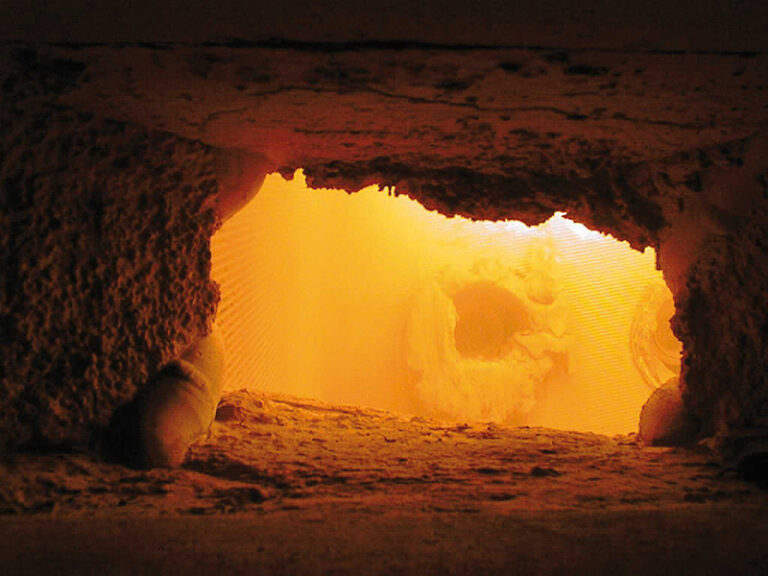
In the furnace itself, which accounts for approximately 50% of total heat transfer in a boiler, slagging on membrane walls compounds the problem. Molten or partially molten ash adheres to furnace walls, reducing radiant heat absorption and pushing higher flue gas temperatures into the convective pass. This means the convective surfaces must handle a greater thermal load at the same time as they are being fouled, accelerating the efficiency loss.
What causes ash carry-over in the first place?
Ash carry-over is caused by flue gas velocities that are high enough to lift and transport fine ash particles out of the combustion zone and into the convective pass. The quantity and characteristics of the ash carried over depend on fuel composition, combustion conditions, boiler load and the design of the gas path. Any factor that increases gas velocity or produces finer, lighter ash particles will increase the rate of carry-over.
Fuel quality plays a large role. Fuels with high ash content, high moisture or variable calorific value produce combustion conditions that are harder to control, generating more unburned particles and finer fly ash fractions. In biomass combustion, alkali-rich fuels such as straw or agricultural residues produce ash with low melting points, meaning particles can arrive at heating surfaces in a sticky, semi-molten state that bonds strongly to tube metal rather than remaining as loose dust.
Boiler load changes also drive carry-over. During load ramps, excess combustion air or changes in fuel feed rate can temporarily increase gas velocities and disturb settled deposits, releasing bursts of ash into the gas stream. Poorly tuned combustion systems that allow localised high-temperature zones or incomplete burnout produce more fine particulate matter, increasing the volume of material available for carry-over.
Why do ash deposits build up faster in waste-to-energy and biomass boilers?
Ash deposits build up faster in waste-to-energy and biomass boilers because the fuels are chemically complex, heterogeneous and often rich in alkali metals, chlorine and sulphur. These elements lower the melting point of ash, making deposits sticky and adhesive at the temperatures found on superheater and reheater surfaces. Municipal solid waste in particular contains plastics, organic material and inorganic contaminants that produce a highly variable ash chemistry, making deposit behaviour difficult to predict and control.
The inhomogeneous nature of these fuels means combustion conditions fluctuate continuously. Variations in moisture content, particle size and calorific value cause temperature swings in the furnace that alternately melt and re-solidify deposits, building up dense, hard clinker layers that are far more difficult to remove than loose fly ash. In biomass plants burning agricultural residues, potassium and chlorine in the fuel combine to form low-melting-point compounds that coat tube surfaces rapidly, even at moderate flue gas temperatures.
Waste-to-energy boilers face the additional challenge of corrosive gas species. Hydrogen chloride released during combustion reacts with alkali ash compounds to form chloride salts that deposit on tube surfaces and drive aggressive under-deposit corrosion. This means that in waste-to-energy and biomass boiler fouling, the problem is not just thermal resistance but active material degradation, making timely and effective cleaning even more important than in conventional coal-fired plants.
How does fouling from ash carry-over affect boiler efficiency over time?
Fouling from ash carry-over reduces boiler efficiency progressively over time by increasing the thermal resistance between the flue gas and the heat transfer fluid. As deposit thickness grows, the temperature difference required to drive the same heat flux increases, which means flue gas exit temperatures rise and more energy leaves the boiler as waste heat rather than useful steam. This degradation is cumulative and accelerates as deposits harden and become more difficult to remove through normal cleaning cycles.
In practical terms, even a few millimetres of deposit on superheater or economiser tubes can raise flue gas exit temperatures by tens of degrees, translating directly into measurable increases in fuel consumption per unit of steam produced. Over weeks or months without effective cleaning, the efficiency loss compounds. Operators often notice rising stack temperatures as the first indicator that fouling is advancing, but by the time this is visible on instrumentation, the deposit layer is already substantial.
The efficiency impact is not uniform across the boiler. Surfaces closest to the furnace exit, where gas temperatures and particle concentrations are highest, foul most rapidly. Superheaters and reheaters are typically the first to show significant performance degradation. Economisers, further downstream, accumulate cooler and drier deposits that are less adhesive but still reduce heat recovery effectiveness. Air preheaters at the tail end of the gas path can suffer from condensation of acid vapours onto ash deposits, creating sticky, corrosive fouling that restricts airflow and increases fan power consumption.
What are the signs that ash carry-over is damaging heat transfer in a boiler?
The clearest signs that ash carry-over is damaging heat transfer are rising flue gas exit temperatures, falling steam temperatures at constant load and increasing fuel consumption for the same output. These three indicators together point to growing thermal resistance on heating surfaces. Additional signs include rising pressure drop across tube banks, which indicates narrowing gas flow paths due to deposit accumulation, and uneven steam temperatures across parallel tube circuits, which suggests localised heavy fouling.
Operators may also observe increased sootblower steam consumption as cleaning systems work harder to maintain surface cleanliness, or reduced effectiveness of existing cleaning cycles that previously kept surfaces clean. In severe cases, clinker formations in the furnace become visible during inspections, and tube metal temperatures measured by thermocouples may rise above design limits, signalling that the protective effect of the working fluid is being compromised by the insulating deposit layer.
During planned outages, visual inspection of tube surfaces provides direct evidence of fouling severity. Hard, glassy deposits that resist mechanical cleaning indicate that ash has been arriving in a molten or semi-molten state, a sign of slagging conditions in the furnace or high alkali content in the fuel. Loose, powdery deposits that clean easily suggest convective carry-over of dry fly ash without significant sintering. Understanding the deposit type helps in selecting the right cleaning approach and adjusting cleaning frequency before the next outage.
How can on-load boiler cleaning reduce the impact of ash carry-over?
On-load boiler cleaning reduces the impact of ash carry-over by removing deposits continuously during operation, before they harden, bond to tube surfaces or build up to a thickness that significantly impairs heat transfer. Cleaning while the boiler runs avoids the efficiency losses and production interruptions associated with allowing deposits to accumulate between planned outages. The most effective on-load cleaning strategies match the cleaning medium, frequency and intensity to the actual deposit conditions in each zone of the boiler.
In the furnace, where slagging on membrane walls reduces radiant heat absorption, water-based cleaning systems deliver targeted jets that break up and remove heavy slag deposits without damaging tube surfaces. In the convective pass, sootblowers using steam or air dislodge fly ash deposits from superheater, reheater and economiser tube banks. The choice between steam and water as a cleaning medium depends on deposit hardness and adhesion: loose fly ash responds well to steam or air, while harder, sintered deposits in waste-to-energy and biomass applications often require water lances or part-retractable sootblowers capable of delivering higher impact energy.
Demand-driven cleaning, where cleaning cycles are triggered by actual deposit conditions rather than fixed time intervals, offers a meaningful improvement over conventional scheduled cleaning. By using sensor data and boiler performance monitoring to identify where and when deposits are forming, operators can direct cleaning effort to the zones that need it most, reduce unnecessary cleaning that wastes steam and causes thermal cycling stress on tubes, and extend the intervals between outages. This approach is particularly valuable in waste-to-energy and biomass plants where deposit behaviour varies with fuel composition and load.
How Clyde Bergemann supports you in managing ash carry-over
We have been developing and supplying boiler cleaning solutions for more than 60 years, and ash carry-over in boilers is one of the core challenges our products are designed to address. Our Clyde Bergemann boiler efficiency solutions cover every zone of the boiler where ash deposits reduce heat transfer, from furnace wall cleaning to convective pass sootblowing and intelligent cleaning control.
- Furnace cleaning: Our SMART Cannon and Shower Clean System use water as the cleaning medium to remove heavy slagging from furnace walls, including in large waste-to-energy and biomass incinerators where deposit build-up is most aggressive.
- Convective pass cleaning: Retractable, part-retractable and oscillating sootblowers clean superheater, reheater and economiser surfaces using steam, air or water, matched to the deposit type and tube geometry in each application.
- Demand-driven cleaning control: Our SMART Clean platform uses boiler diagnostics and sensor data to trigger cleaning based on actual deposit conditions rather than fixed schedules, reducing steam consumption and avoiding unnecessary thermal stress on tubes.
- Waste-to-energy and biomass expertise: We have extensive experience with the specific fouling and corrosion challenges of these fuel types, including chlorine-rich and alkali-rich ash that forms sticky, adhesive deposits at low temperatures.
- Service and spare parts: We provide surveys, maintenance support, spare parts and operator training tailored to the specific cleaning systems installed at your plant.
If you are dealing with rising flue gas temperatures, falling steam output or increasing maintenance costs linked to ash deposits, we are glad to help you assess the situation and identify the right cleaning strategy. Get in touch to speak with one of our engineers.