

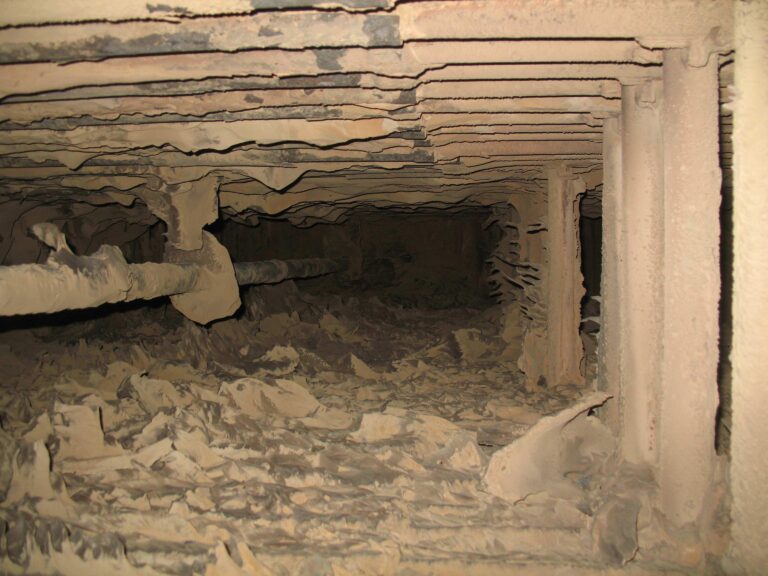
Fouling in industrial boilers is caused by the accumulation of ash, mineral compounds and combustion by-products on heat transfer surfaces. These deposits form when fuel impurities vaporise at high temperatures and then condense or react on cooler tube surfaces, gradually building up layers that insulate the metal and restrict heat flow. The sections below unpack the specific mechanisms, fuel influences and operating conditions that drive fouling in practice.
What types of deposits form inside industrial boilers?
Industrial boilers accumulate two main categories of deposits: slagging and fouling. Slagging refers to molten or partially molten ash that sticks to furnace walls and radiant surfaces exposed to the highest temperatures. Fouling describes the bonding of ash particles and condensed vapours onto convective surfaces such as superheaters, reheaters and economisers, where gas temperatures are lower.
Beyond this broad distinction, the chemical character of deposits varies considerably. Silicate-based slags are common in coal and biomass combustion, forming hard, glassy layers that are difficult to remove mechanically. Alkali sulphate and chloride compounds are particularly prevalent in waste-to-energy and biomass plants, where fuels contain elevated levels of potassium, sodium and chlorine. These compounds have relatively low melting points, which means they remain sticky across a wide temperature range and act as binding agents for additional fly ash particles. Calcium-rich deposits, by contrast, tend to form drier, more friable layers that respond better to mechanical cleaning.
In practice, most boilers accumulate a mixture of deposit types simultaneously, and the distribution across heating surfaces is rarely uniform. Factors such as local gas velocity, surface temperature and the trajectory of ash particles all influence where deposits concentrate and how quickly they grow.
What causes slagging on boiler furnace walls?
Slagging on furnace walls occurs when ash particles in the combustion gas reach their softening or melting temperature and then contact a surface, where they adhere and solidify. The root cause is the mineral content of the fuel: elements such as iron, calcium, silicon, sodium and potassium combine during combustion to form compounds with melting points that fall within the temperature range of the furnace.
The position of the flame and the local heat flux both play a role. Areas of the furnace wall that face the hottest part of the flame receive the highest concentration of molten particles. If the flame impinges directly on a membrane wall, the rate of slag deposition accelerates sharply. Combustion conditions that produce a reducing atmosphere near the wall surface lower the melting point of iron-containing ash compounds, making slagging more likely even when overall furnace temperatures appear manageable.
Once an initial slag layer forms, it insulates the tube surface beneath it. The outer face of the deposit reaches higher temperatures than the clean tube wall would, which keeps incoming ash particles in a molten state for longer and encourages further adhesion. This self-reinforcing cycle means that slagging, if left unaddressed, grows progressively faster over time.
Why does fouling occur on convective heat transfer surfaces?
Fouling on convective surfaces such as superheaters and economisers occurs primarily through the condensation and chemical reaction of volatile compounds carried in the flue gas. As hot combustion gases cool while passing through the convective pass, alkali metals and sulphur compounds reach their dew point and deposit on tube surfaces. These condensed layers are chemically reactive and bond strongly to the metal.
A secondary mechanism is inertial impaction: fly ash particles travelling with the flue gas strike tube surfaces, particularly on the leading edges of tube banks where gas velocity is highest. Fine particles that escape impaction can also settle on horizontal or low-velocity surfaces through gravitational deposition.
The result is a layered deposit structure. The innermost layer, closest to the tube wall, is typically a dense, sintered material formed by condensation. Outer layers are more porous and consist of loosely bonded fly ash. While the outer layers can often be dislodged by cleaning systems, the inner sintered layer is far more resistant and requires targeted, high-energy cleaning to remove effectively.
How does fuel type affect fouling severity?
Fuel composition is one of the strongest predictors of fouling severity in industrial boiler systems. Fuels with high concentrations of alkali metals, chlorine and sulphur produce the most aggressive deposits, because these elements form low-melting-point compounds that remain sticky across a wide range of surface temperatures.
Waste-to-energy plants face some of the most challenging fouling conditions. Municipal solid waste contains variable and often high levels of chlorine, sodium and potassium. Chlorine in particular drives the formation of alkali chlorides, which condense readily on superheater surfaces and initiate corrosion beneath the deposit layer. The heterogeneous nature of the fuel means deposit composition and distribution shift constantly, making it difficult to predict or manage fouling with a fixed cleaning schedule.
Biomass fuels present a similar challenge. Agricultural residues such as straw and cereal husks are rich in potassium and silica, producing deposits that are both sticky and abrasive. Woody biomass is generally cleaner, but co-firing with other fuels or using lower-grade feedstocks introduces the same alkali-driven fouling mechanisms. Coal, by comparison, tends to produce harder, more predictable silicate slags, though high-sulphur coals generate their own fouling challenges in the convective pass.
When plants switch fuels or blend multiple fuel types, the fouling behaviour can change significantly. A cleaning strategy optimised for one fuel may be inadequate when the fuel mix shifts, which is why demand-driven cleaning approaches that respond to actual deposit conditions outperform fixed-interval programmes in multi-fuel environments.
What operating conditions accelerate boiler fouling?
Several operating conditions directly accelerate the rate at which deposits build up on boiler surfaces. High furnace temperatures increase the proportion of ash that reaches a molten or semi-molten state, raising the likelihood of adhesion on contact with any surface. Conversely, operating at reduced load can lower gas temperatures into the range where certain compounds condense more readily on convective surfaces.
Flue gas velocity is another important factor. Higher velocities increase the rate of inertial impaction on tube banks, while low-velocity zones allow fine particles to settle by gravity. Poorly distributed combustion air creates localised reducing zones near burners or grate sections, which lowers the melting point of iron-containing ash and promotes slagging in those areas.
Flexible operation, which is increasingly common as plants balance grid demands or process variable waste streams, introduces additional stress. Frequent load changes alter gas temperatures and flow patterns, disrupting any equilibrium that may have developed in deposit behaviour. Plants that ramp output up and down regularly often see faster deposit growth and less predictable distribution than those running at steady state.
Maintenance intervals also matter. If cleaning systems are operated on a fixed schedule rather than in response to actual deposit conditions, surfaces can accumulate significant fouling between cleaning cycles. This allows deposits to sinter and harden, making them progressively more difficult to remove and increasing the risk of an unplanned shutdown.
How does fouling reduce boiler efficiency and output?
Fouling reduces boiler efficiency by acting as a thermal insulator between the hot combustion gases and the water or steam inside the tubes. Even a thin deposit layer significantly increases thermal resistance, meaning less heat transfers to the working fluid per unit of fuel burned. The boiler must then burn more fuel to achieve the same steam output, raising operating costs and CO2 emissions simultaneously.
As deposits thicken, the effects compound. Flue gas leaving the boiler carries more heat than it should, raising stack temperatures and reducing overall thermal efficiency. In the convective pass, fouled tube banks restrict gas flow, increasing draught losses and placing additional load on fans. In severe cases, bridging deposits between adjacent tubes can partially or fully block gas lanes, forcing a reduction in boiler output or an unplanned shutdown for manual cleaning.
Fouling also accelerates corrosion. Alkali chloride deposits in particular create a chemically aggressive environment at the tube surface, attacking the protective oxide layer on the metal. Over time, this leads to wall thinning, tube failures and unplanned outages that are far more costly than the efficiency losses alone. Managing deposit build-up is therefore not only a question of heat transfer performance but also of asset longevity and plant availability.
How Clyde Bergemann helps you manage boiler fouling
We have been developing and manufacturing on-load boiler cleaning systems for more than 60 years, and fouling management in industrial boiler systems is at the core of what we do. Our product portfolio covers every zone of the boiler where deposits form, from the furnace and empty passes through to superheaters, reheaters, economisers and air preheaters.
- Targeted furnace cleaning: Our SMART Cannon and Shower-Clean System use water as the cleaning medium to remove slagging from furnace walls and empty passes in waste-to-energy and biomass plants, with precise positioning to reach the areas where deposits concentrate.
- Convective surface cleaning: Retractable, part-retractable and oscillating sootblowers address fouling on superheater and reheater tube banks, using steam or air to dislodge deposits before they sinter and harden.
- Demand-driven cleaning with SMART Clean: Rather than following a fixed cleaning schedule, our SMART Clean approach responds to actual deposit conditions detected by sensors and diagnostics. This means cleaning happens when and where it is needed, reducing unnecessary cleaning cycles and protecting surfaces from overcleaning.
- Multi-fuel flexibility: Our systems are designed to handle the variable deposit behaviour that comes with changing fuel mixes, making them well suited to plants that co-fire or process heterogeneous waste streams.
- Extended plant availability: By keeping heating surfaces clean on-load, our systems help you avoid unplanned shutdowns and reduce the frequency and duration of maintenance outages.
If you are dealing with fouling challenges in your plant, our engineers can assess your specific situation and recommend a cleaning strategy matched to your fuel type, boiler design and operating profile. You can find an overview of our boiler efficiency solutions on our website, or get in touch to discuss your requirements directly with our team.
Related Articles
- How to improve heat transfer efficiency in biomass boiler systems
- What causes slagging in waste-to-energy boilers and how to prevent it
- When does it make sense to upgrade from sootblowers to an online cleaning system?
- What is demand-based boiler cleaning and how does it work?
- How boiler fouling affects emissions compliance in waste-to-energy plants