

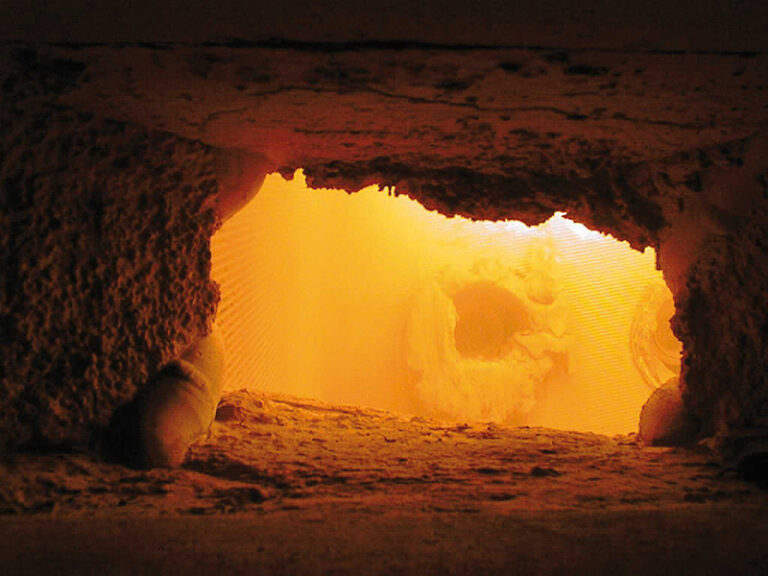
Schedule sootblowing based on actual deposit conditions in your boiler, not on a fixed clock. The right timing depends on fuel type, boiler load, flue gas temperature trends and measurable indicators like heat transfer loss or pressure drop across heating surfaces. The sections below break down each factor so you can make informed decisions about your boiler cleaning schedule.
What factors determine the right sootblowing frequency?
Sootblowing frequency is determined by how quickly deposits form on your heating surfaces, which depends on fuel composition, combustion conditions, boiler load and the design of the heat exchanger zones. There is no universal interval that works across all plants. The right frequency is the one that removes deposits before they reduce efficiency or cause damage, without cleaning surfaces that do not yet need it.
The most relevant factors to assess are:
- Fuel type and quality: High-ash fuels, waste streams with variable composition and biomass with high alkali content all produce deposits faster and with different adhesion characteristics than cleaner fuels.
- Flue gas temperature: Rising temperatures at a given boiler load indicate that heat transfer is being blocked by fouling. This is one of the most reliable signals that cleaning is needed.
- Boiler load: Higher loads generate more combustion products and accelerate deposit formation. Load changes also affect where deposits accumulate.
- Zone-specific conditions: The furnace, superheater, reheater, economiser and air preheater each have different fouling rates and deposit types. Cleaning frequency should be set per zone, not uniformly across the entire boiler.
How do you detect when sootblowing is actually needed?
You detect the need for sootblowing by monitoring measurable changes in boiler performance, particularly rising flue gas temperatures at fixed load points, increasing pressure drop across heating surfaces and declining steam output for a given fuel input. These indicators tell you that deposits are already affecting heat transfer and that cleaning will produce a measurable improvement.
Practical detection methods include:
- Flue gas temperature monitoring: Compare current temperatures against baseline values at the same load. A consistent upward trend signals fouling in the upstream zone.
- Differential pressure measurement: Increasing pressure drop across tube banks indicates deposit accumulation that is restricting flow or reducing the effective cross-section.
- Heat flux sensors: Installed directly on boiler walls, these sensors measure local heat transfer rates and can identify fouled areas with precision, enabling targeted rather than blanket cleaning.
- Steam and feed water parameters: Deviations from expected steam temperature or feed water consumption at a given load are indirect indicators of reduced heat transfer efficiency.
Combining continuous process data with sensor-based diagnostics gives you the clearest picture of where deposits are forming and how fast. This is the foundation of demand-driven cleaning, where you act on evidence rather than assumption.
What happens if sootblowing is done too early or too late?
Sootblowing too early wastes cleaning medium, increases wear on sootblower components and can cause unnecessary thermal stress on tube surfaces. Sootblowing too late allows deposits to harden, reduces heat transfer efficiency, risks clinker formation and can force unplanned shutdowns. Both errors carry real operational and financial costs.
The cost of cleaning too early
When you activate a sootblower on a surface that has little or no deposit, you consume steam or water without recovering any efficiency. Repeated unnecessary cycles accelerate mechanical wear on the blower itself and increase the risk of tube erosion from the cleaning medium. Over time, this shortens component service life and raises maintenance costs without delivering any cleaning benefit.
The cost of cleaning too late
Deposits left in place too long change character. Loose, powdery fouling that would have been easy to remove becomes sintered or fused to the tube surface. In the furnace, this leads to slagging and clinker formation. Large clinker pieces that detach suddenly can damage the hopper area below. In the superheater and reheater zones, heavy fouling raises local flue gas temperatures, which accelerates corrosion and can cause tube failures. In the economiser and air preheater, late cleaning leads to progressive efficiency loss that compounds over time.
Should sootblowing be scheduled at fixed intervals or on demand?
Demand-driven sootblowing outperforms fixed-interval scheduling in most operating conditions because it responds to actual deposit levels rather than assumed ones. Fixed schedules are a reasonable starting point when you have no monitoring data, but they consistently result in either over-cleaning or under-cleaning as operating conditions change.
Fixed-interval schedules were the industry standard for decades because they are simple to implement and require no instrumentation beyond a timer. They work adequately when fuel quality is stable and load is constant. In practice, most plants today operate with variable loads, mixed fuels or changing waste streams, which means deposit formation rates shift continuously. A fixed schedule set for average conditions will be wrong for peak and off-peak conditions.
Demand-driven cleaning uses process data and sensor inputs to trigger sootblowing only when and where it is needed. This approach reduces cleaning medium consumption, lowers mechanical wear and extends the availability of the boiler by avoiding both the damage caused by late cleaning and the unnecessary stress caused by premature cleaning. It also makes it possible to adapt automatically when fuel quality or boiler load changes, without manual intervention.
How does fuel type affect sootblowing timing in WtE and biomass plants?
In waste-to-energy and biomass plants, fuel composition varies continuously, which directly affects how quickly deposits form and how difficult they are to remove. Fuels with high chlorine, alkali or ash content produce sticky, corrosive deposits that form faster and bond more aggressively to heating surfaces than deposits from cleaner fuels. This means your boiler cleaning schedule must be flexible enough to respond to fuel variability in real time.
Waste streams are particularly unpredictable. The calorific value, moisture content and chemical composition of municipal solid waste change with season, source and sorting quality. A shift toward wetter or more chlorine-rich waste can double the rate of deposit formation in the furnace and superheater zones within hours. If your sootblowing schedule is fixed, it will not respond to this change until efficiency losses become visible in your process data.
Biomass fuels present a different challenge. High potassium and sodium content in agricultural residues and certain wood fuels creates low-melting-point ash that forms sticky deposits at relatively moderate flue gas temperatures. These deposits are more likely to sinter quickly, which means the window for effective cleaning is shorter than with coal or gas. Cleaning frequency in the superheater zone of a biomass boiler often needs to be higher than in a comparable coal-fired unit, and the timing needs to be tighter.
In both fuel types, the practical response is to monitor flue gas temperatures and heat flux continuously and to set cleaning triggers based on measured deviation from baseline rather than on elapsed time.
What role does boiler load play in sootblowing decisions?
Boiler load directly affects the rate of deposit formation and the effectiveness of sootblowing. At higher loads, combustion intensity increases, more flue gas passes through the heating surfaces per unit of time and deposits accumulate faster. At lower loads, the opposite is true, but the risk of condensation-related fouling in cooler zones like the economiser and air preheater increases.
Load changes also affect where deposits concentrate. During load ramps, temperature gradients shift across the boiler, and zones that were previously stable can begin fouling more rapidly. This is particularly relevant for plants that follow grid demand or process heat requirements and operate across a wide load range within a single day.
From a practical standpoint, sootblowing during very low load periods is often less effective because the cleaning medium has less thermal energy to work with and the flue gas velocity is lower, which affects how deposits respond to the cleaning jet. Conversely, cleaning during high-load operation is more effective but must be managed carefully to avoid thermal shock on tube surfaces that are already under stress.
The most effective approach is to link sootblowing decisions to load state as one of several input variables, alongside temperature trends and sensor data, so that cleaning intensity and frequency scale with actual operating conditions rather than remaining static across all load points.
How Clyde Bergemann supports smarter sootblowing decisions
Getting sootblowing timing right requires both the right equipment and the right control logic. We support plant operators across waste-to-energy, biomass and power generation with on-load boiler cleaning solutions that are designed around demand-driven operation rather than fixed schedules.
- SMART Clean diagnostics: Our sensor-based diagnostic system monitors actual deposit conditions across all boiler zones and triggers cleaning based on measured heat transfer loss, not elapsed time.
- Zone-specific cleaning systems: We supply tailored solutions for every area of the boiler, from furnace wall blowers and SMART Cannons to retractable sootblowers for superheater and reheater zones and rotating element sootblowers for economisers, so each zone is cleaned with the right technology at the right moment.
- Flexible fuel compatibility: Our systems are engineered to handle the deposit variability that comes with waste and biomass fuels, including rapid changes in fouling rate caused by shifts in fuel composition.
- More than 60 years of operational experience: We bring deep procedural knowledge from boiler cleaning projects across more than 130 countries, which informs how we configure cleaning sequences and control logic for each plant.
- Training and service support: We train your team to interpret cleaning data and adjust operating parameters, so the knowledge stays in your plant.
If you want to review your current sootblowing schedule or assess whether demand-driven cleaning could reduce your maintenance costs and improve boiler availability, get in touch with our engineering team.
Related Articles
- What are the main types of sootblowers used in industrial boilers?
- Understanding heat transfer degradation and what soot deposits actually cost
- How intelligent sootblowing systems are transforming industrial boiler performance
- Why unplanned boiler downtime costs more than most plant managers realize
- How does ash carry-over in boilers cause heat transfer problems?