

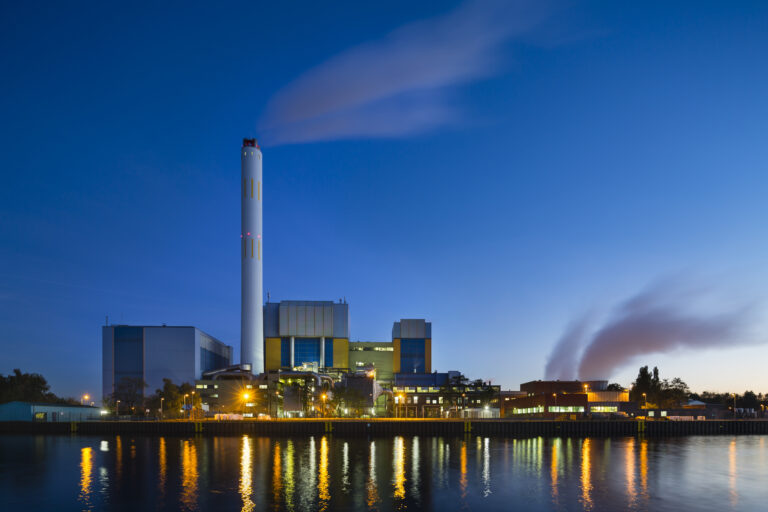
Continuous boiler cleaning is important in waste-to-energy plants because the fuel burned, municipal solid waste, produces aggressive, highly variable flue gases that deposit fouling material on heat transfer surfaces far faster than conventional fuels do. Without ongoing cleaning, those deposits compound quickly, cutting heat transfer efficiency, accelerating corrosion and forcing unplanned shutdowns. The sections below unpack exactly why this happens, what the consequences are and how a well-designed continuous cleaning strategy addresses each challenge.
What happens inside a waste-to-energy boiler when deposits build up?
When deposits accumulate on the heating surfaces of a waste-to-energy boiler, they act as an insulating layer between the hot flue gas and the water-steam circuit. Heat that should transfer into the working fluid stays trapped in the gas stream instead, reducing steam output and forcing the boiler to work harder to maintain target temperatures. Over time, the deposit layer thickens, corrosion accelerates beneath it and the risk of a forced shutdown rises sharply.
The process begins in the furnace, where unburned particles, ash and condensed chlorine compounds start adhering to tube walls. The furnace alone accounts for roughly half of total heat transfer in a boiler, so even a moderate deposit layer there has a disproportionate effect on overall efficiency. As flue gases travel downstream through the superheater, reheater and economiser, additional fouling layers form at progressively lower temperatures, each one compounding the thermal resistance already created upstream.
Heavy deposits in the furnace zone can develop into clinker formations, dense, fused slag masses that fall into the hopper area and cause mechanical damage. Chlorine-rich deposits in the superheater zone create the conditions for high-temperature corrosion, attacking tube material from the outside while steam-side oxidation works from within. Left unaddressed, this combination shortens tube life significantly and turns what could have been a planned maintenance event into an emergency repair.
Why is fouling in waste-to-energy boilers worse than in coal or biomass plants?
Fouling in waste-to-energy boilers is more severe than in coal or biomass plants primarily because municipal solid waste is an inconsistent, chemically aggressive fuel. Unlike coal, which has a relatively stable composition, household and commercial waste contains plastics, chlorinated materials, heavy metals and moisture levels that shift from hour to hour. This variability produces flue gases with high concentrations of hydrogen chloride, alkali compounds and sticky particulates that bond aggressively to tube surfaces.
Chlorine is the central problem. When chlorine compounds in the flue gas react with alkali metals from the waste stream, they form low-melting-point salts that deposit on superheater tubes at temperatures where coal ash would remain dry and loose. These sticky deposits capture additional fly ash particles, growing rapidly into thick, corrosive layers that are far harder to remove than the dry, powdery deposits typical of coal combustion.
Biomass plants face some of the same alkali-related challenges, particularly when burning agricultural residues high in potassium and silica. However, the chlorine concentrations in biomass flue gas are generally lower and more predictable than in waste combustion. Waste-to-energy operators also have far less control over fuel composition than biomass or coal plant operators, because the incoming waste stream reflects whatever the local population discards. That unpredictability means deposit behaviour can change significantly between shifts, making a fixed, schedule-based cleaning approach poorly suited to the actual conditions inside the boiler.
What are the operational consequences of inadequate boiler cleaning in WtE plants?
Inadequate boiler cleaning in a waste-to-energy plant leads to a cascade of operational problems: reduced heat transfer efficiency, higher flue gas exit temperatures, accelerated tube corrosion, increased emissions and ultimately unplanned shutdowns. Each of these consequences carries a direct financial cost, and they tend to reinforce one another once deposit build-up passes a certain threshold.
Reduced heat transfer is the first and most immediate effect. As the insulating deposit layer grows, steam production falls for the same fuel input. To compensate, operators may increase combustion intensity, which raises flue gas temperatures and accelerates the very corrosion processes the deposits are already promoting. Higher exit temperatures also mean more heat is lost to the stack, reducing the plant’s overall energy recovery effectiveness.
Corrosion is the consequence that causes the most lasting damage. Chlorine-rich deposits create a chemically active environment at the tube surface, particularly in the superheater zone where temperatures are high enough to drive electrochemical attack. Tubes that corrode faster than expected require earlier replacement, and in severe cases a single corroded tube failure can trigger a full boiler outage. For a waste-to-energy plant that operates as part of a municipal waste management system, an unplanned outage creates problems beyond the plant itself, waste that cannot be processed must be diverted to landfill or alternative facilities.
Emissions compliance is a further concern. Deposits that alter combustion conditions or reduce the effectiveness of flue gas treatment systems can push a plant toward the limits of its permitted emission levels for particulates, dioxins and heavy metals. Regulatory pressure on waste-to-energy operators continues to tighten in 2026, making consistent boiler performance a compliance requirement as much as an efficiency goal.
How does continuous on-load cleaning differ from periodic offline cleaning?
Continuous on-load cleaning removes deposits while the boiler is operating at full load, preventing significant build-up from forming in the first place. Periodic offline cleaning, by contrast, requires the boiler to be taken out of service so that accumulated deposits can be removed manually or with high-pressure equipment. The fundamental difference is one of prevention versus remediation, and in a waste-to-energy context, prevention is substantially more effective.
Offline cleaning addresses deposits that have already formed, often after they have had time to harden, fuse or cause corrosion damage. The cleaning itself requires a shutdown, which means lost generation capacity, waste diversion costs and the labour expense of the cleaning operation. Depending on the severity of fouling, offline cleaning intervals in poorly maintained WtE boilers can be as frequent as every few weeks, each one representing a significant operational disruption.
On-load cleaning systems work continuously or on demand, applying cleaning energy, water, steam, air or mechanical impulse, to tube surfaces before deposits have the chance to consolidate. Because the deposits are removed while still soft and loosely adhered, far less energy is needed to dislodge them and the risk of tube erosion from aggressive cleaning is lower. The boiler maintains consistent heat transfer performance throughout its operating cycle, which translates directly into stable steam output and predictable energy recovery.
A further advantage of on-load cleaning is the ability to respond to changing deposit conditions in real time. Waste-to-energy boilers experience rapid shifts in fouling intensity as fuel composition changes. A continuous cleaning system that can be adjusted or triggered based on actual deposit conditions, rather than a fixed schedule, keeps the boiler operating within its design parameters even when the incoming waste stream is particularly challenging.
Which continuous cleaning technologies are used in waste-to-energy boilers?
The main continuous cleaning technologies used in waste-to-energy boilers are water-based cleaning systems, sootblowers using steam or air, and mechanical rapping systems. Each technology is suited to specific zones of the boiler and specific deposit types, and most WtE plants use a combination of approaches across different sections of the flue gas path.
Water-based cleaning systems
Water cleaning is particularly effective in the furnace zone, where high temperatures and heavy slagging require a cleaning medium with sufficient thermal shock energy to dislodge fused deposits. Systems such as the SMART Cannon and SMART Helix Water deliver controlled water pulses or rotating water jets that fracture and flush slag from furnace walls without causing tube damage. The Shower-Clean System (SCS) is another water-based approach widely used in WtE applications, delivering a curtain of water across the furnace walls to prevent deposit accumulation rather than removing established slag. Multiple WtE plants across Europe have operated SCS installations since the early 2010s, demonstrating the technology’s suitability for the demanding conditions of waste combustion.
Sootblowers and rapping systems
In the superheater, reheater and economiser zones, where flue gas temperatures are lower and deposits tend to be less fused, retractable sootblowers using steam or air are the standard approach. These devices extend into the flue gas path, direct a cleaning jet across the tube banks and retract again, removing loosely adhered ash and preventing the gradual build-up that reduces heat transfer. Pneumatic rapping systems offer an alternative for areas where a cleaning medium is impractical, mechanical impulses transmitted through the tube structure dislodge deposits by vibration. Rapping systems are commonly used in superheater and economiser sections of WtE boilers where the deposit character suits this approach.
How should a continuous cleaning strategy be designed for a WtE boiler?
A continuous cleaning strategy for a waste-to-energy boiler should be designed around the specific deposit behaviour of that plant, matching cleaning technology, intensity and frequency to the actual fouling conditions in each boiler zone rather than applying a generic schedule. The starting point is a thorough assessment of the boiler’s geometry, the fuel mix it processes and the deposit patterns that have developed during operation.
Zone-by-zone analysis is the foundation of an effective strategy. The furnace requires a different approach from the superheater, which in turn differs from the economiser. Deposit composition, temperature, adhesion strength and the risk of corrosion all vary across these zones, and the cleaning system must be matched to each set of conditions. Applying the wrong cleaning medium or the wrong intensity in a given zone can cause tube erosion without meaningfully improving cleanliness.
Demand-driven cleaning represents a significant improvement over fixed-schedule approaches. Rather than activating cleaning systems at predetermined intervals regardless of actual deposit conditions, demand-driven systems use temperature differentials, pressure drop measurements and heat transfer calculations to determine when and where cleaning is needed. This approach avoids unnecessary cleaning cycles that waste steam or water and cause unnecessary mechanical stress, while ensuring that genuinely problematic deposit build-up is addressed before it affects performance.
Integration with digital controls and diagnostics adds another layer of precision. When cleaning systems are connected to plant monitoring data, operators gain visibility into deposit development across the boiler in real time. Cleaning sequences can be adjusted automatically or manually based on what the data shows, and the system builds a record of deposit behaviour over time that supports better long-term planning. For plants processing variable waste streams, this kind of adaptive capability is particularly valuable because it allows the cleaning strategy to respond to fuel changes without manual intervention.
Finally, the cleaning strategy should account for the full operating cycle of the plant, including planned maintenance intervals. On-load cleaning reduces the frequency and intensity of offline cleaning required, but it does not eliminate it entirely. A well-designed strategy coordinates both, using continuous cleaning to extend the intervals between shutdowns and to ensure that when offline maintenance does occur, the boiler is in better condition than it would otherwise be.
How Clyde Bergemann supports continuous cleaning in waste-to-energy plants
We have been developing on-load boiler cleaning solutions for nearly 100 years, and waste-to-energy is one of the industries where that depth of experience makes a measurable difference. Our approach is not to offer a standard product and fit it to every plant, we design cleaning strategies around the specific conditions of each boiler, from furnace geometry to fuel mix to the deposit patterns that have developed over years of operation.
- Our boiler efficiency product range covers every zone of the WtE boiler, including water-based furnace cleaning with the SMART Cannon and Shower-Clean System, retractable sootblowers for superheater and economiser sections and pneumatic rapping systems where a cleaning medium is not appropriate.
- Our SMART Clean platform enables demand-driven cleaning, systems activate based on actual deposit conditions rather than fixed schedules, reducing unnecessary cleaning cycles and protecting tube surfaces from avoidable wear.
- We integrate controls and diagnostics directly with cleaning systems, giving plant operators real-time visibility into deposit development and the ability to adjust cleaning sequences as fuel composition changes.
- Our spare parts and service support is available globally, with experienced engineers who understand the extreme operating conditions of WtE boilers and can respond when components need attention.
- We support retrofit projects as well as new installations, helping plants that inherited suboptimal cleaning solutions upgrade to technologies better suited to their actual operating conditions.
If you are reviewing your plant’s cleaning strategy or evaluating options for a retrofit, we are glad to discuss the specifics of your boiler and what a more effective approach might look like. You can reach our team directly to start a conversation.