

Boiler fouling is one of the most persistent and costly challenges in industrial plant operations, yet it rarely appears as a line item in maintenance budgets until something goes wrong. Deposits accumulate gradually, heat transfer degrades quietly, and efficiency losses compound over weeks and months before anyone raises an alarm. By the time fouling becomes visible or measurable, the financial damage is already done.
This article builds your understanding of boiler fouling from the ground up: what it is, how it develops, what it actually costs, and how modern plants are shifting from reactive cleaning to proactive deposit management. Whether you manage a waste-to-energy facility, a biomass plant, or a conventional power generation unit, the principles here apply directly to your operation.
What is boiler fouling and how does it develop?
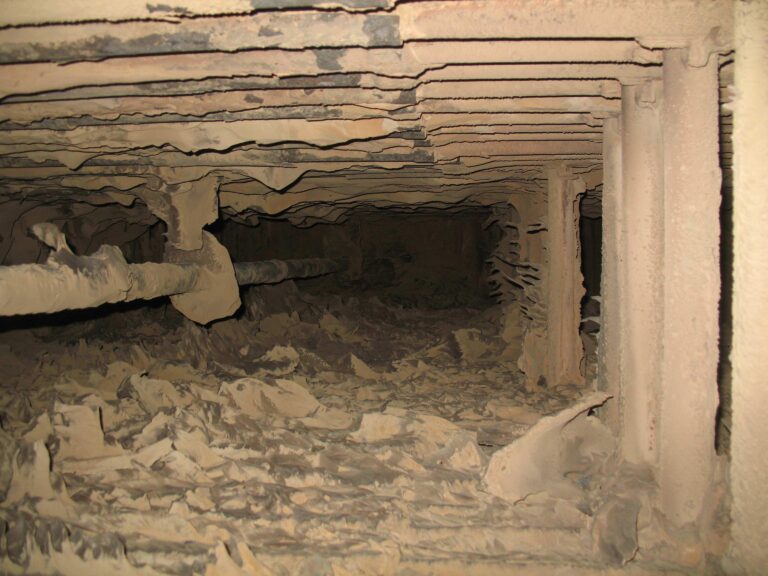
Boiler fouling is the accumulation of unwanted material on heat transfer surfaces inside a boiler. These deposits form when combustion gases carry particles, ash, minerals, and chemical compounds that settle, bond, or react with the surfaces they contact. Over time, the accumulated layer grows thicker and harder, reducing the surface’s ability to transfer heat to the working fluid.
The development process follows a recognisable pattern. In the early stages, fine particles land on tube surfaces and begin to adhere. Heat causes some of these particles to soften or partially melt, which makes them sticky and accelerates further accumulation. As the layer thickens, its outer surface cools relative to the tube wall beneath it, which changes the chemistry of what sticks next. The result is a deposit that is often layered, with different compositions at different depths.
Two distinct forms of fouling are worth distinguishing from the start. Slagging refers to deposits that form in high-temperature zones, typically in the furnace, where ash particles melt and fuse onto surfaces. Fouling in the narrower technical sense refers to deposits that form in lower-temperature convective zones, such as superheaters and economisers, where condensation and chemical reactions drive accumulation. Both reduce efficiency, but they behave differently and respond to different cleaning approaches.
How fouling disrupts heat transfer and combustion
To understand why fouling is so damaging, it helps to think of heat transfer surfaces as the interface between hot combustion gases and the water or steam they are meant to heat. The thinner and cleaner that interface, the more efficiently energy crosses it. Deposits act as insulation, blocking the transfer of heat and forcing the combustion gases to exit the boiler at higher temperatures than intended.
The furnace alone is responsible for roughly 50% of the total heat transfer in a boiler. When slagging builds up on furnace walls, that primary heat exchange zone becomes progressively less effective. The boiler must work harder to achieve the same steam output, which means burning more fuel for the same result.
Fouling also disrupts combustion indirectly. Heavy deposits can alter gas flow patterns inside the boiler, creating uneven temperature distribution and hot spots. In extreme cases, large clinker formations break free from furnace walls and fall into the hopper area, causing mechanical damage. Corrosion is another consequence: deposits trap moisture and reactive compounds against metal surfaces, accelerating material degradation beneath the visible layer.
- Reduced heat transfer across all affected zones
- Higher flue gas exit temperatures, indicating wasted energy
- Increased fuel consumption to maintain target steam output
- Uneven temperature distribution and localised hot spots
- Accelerated corrosion beneath deposit layers
- Risk of mechanical damage from falling clinker
The real costs hiding behind fouling deposits
The financial impact of boiler fouling is rarely captured in a single figure, which is precisely why it tends to be underestimated. The costs distribute themselves across several categories, and each one is easy to overlook in isolation.
Fuel overconsumption
As heat transfer efficiency drops, the boiler burns more fuel to produce the same output. This overconsumption is continuous and cumulative. A plant operating with fouled surfaces for weeks or months may consume significantly more fuel than a clean equivalent, with the difference appearing as a gradual rise in operating costs rather than a sudden spike that triggers investigation.
Unplanned downtime
When fouling is left unmanaged, it eventually forces a shutdown. Unplanned downtime is far more expensive than scheduled maintenance because it cannot be coordinated with production cycles, spare parts may not be on hand, and the urgency of the situation drives up labour and logistics costs. Every hour of unexpected standstill translates directly into lost output and financial pressure on the operation.
Accelerated component wear
Fouling-related corrosion shortens the service life of tubes, heat exchanger surfaces, and other components. Replacing these parts is expensive in itself, but the associated labour, scaffolding, and outage time multiply the total cost considerably. Plants that manage deposits proactively tend to extend component lifespans and reduce the frequency of major interventions.
Emissions penalties
A fouled boiler operating inefficiently produces higher emissions per unit of output. In an environment of tightening environmental regulations, this creates compliance risk. Excess CO₂, NOₓ, and particulate emissions can trigger regulatory penalties and complicate permit renewals, adding a financial and reputational dimension to what might otherwise seem like a purely technical problem.
Why fouling severity varies across fuel types and plant designs
Building on the understanding of how deposits form, it becomes clear that not all boilers foul at the same rate or in the same way. Fuel composition is the single largest variable. Different fuels carry different ash chemistries, moisture contents, and combustion characteristics, all of which influence where deposits form and how aggressively they accumulate.
Biomass fuels, for example, often contain high levels of potassium and chlorine. These elements lower the melting point of ash particles, making them more likely to stick to surfaces at temperatures where other ash types would remain dry and loose. Waste-to-energy plants face an additional challenge: the composition of municipal solid waste varies continuously, meaning the combustion chemistry shifts from hour to hour. This variability makes deposit behaviour harder to predict and harder to manage with fixed cleaning schedules.
Plant design also plays a role. Boilers built for one fuel type and later adapted to another may have heat exchanger geometries, gas velocities, and cleaning system placements that are not optimised for the new combustion conditions. Legacy systems installed during original construction were often selected for lowest upfront cost rather than long-term performance, which means many plants are operating with cleaning solutions that were never well matched to their actual fouling patterns.
How to assess fouling impact in your own boiler system
Assessing fouling impact starts with the data your plant already generates. The most direct indicator is flue gas exit temperature: when this rises above the design value without a corresponding change in load or fuel, it signals that heat transfer surfaces are losing effectiveness. Tracking this figure over time reveals the rate at which fouling is progressing.
Steam output relative to fuel input is another useful measure. A gradual decline in this ratio, holding all other variables constant, points to increasing thermal resistance in the system. Pressure drop measurements across heat exchanger sections can also indicate deposit accumulation, as fouled surfaces restrict gas flow and alter the pressure profile through the boiler.
Beyond instrument readings, visual inspection during planned outages provides direct evidence of deposit distribution and character. The location, thickness, and hardness of deposits tell you which zones are most affected and whether the deposits are loose and removable or hard and fused. This information is valuable for calibrating cleaning strategies and identifying areas where the current approach is insufficient.
- Monitor flue gas exit temperature as a primary efficiency indicator
- Track steam output per unit of fuel input over time
- Measure pressure drop across heat exchanger sections
- Document deposit location, thickness, and hardness during outages
- Compare current performance against original design specifications
From reactive cleaning to proactive fouling management
Many plants still operate on a reactive model: clean when performance drops to an unacceptable level or when a shutdown is forced. This approach is understandable given the operational pressures maintenance teams face, but it consistently produces worse outcomes than a proactive strategy. By the time fouling is severe enough to trigger action, the efficiency losses have already accumulated and the risk of damage has increased.
Proactive fouling management shifts the logic. Instead of cleaning on a fixed schedule or waiting for a problem to become visible, the goal is to clean based on the actual deposit situation in the boiler at any given moment. This requires continuous monitoring of performance indicators and the ability to direct cleaning effort to the zones where it is most needed, rather than applying the same cleaning pattern regardless of conditions.
Demand-driven cleaning is the practical expression of this philosophy. When cleaning systems respond to real-time deposit data rather than a predetermined timetable, they can intervene earlier, use cleaning media more efficiently, and avoid over-cleaning zones that do not need attention. This reduces wear on cleaning equipment, lowers steam or water consumption associated with cleaning, and keeps heat transfer surfaces in a consistently better condition.
The shift from reactive to proactive management also changes how maintenance teams think about fouling. Rather than treating deposits as an inevitable problem to be dealt with periodically, proactive management treats deposit control as an ongoing operational parameter, one that can be tuned and optimised alongside fuel mix, load profile, and other variables that affect plant performance.
How Clyde Bergemann supports your fouling management strategy
We have been developing and manufacturing on-load boiler cleaning solutions for close to 100 years, working across power generation, waste-to-energy, biomass, and other industrial processes. Our focus has always been on keeping heat transfer surfaces clean under real operating conditions, including variable fuels, flexible load profiles, and the demanding thermal environments that accelerate deposit formation.
Our boiler efficiency solutions at Clyde Bergemann cover the full range of deposit challenges described in this article:
- On-load cleaning systems for furnaces, superheaters, reheaters, economisers, and air preheaters, using water, steam, or air as the cleaning medium depending on the application
- SMART Clean technology for demand-driven cleaning, which responds to actual deposit conditions rather than fixed schedules, reducing overcleaning and improving efficiency
- Controls and diagnostics that give your team real-time visibility into deposit build-up and cleaning performance across all boiler zones
- Solutions specifically developed for waste-to-energy and biomass plants, where variable fuel quality and changing combustion conditions make deposit management particularly complex
- Spare parts availability and service support from experienced engineers, with references across more than 130 countries
If you are evaluating your current cleaning approach or building a business case for an upgrade, we are glad to support that process with technical input grounded in operational experience. Get in touch to discuss the specific conditions at your plant.
Related Articles
- When should you schedule sootblowing during boiler operation?
- Why on-load cleaning systems are key to continuous boiler operation
- Should you clean a boiler while it is running or during shutdown?
- How does slagging in waste-to-energy boilers affect plant availability?
- What is boiler fouling and how does it affect efficiency?